
THE PILLAR BOX
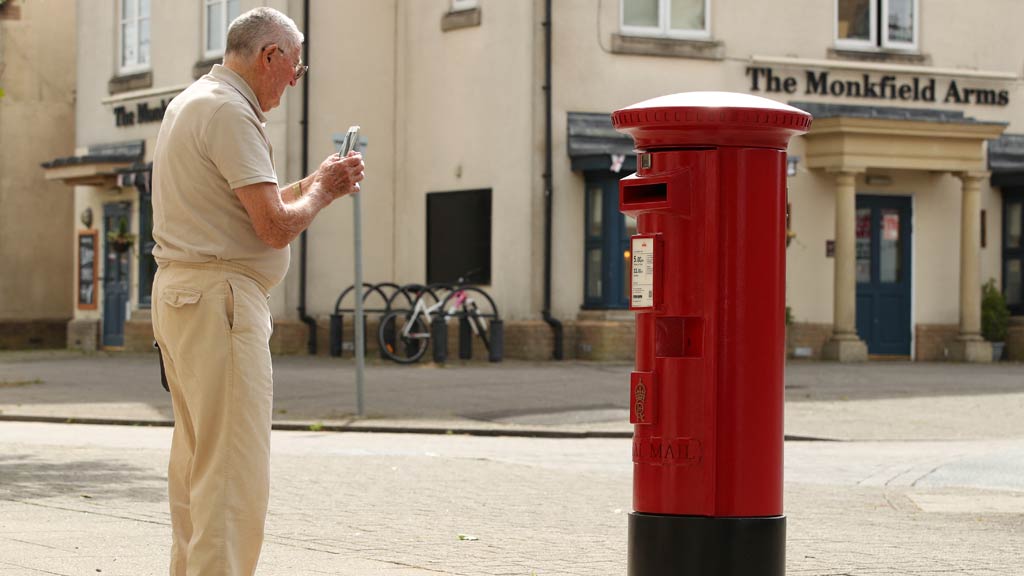
I dislike e-cards for Christmas. They are impersonal and seem to say “we couldn’t be bothered.” I still send cards, sometimes handmade, but there is one part of that that always disappoints: dropping them in the mailbox. The USPS mailbox at the corner is a dismal affair, a cheap, ugly metal receptacle that reminds me of a trash can and always makes me feel as if I’m throwing my letters away. I grew up in England, and I still remember the pillar box, made of sturdy cast-iron, embossed with G VI R and a royal crown, and painted bright red. “Iconic” is a much over-used term, but the British pillar box is exactly that. According to Wiki it dates from 1852, when Anthony Trollope—yes, the novelist—then employed by the Post Office, recommended “letter-receiving pillars” as a way of collecting mail on the Channel Islands. Soon adopted on the mainland, the pillar box has undergone various iterations—there was a hexagonal design, and an unpopular sheet metal version). But it’s the traditional form that has endured: a round, cast-iron column painted red, five feet high, with a domed top, fluted sides, and a base. In other words, a little classical temple.
A HUNGARIAN ARCHITECT IN AMERICA
I watched The Brutalist yesterday. My reaction? An implausible story poorly told and awkwardly stitched together; the Holocaust connection seemed gratuitous; a ham-handedly written script, the audience actually snickered at some of more pompous utterances of the Guy Pearce character; distracting bursts of portentous music at odd moments; and glitches, like Tóth saying square meters when he knows his audience understands only square feet, or producing the kind of expressionistic sketches that are out of character for a Bauhaus-trained architect—more like something the great Eric Mendelsohn would draw. As for the title, while Tóth was definitely brutalized, it made no sense to me, but then not much in this second-rate production did.
My grumpy reaction may have been colored by the greasy smell of my neighbor’s popcorn—a reminded of why I stopped going to the cinema a decade ago.
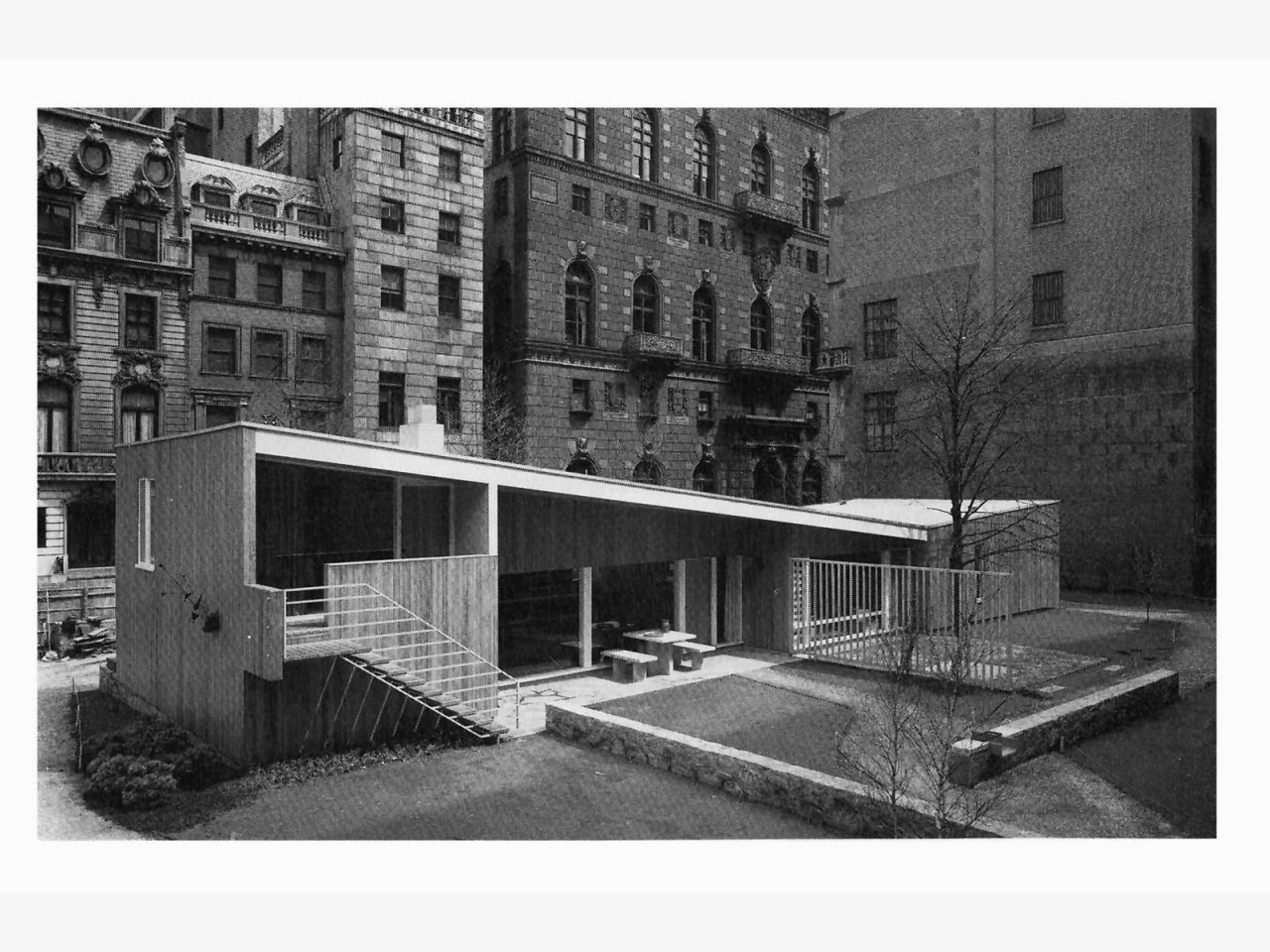
Architecture? The stunning library that Tóth builds for Van Buren does seem like the sort of thing that a talented Bauhausler might design on coming to America, unlike the monumental “community center” that sits uneasily at the center of the film. In 1948 Marcel Breuer, an actual Hungarian immigrant Bauhaus architect, built a modernist house in the MoMA garden (above).
STAINED GLASS
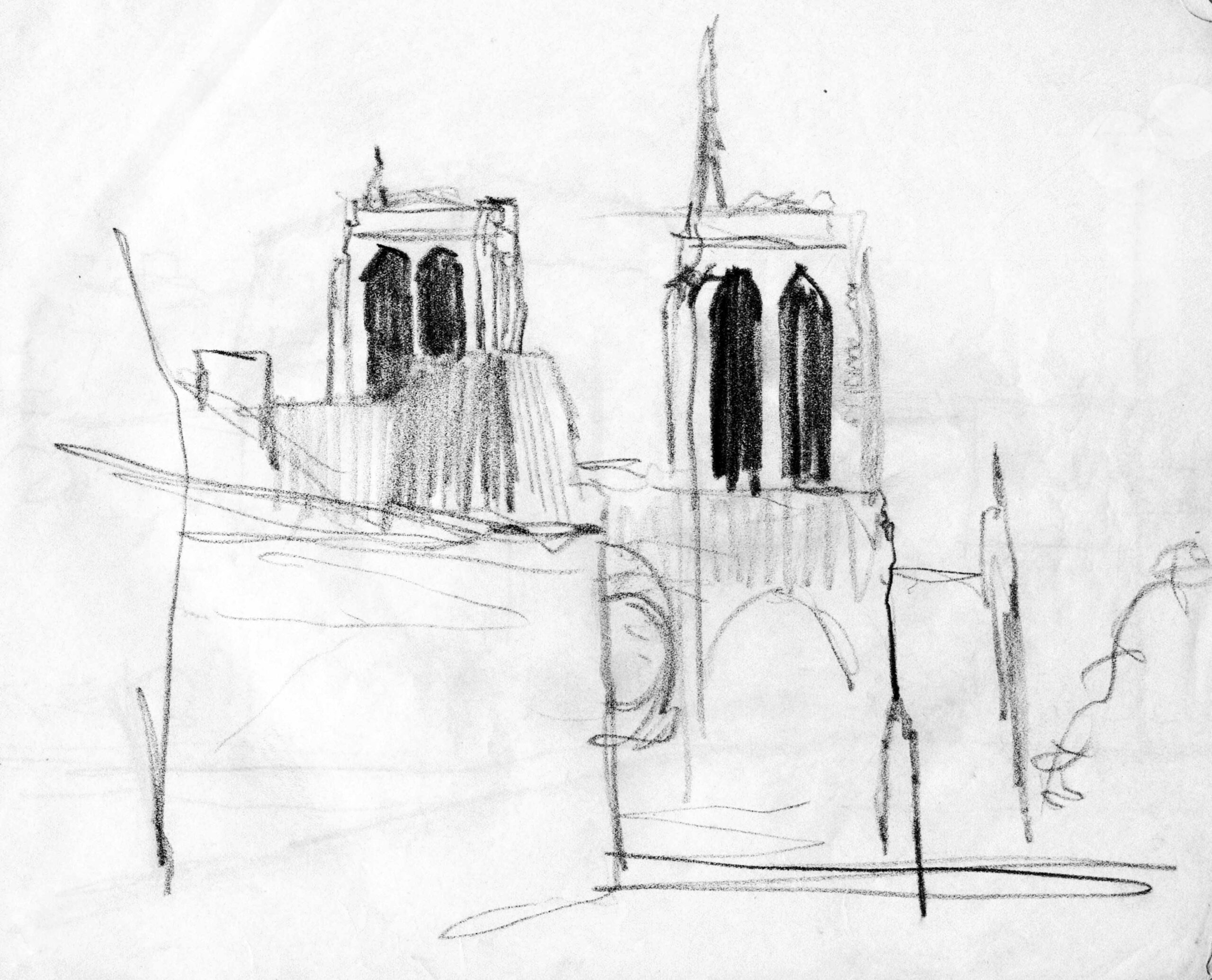
Remember when French premier Emmanuel Macron saw the Notre-Dame fire as an opportunity to modernize the cathedral, and announced an international architectural competition to produce a new, updated roof—a “contemporary gesture,” in his words? And remember when many well-known architects, much to their discredit, applauded the gesture. Macron’s plan was scotched by the almost universal negative reaction of curators, historic preservationists, and the French parliament. Now Macron is back in hot water with his plan to remove six stained glass windows and install modern replacements. The uproar is caused by the fact that the six removed windows were unharmed by the fire, and were in addition the work of Viollet-le-Duc, the architect who was responsible for the nineteenth-century restoration of the cathedral. Some critics have pointed out that there are a number of clear glass windows in the church that would be better candidates for replacement. Paradoxically, the proposed windows are not particularly “contemporary”; the artist, Claire Tabouret, is no Chagall.
HOME ECONOMICS
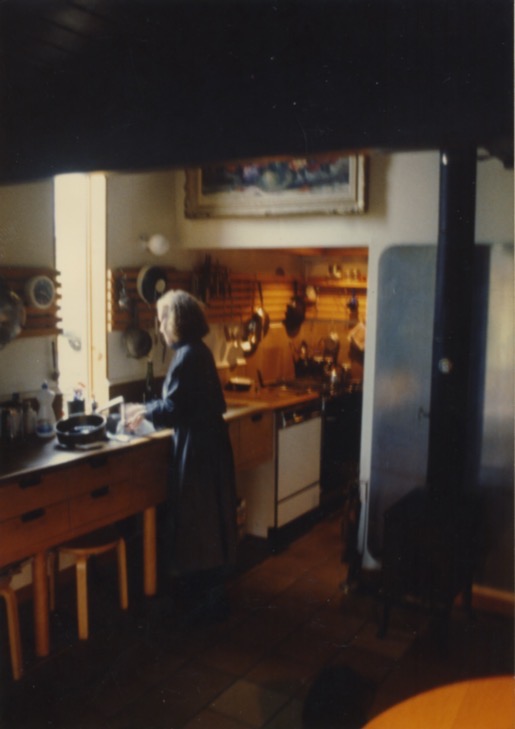
I recently reviewed an upcoming book about home economics by Anna Myjak-Pycia, Another Modernism. Home economics is often derided as having been too traditional, to much a celebration of homebound femininity, yet it had a lasting influence on the way that we live—and especially work—in our homes. I wrote about the work of Ellen Richards, Christine Frederick, and Lillian Gilbreth, self-styled “domestic engineers,” in Home, and I took it to heart when, shortly after, my wife and I built our own home, the Boathouse (see The Most Beautiful House in the World), Shirley was small (in stature not presence) and I am tall, and the kitchen suited us both. There were no cabinets. A long wooden rack served the same function as the pegboard in Julia Childs’s kichen, a place to hang utensils, knives, pots and pans, a scale, a clock, etc. All other storage was in drawers, some as deep as file drawers, that were below the counter but not all the way down to the floor. Dishes and glasses were in a nearby freestanding cupboard. We finished the top of the counter, which was built by my friend Jean-Louis Bévière,

FROM OUR FOREIGN DESK
Coming soon from Owl Publishing House in Taipei, Taiwan, a translation of The Story Of Architecture and The Driving Machine. Owl has previously published Now I Sit Me Down to Eat, How Architecture Works, Makeshift Metropolis, One Good Turn, Waiting for the Weekend, and Home.
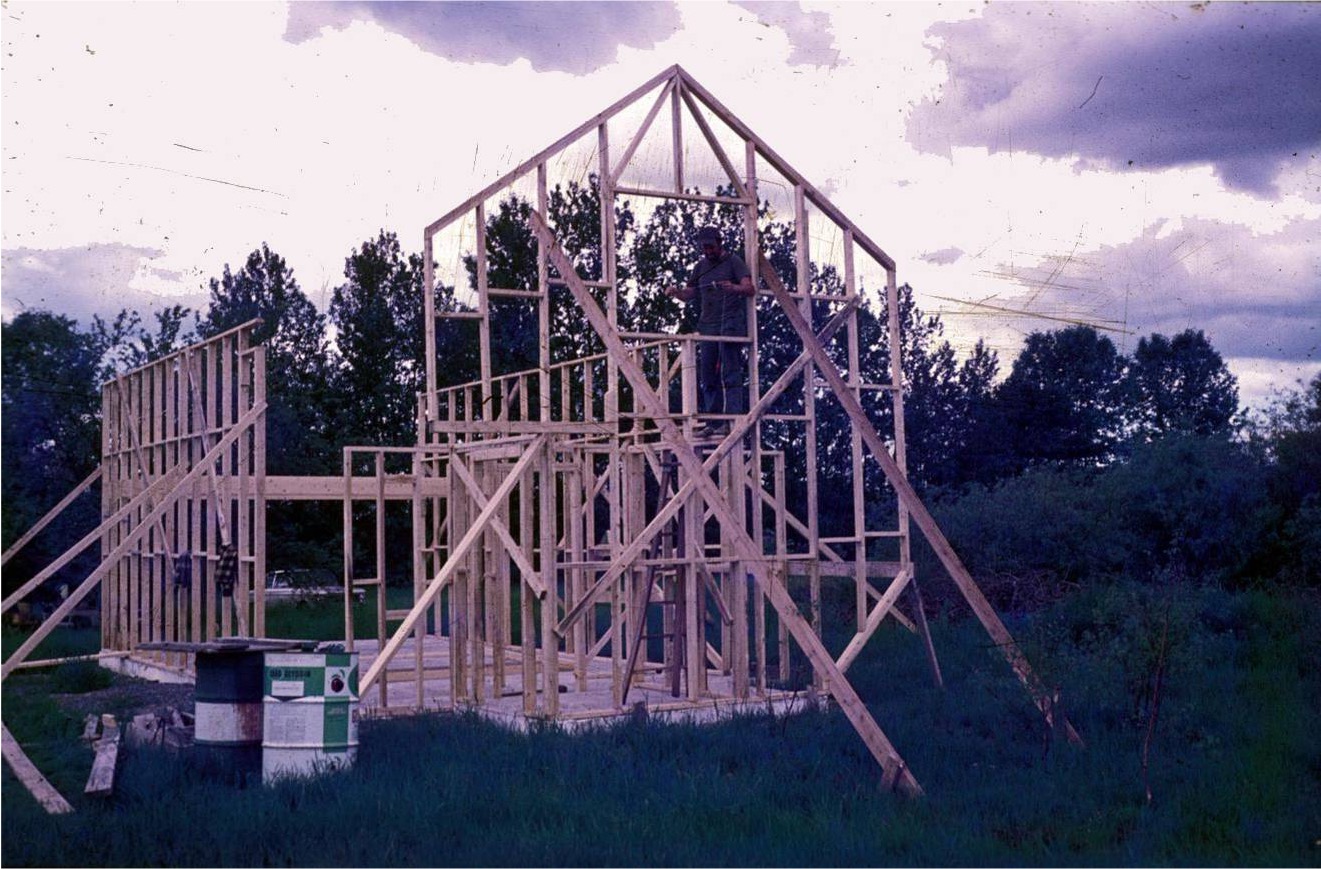
DO-IT-YOURSELF
“Man Builds House with STONES and LOGS in the Forest.” YouTube is full of bright ideas for building your own house: in a dome, underground, out of ferrocement, or bales of hay, or logs, We promise it will be cheaper, easier, faster. My advice is keep it simple, avoid shortcuts; the old solutions are best, especially for beginners. Building your own home, I mean really building it, without an architect or a contractor, can be stressful. The level of stress will be increased, needlessly in my opinion, by two things.
First, trying to do too much. I remember once visiting a couple who were building their own home. They showed me their plans for a Quebecois-style house, two stories with the typical bell-cast roof. Very large, very ambitious. In the meantime they were living in what would eventually be their two-car garage, a straightforward structure that they had converted into a temporary home. It was snug and cozy, and had the charm of a place that was improvised rather than designed. Shirley and I had just finished building our house (picture above), which was not much bigger than this garage. I remember thinking to myself that they should forget about the big house,