THE INDELIBLE STAIN
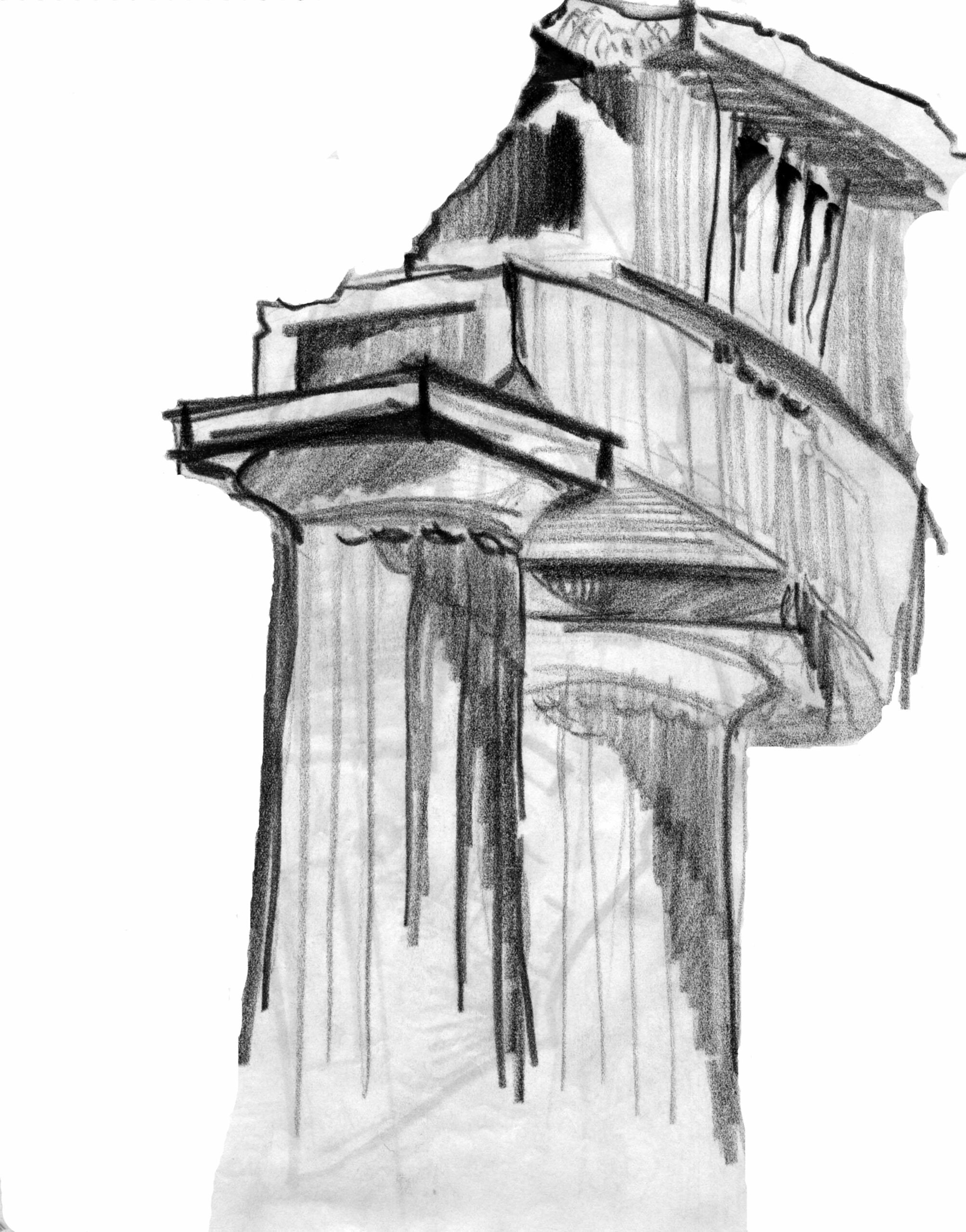
The public has never paid much attention to architecture, alas. Today, less than ever, which may help explain why so many mainstream media outlets no longer have full-time architecture critics. There is one exception to this architectural brownout: the extraordinary coverage devoted to the White House ballroom and the proposed triumphal arch near Arlington National Cemetery. There is plenty of evidence that people who give architecture little thought nevertheless have a soft spot for buildings such as the Lincoln Memorial and Mount Vernon. The debate over President Trump’s architectural agenda has changed that, because what was once a stylistic question has become a political one. The association will be cemented when the White House ballroom is complete. It may well have the same devastating effect on classicism that the J. Edgar Hoover Building had on Brutalism. I suspect it will take a generation or more for proponents of classical architecture to overcome what may prove to be an indelible stain.
BODYWORK
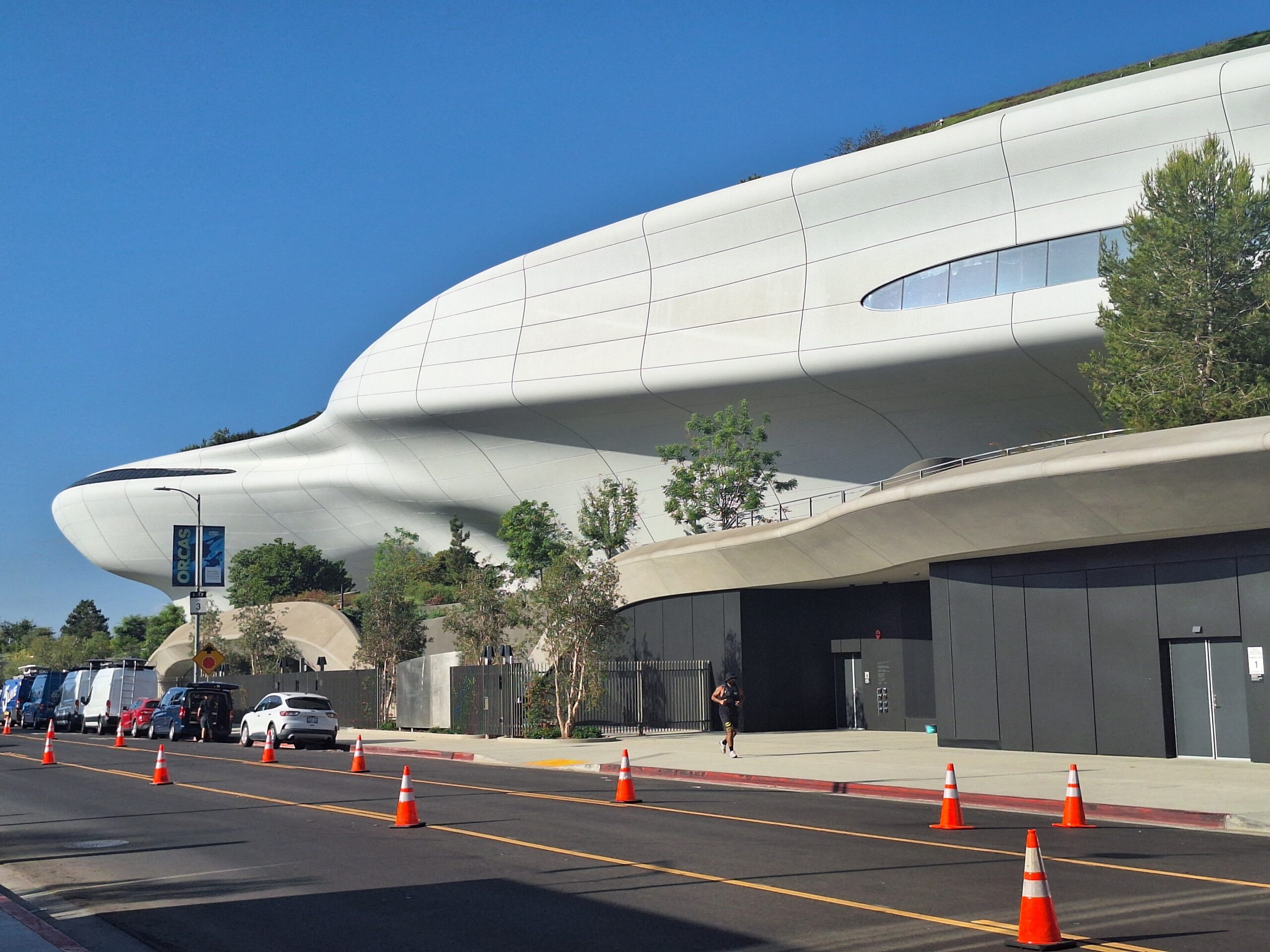
I’ve not visited the new Lucas Museum of Narrative Art in Los Angeles, but I have read that its skin is made of fiberglass-reinforced polymer. Beneath the biomorphic forms are the hidden bones of structural steel. Sort of like the human body, you might say. Or perhaps like an automobile, whose structure is concealed beneath a sculpted body of thin metal—or fiberglass, in the case of a Corvette.
There is a long history of architects trying to make buildings that look as if they had grown rather than been assembled. Frederick Kiesler’s Endless House is the progenitor of such biomorphic buildings. It existed only as a plaster-of-Paris model, but had it been built, it would probably have been made of ferrocement: cement sprayed over a mesh armature. Le Corbusier used a similar technique at Ronchamp, where the curving walls and roof are not simply a surface applied to a building; they are the building. Eero Saarinen’s TWA Terminal is another example. Its swooping forms are thin-shell reinforced concrete. The shell is also the structure; the swooping forms have to hold themselves up.
The Lucas Museum is different. Its carapace does not support anything. If some of the Lucas collection can be described,

WHAT ABOUT THE BUILDING?
The other day I was delighted to discover an Australian journal article about a country house that Romaldo Giurgola designed for himself in 2004, when he was eighty-five. As far as I know this was the first home he had designed for himself and I hoped to learn something about the house. Unfortunately the article was written by two history-theory docs. It had no proper plan, and little explanation of the actual design of the house. Instead, it was laden with long quotes from a bevy of architectural scholars. The usual suspects. Why do articles by history-theory types all have basically identical bibliographies? They start with the literature and build an argument through citation: Derrida, Foucault, Tafuri, Eisenman, Frampton, Rossi, Vidler, etc., followed by the same secondary literature about those figures. Why is the literature more important than the circumstances around the building itself? Citation is partly a form of professional positioning. If everyone in the field cites the same twenty-five authorities, citing those authorities signals that you are participating in the conversation. A newspaper article about the house, an interview, or an actual plan may be much more informative about the building but has less value as a marker of theoretical affiliation.
INVISIBLE DECOR
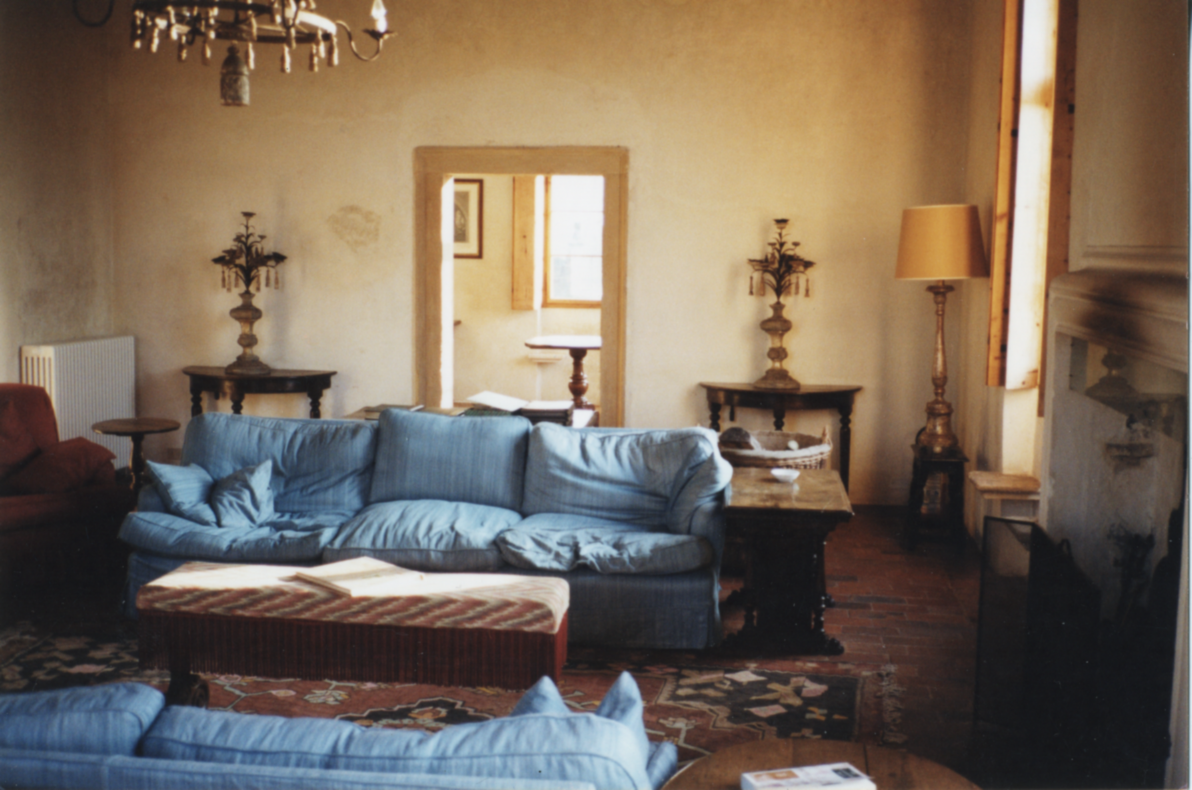
Years ago I had an unexpected satori. It occurred in the beachside clubhouse of Windsor, an upscale resort community in Florida. It was a most pleasant room, relaxed, quietly comfortable, a place to relax. I learned later that it was the work of the grande dame of New York decorators (whose name I now can’t recall). Aha, I thought, now I understand—great interior decoration is invisible. It reminded me of something that my friend Marc Appleton said, “I’ve always admired Billy Wilder’s direction because you’re not aware of it, only the story he’s telling.” Describing his own house Marc told me “I hope it doesn’t look like an architect had anything to do with it.” Another satori occurred when Shirley and I spent a week in Andrea Palladio’s Villa Saraceno (see the living room above). The house belongs to the British Landmark Trust, which rescues old buildings, then rents them to short-stay visitors. How do you furnish a sixteenth century masterpiece? By not decorating it.
GETTING IT RIGHT
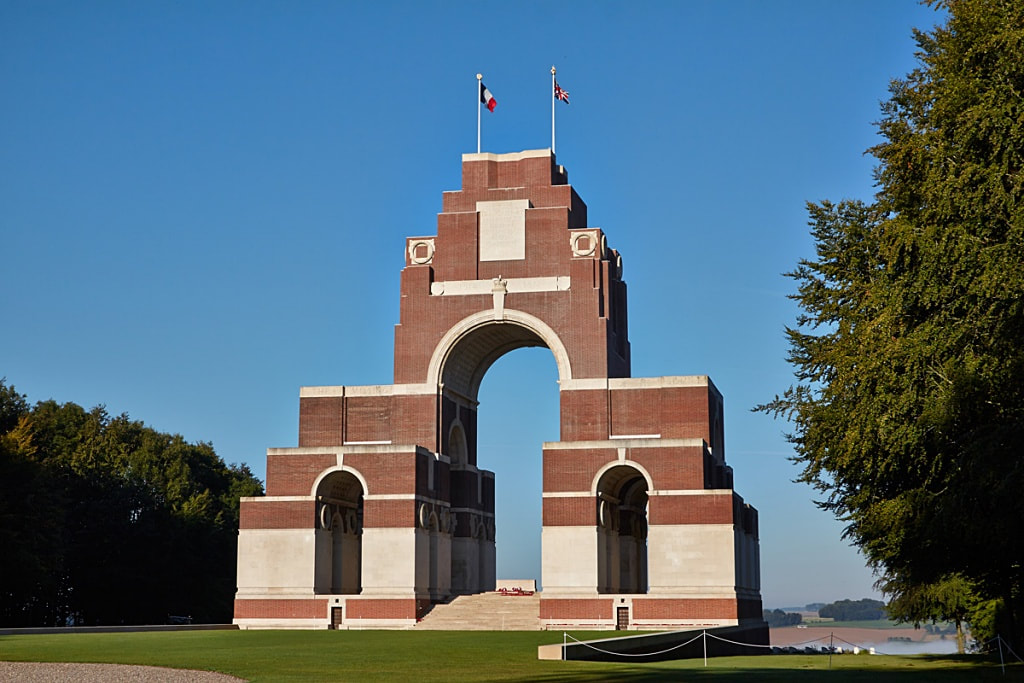
An article in The Architects Newspaper titled “How Trump’s arch gets classical wrong” gets it wrong. I’m not here to defend the design of the memorial arch proposed for a site near the Arlington National Cemetery, but to say that the arch represents “category error” because it doesn’t commemorate a military victory, like its inspiration, the Arc de Triomphe and the ancient Roman original, the Arch of Titus, is misleading. There have been several twentieth-century arches that do not commemorate victorious battles. The National Memorial Arch at Valley Forge, designed by Paul Philippe Cret and inaugurated in 1917 doesn’t, neither does the Gateway of India, built in Bombay in 1924 to celebrate the visit of King George V and his coronation as Emperor of India. The Black Star Gate in Accra, Ghana, was commissioned by Kwame Nkrumah in 1957 to commemorate his country’s new sovereignty. The Ghanaian gate is not modeled on a Roman arch and it’s not huge—40 feet high. The Valley Forge arch is 60 feet, only slightly taller than its model, the Arch of Titus. The Gateway of India is 85 feet, which happens to be the height of another famous arch, the Brandenburg Gate in Berlin.
LIBRARY TOWER
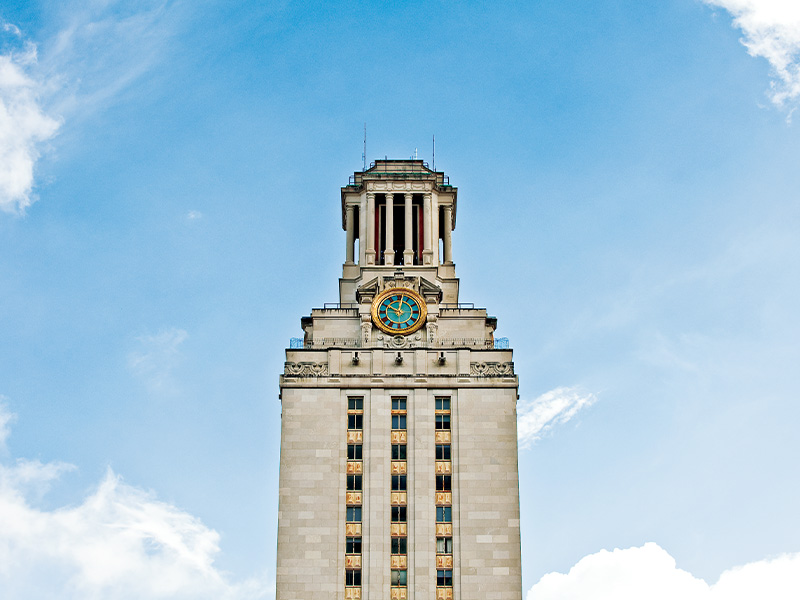
A design for the Trump Presidential Library has been unveiled: a highrise tower in downtown Miami. It’s an original idea that puts me in mind of Henry Van de Velde’s Booktower for Ghent University, Paul Cret’s library tower at UT Austin (above), and Charles Klauder’s Cathedral of Learning at the University of Pittsburgh, although the last is not a library. Klauder’s building is Gothic, Cret’s is stripped classical, and Van de Velde’s is his Art Nouveau-jnfluenced brand of early modern. Oddly enough the Miami tower is neither classical nor traditional but a warmed-over “contemporary” highrise.