
POMO
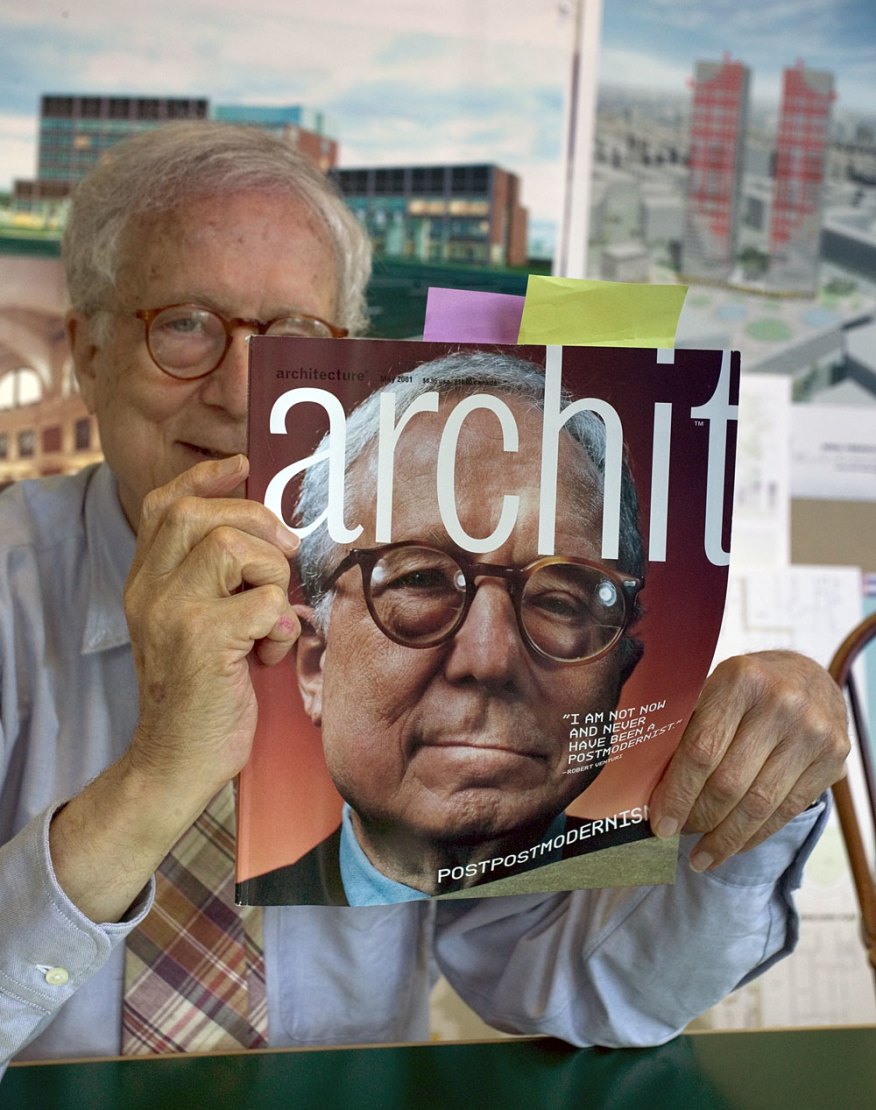
“I am not now and never have been a postmodernist,” said Robert Venturi twenty years ago; the quote appeared on the cover of the May 2001 issue of Architecture. But of course he was a postmodernist, although it is no wonder that he wanted to disassociate himself from that movement; after several decades PoMo had run its course, moreover in hindsight it appeared that it had done more harm than good. The best postmodernists had produced first-rate work—the Neue Staatsgalerie in Stuttgart, the Sainsbury Wing in London, the Beverly Hills Civic Center—but few architects were as historically knowledgable as James Stirling, Venturi, and Charles Moore—and in less capable hands PoMo was thin gruel indeed: an unconvincing blend of ersatz history and weak-kneed modernism. It’s easy to ridicule postmodernism today, but it is worth remembering what it was reacting against: lumbering Brutalism, warmed-over Mies, inept minimalism. Stirling was critical of modernist conventions: “The language itself was so reductive that only exceptional people could design modern buildings in a way that was interesting.” Postmodernism ultimately proved a failure as a broad-based movement—it turned out that only exceptional people could design interesting postmodern buildings, too. In that regard, it was much less successful than earlier short-lived architectural episodes such as Art Nouveau and Art Deco.
MAKE HISTORY
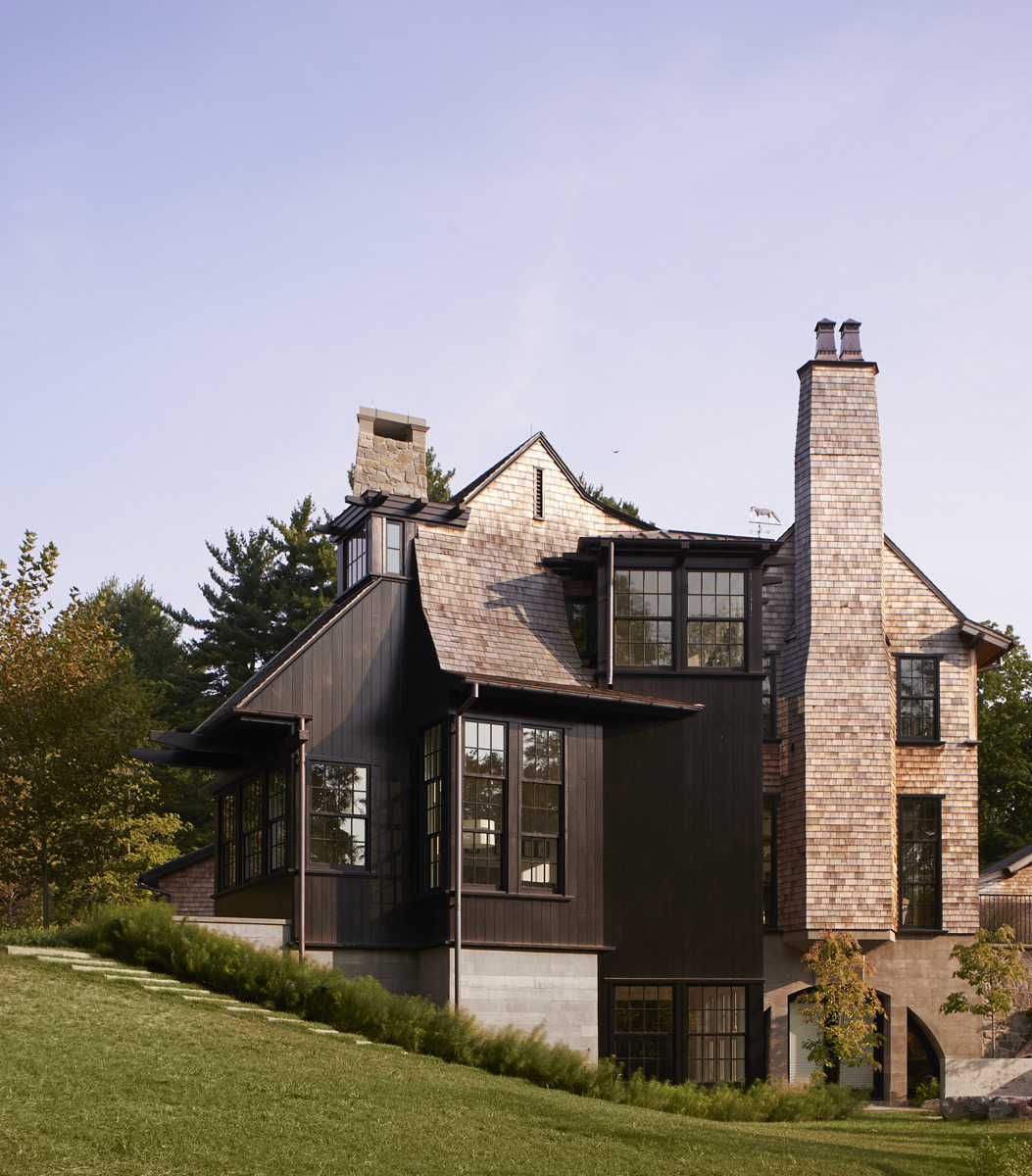
Last night I listened to an ICAA Zoom lecture by the architect Tom Kligerman, whose firm—Ike, Kligerman, Barkley—specializes in beautifully crafted houses, which were the subject of his talk: “New Thoughts on the American Home.” While many of the designs could be described as traditional, others were distinctly modern, and some were an eclectic combination of the two. Evidently catholic in its taste, IKB was clearly not committed to a canonic approach to the classical past. Kligerman observed that in his opinion architects should aim to make history, not simply be inspired by it. This has surely been the motivation of all creative architects over the years, whether they were Palladio, Edwin Lutyens, or Bertram Goodhue. All combined their historical interest with other influences; Veneto traditions in villas, Moghul motifs in New Delhi, and Middle Eastern architecture in the Nebraska capitol. Not wedded to the past but using it as a springboard to move forward.
Photo: Modern Farmhouse, Princeton (IKB Architects)

DAN FRANK
Dan Frank, 67, died last week. He was the editorial director of Pantheon Books, but when I knew him, in the late 1980s, he was a young editor at Viking Press working with me on The Most Beautiful House in the World and Waiting for the Weekend. This was still early days for me as a writer and I was lucky to have someone as patient yet demanding as Dan. And as supportive. After the success of Home and The Most Beautiful House in the World I might have specialized in domestic non-fiction, becoming a sort of literary Martha Stewart. Dan never pushed me in that direction, and when I proposed a book about the history of the weekend he was encouraging. When I dedicated my next book, an essay collection, to “My Editors,” I was thinking of Dan.
ORWELLIAN
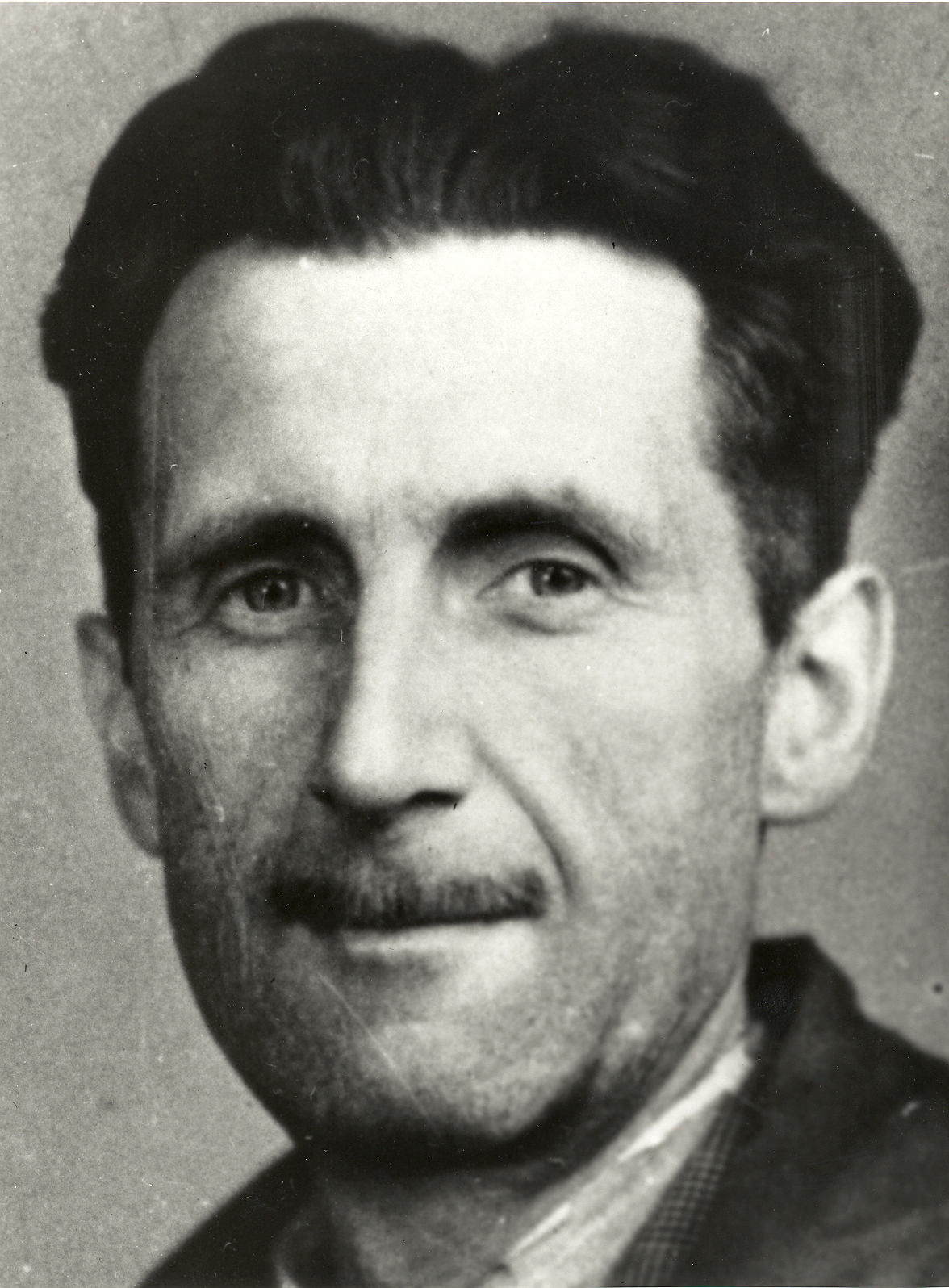
In a 1946 essay on politics and the English language, George Orwell criticized pretentious diction and meaningless words. “Adjectives like epoch-making, epic, historic, unforgettable, triumphant, age-old, inevitable, inexorable, veritable, are used to dignify the sordid process of international politics, while writing that aims at glorifying war usually takes on an archaic color, its characteristic words being: realm, throne, chariot, mailed fist, trident, sword, shield, buckler, banner, jackboot, clarion. Foreign words and expressions such as cul de sac, ancien regime, deus ex machina, mutatis mutandis, status quo, gleichschaltung, weltanschauung, are used to give an air of culture and elegance.” What would he have made of today’s slew of popular adjectives: social (distancing), societal (change), equitable (outcomes), or systemic (racism)? “A man may take to drink because he feels himself to be a failure, and then fail all the more completely because he drinks,” observed Orwell. “It is rather the same thing that is happening to the English language. It becomes ugly and inaccurate because our thoughts are foolish, but the slovenliness of our language makes it easier to have foolish thoughts.”
THE COMMISSION
President Biden’s decision to appoint four new members to the U.S Commission of Fine Arts has focussed public attention on this body. The New York Times rather snarkily described the Commission as a “low-key, earnest design advisory group”; just tell that to the architectural firms that have had to undergo detailed and sometimes severe reviews. Not all the reporting has been accurate; the Commission does not report to Congress, nor is the chair appointed, he or she is elected by the commissioners.
The Commission of Fine Arts was created in 1909 personally by President Theodore Roosevelt to act as an aesthetic watchdog over the urban makeover of Washington, D.C. that produced the National Mall, the Lincoln Memorial, and the Jefferson Memorial, as well as an extensive urban park system. Congress formalized Roosevelt’s decision a year later. The Commission reviews the designs of new federal buildings, monuments, and memorials in the District, as well as all new buildings—private as well as public—in the monumental core of the city. Over the years the Commission’s responsibilities have grown to include reviewing overseas military cemeteries, all coins and medals issued by the U.S. Mint, and heraldic designs of the Army.
THE BEDPAN LINE
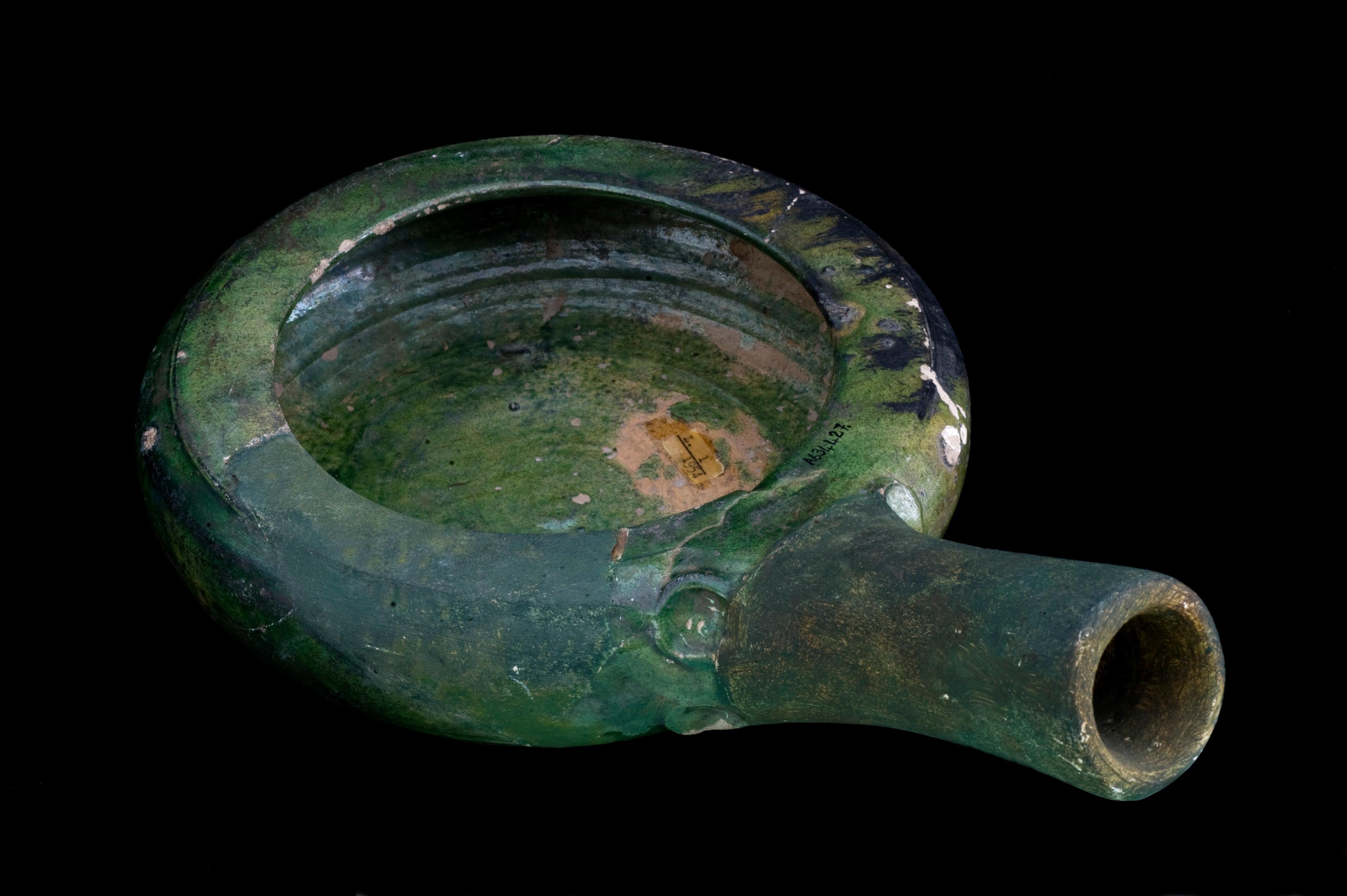
I spent some time in a hospital room recently, visiting. The atmosphere was distinctly technological: screens, flashing lights, mechanical beds, not to mention numerous pharmaceuticals. I was brought up short by the appearance of a device that was more Florence Nightingale than Big Pharma: a bedpan. The bedpan was plastic, but I’d always thought of them as glazed metal. Early bedpans were made of ceramic and were heavy affairs. A famous bedpan, made of pewter, belonged to Martha and George Washington, but the device is much older than the Colonial period. The Science Museum in London has a collection of old British and French bedpans, ingenious designs in which the hollow handle doubles as a pouring spout. The oldest model, made of glazed earthenware, is vaguely dated “1501-1700.” The earlier date suggests that the origin of the bedpan might be medieval. That inventive period gave us the windmill, the printing press, and eyeglasses—and perhaps the bedpan. Apropos of nothing, I came across a humorous reference: the British suburban railway line linking the city of Bedford to London’s St Pancras station is nicknamed the Bedpan Line.
Photo:Bedpan, 1501-1700