
FAKE NEWS
 The other day I read in The Architects Newspaper that the dean of IIT had stepped down. While this is undoubtedly of keen interest to IIT faculty and students why is it considered news? Perhaps because five years ago, when Wiel Arets was appointed dean, that decision was widely reported. But why was that event newsworthy? Architecture schools operate under a handicap where publicity is concerned. Law schools periodically gain attention when their graduates attain high positions, the Supreme Court or even the White House; business schools are lauded for the wealth of their graduates;
 My first car was a Volkswagen. It was a 1960 model bought in Hamburg in 1967, and it carried me without a hitch as far as Valencia (which is where it was stolen, but that’s another story). I’d never driven a VW before, but the simple controls required no advance knowledge. The only gauge was a large speedometer that included an odometer, turn indicators, and two (unidentified) warning lights, one for oil pressure and one for the alternator/generator. A third warning light lit up when the gas tank was empty, which required flipping a switch to access the reserve tank (about a gallon,
 According to a
 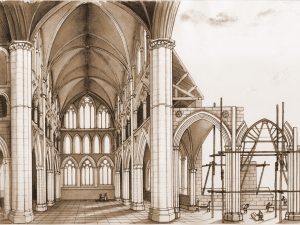 There is a long tradition of architectural research in structures—one thinks of Nervi, Candela, Torroja, and Frei Otto, the pioneers of concrete like Perret, and much earlier the Byzantine and Gothic builders. Architects have sometimes experimented successfully with new building techniques and materials (Rudolph invented striated concrete blocks; Foster was the first to use structural glass fins). But research into how people use buildings is rare. The profession has always recognized the value of so-called post-occupancy evaluation, and the need for knowledge based on how people actually behave in and use buildings. The problem has been that this kind of research is extremely complicated,
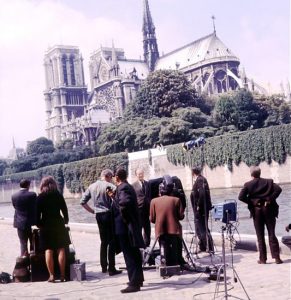 I’ve been watching Civilisation, the 1969 BBC television series, on YouTube. It’s a refreshing experience, and a reminder of how much the documentary film form has been influenced—I almost wrote infected—by Ken Burns. Instead of a revolving door of talking “expert” heads Civilisation makes do with a single presenter. There are no voice-overs pushing a narrative along, no actors dramatizing, no staged sequences, instead we have the wise (and rather dapper) Kenneth Clark to guide us. The 13-part series is subtitled “A Personal View,” and that is one of its strengths. Clark, an art historian,
 Writing a
  These days, urban buildings are playing just one penny-whistle tune: glass, glass, glass. It’s as if there were a material shortage and we had run out of everything else. I don’t miss exposed concrete, but what about limestone and brick, terra cotta and granite? But no, architecture has been reduced to one material—even spandrels and soffits are glass. What explains this phenomenon? Well, of course it’s cheap. The engineer figures out the structure, and the architect wraps it in a glass skin. And the helpful glass manufacturers work out the details for you. It’s also easier to design. No more worrying about junctions between materials,