PLUS ÇA CHANGE
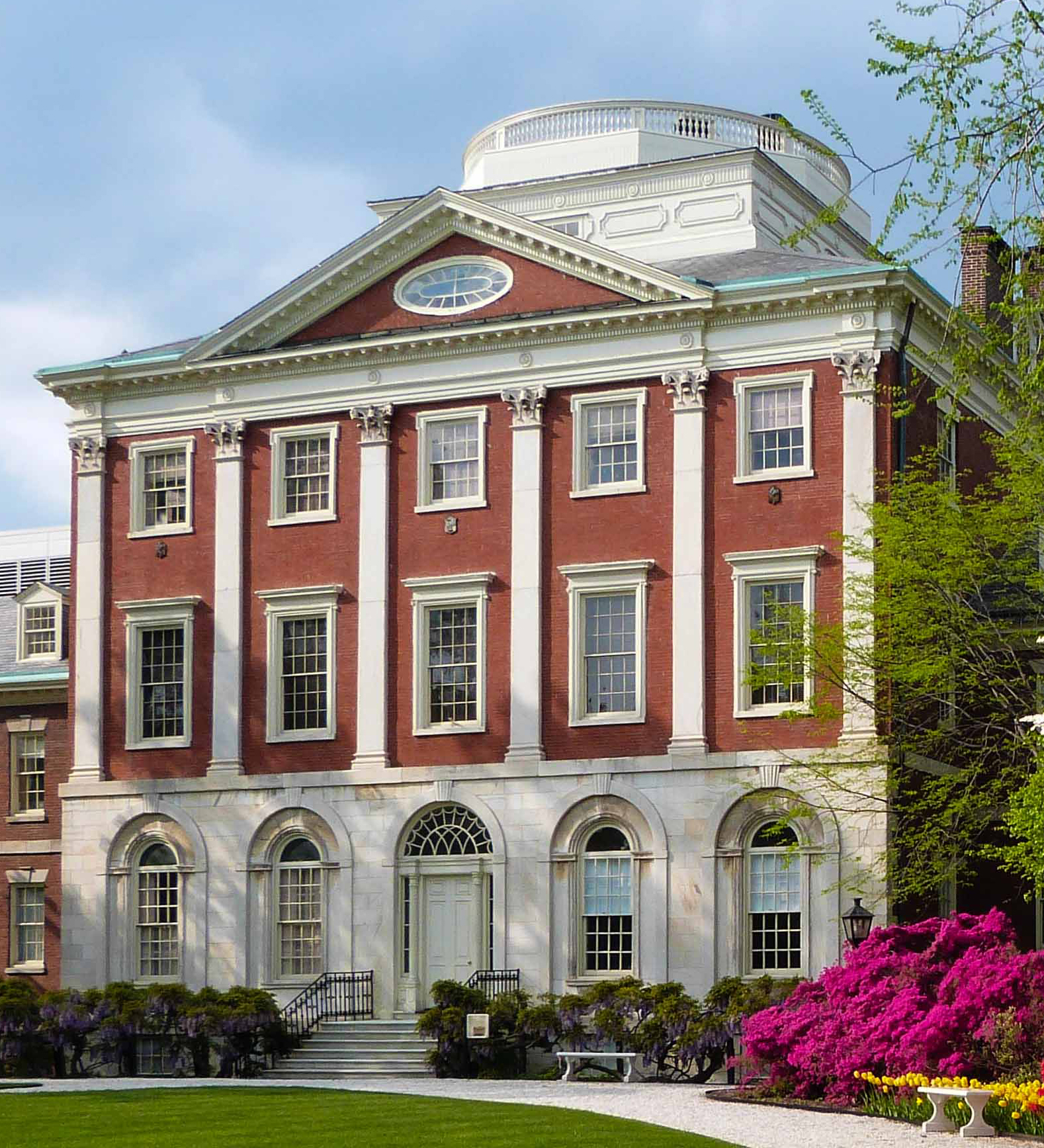
As one gets older one tends to spend an inordinate amount of time visiting hospitals. Ours is Pennsylvania Hospital, which bills itself as “the first in the nation” and was co-founded by Benjamin Franklin in 1751. The original building was designed in 1754 by Franklin’s friend, Samuel Rhoads (1711-84), a self-taught carpenter/architect. Rhoads, who was later a delegate to the First Continental Congress and would serve as the city’s mayor, laid out two wings connected to a central pavilion. Only the east wing, a sturdy Georgian brick structure, was built before the Revolution. The west wing and the central pavilion, which included a medical library, were completed in 1805 by David Evans, Jr., according to Rhoads’s general design but in a more refined Adamesque Federal style. While the delicate facade of the entrance pavilion features prominently in the hospital’s literature, the actual entrance is elsewhere, via a banal addition built in the 1970s. No cupolas, no basketweave brickwork or carefully proportioned windows, instead a concrete canopy and a “just the fact ma’am” interior of low suspended ceilings, more like a Days Inn than a civic landmark. Over the last two centuries, while medical expertise has grown remarkably, architectural ambition, not to mention competence,
THE PAST AND THE FUTURE
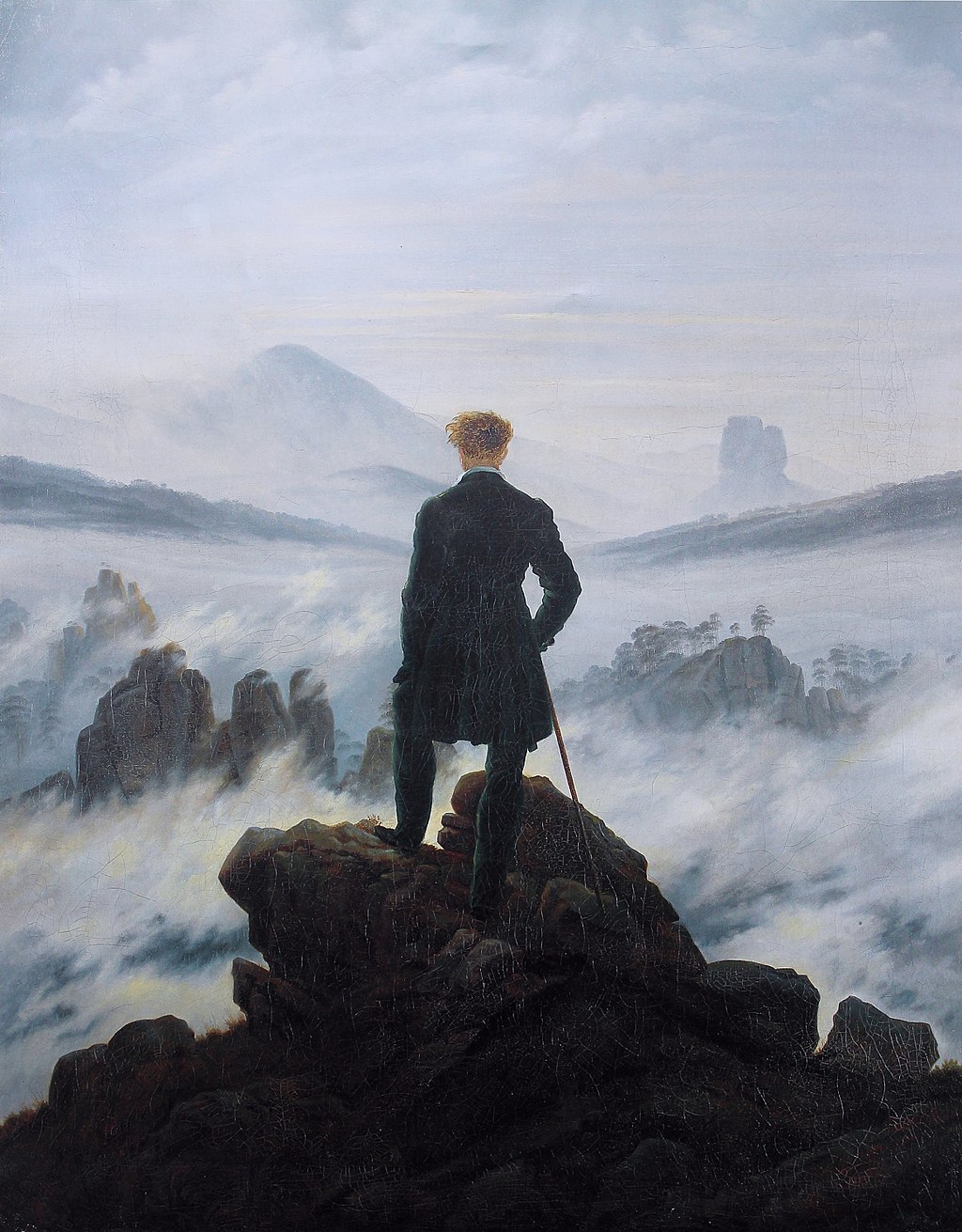
I was listening to a podcast of “The Remnant” the other day, on which Jonah Goldberg made the observation that while political conservatives have usually gotten their ideals from the past, progressives have looked to the future. It struck me how much this applied to the history of architecture. Architecture has traditionally been conservative, not only because buildings were expensive and had to last a long time, but also because clients—the monarchy, the Church, and the merchant class—were conservative. For centuries, architectural ideals were rooted in ancient Greece, Rome, and the Middle Ages. This began to change at the end of the nineteenth century, as evidenced by the Art Nouveau movement, and was later fully realized by the utopian ideals of Russian constructivism and German modernism. Goldberg noted that while the danger for the conservative position is the attraction of nostalgia, it is precisley the draw of utopianism that is the danger for the progressive left. This is particularly dangerous for architecture because while past experience can provide a solid foundation for the art of building, the idealized future is unknown—and unknowable.
URBAN DISCONTINUITIES
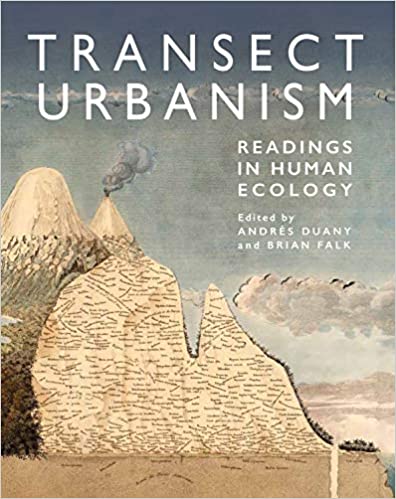
Transect Urbanism is a collection of essays that describe a seminal idea of the New Urbanism movement. The concept is roughly based on observations made by Alexander von Humboldt, a nineteenth-century Prussian naturalist and Patrick Geddes, a twentieth-century Scottish biologist. Geddes was a pioneering urban planner and his Valley Section drawing of 1909 was the basis for a theory postulated by Andrés Duany a century later. Duany’s Rural-to-Urban Transect describes a smooth continuum of six zones—Natural, Rural, Sub-Urban, General Urban, Urban Center, Urban Core—from less to more dense, and from less to more urbanized. Perhaps it is the exception that proves the rule, but what strikes me is that many of my most memorable urban experiences have been the result of roughness rather than smoothness, of odd juxtapositions: the escarpment and ocean beach next to downtown Santa Monica, and Copacabana Beach in Rio; Mount Royal in the middle of downtown Montreal, and the Acropolis in Athens; the quais along the Seine in Paris, and the view of sculls and sailboats on the Charles River in Cambridge. Walking along Fifth Avenue beside Central Park and looking over a low stone wall at a large chunk of the bucolic Adirondacks you experience the Transect’s Zone T1 (Natural) and T6 (Urban Core) simultaneously.
POST-MODERNIST
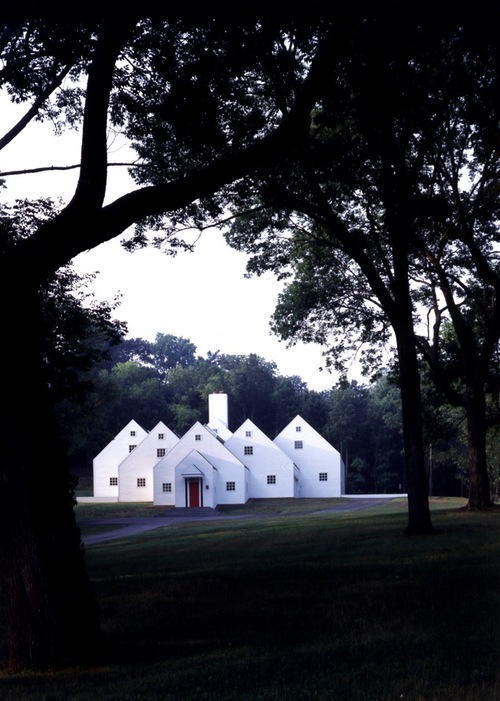
The headline in Hugh Newell Jacobsen’s obituary in the New York Times describes him as a “famed modernist.” Famed he was, especially as the designer of exquisite high-end houses, but to call him a modernist is inaccurate. He was, rather, a post-modernist. That other post-modern master, James Stirling, was critical of mainstream modernism. “The language itself was so reductive that only exceptional people could design modern buildings in a way that was interesting,” he said.“It got stuck and it will have to unstick itself to move one.” Stirling’s unsticking involved broadening the language by introducing historicist motifs and color. Jacobsen (1929-2021) did it by combining minimalist modern interiors with traditional domestic forms (pitched roofs) and vernacular materials (clapboard). Unlike many modernists, he was not averse to symmetry and axes. The forms and materials depended on the location: coastal Maine, Nantucket, the Florida Panhandle. His houses always look at home in their sites. They also have another quality. A large house by a true modernist like Richard Meier can remind me of an upscale clinic; a Jacobsen house always looks—and feels—like a home.
NEW BLOOD
I recently came across an article in The Architect’s Newspaper titled “The future of our profession depends on diversity.” The author argues that the architectural profession needs to take specific steps to increase diversity. “The architecture profession runs the risk of becoming irrelevant if we do not adapt and create pathways for minorities to enter and lead the profession,” he writes. Received wisdom, but is it true? Or, rather, hasn’t it always been true? When I studied architecture in the 1960s, there were no women in my class, no blacks, and no aboriginal Canadians. But we were a mixed group: five immigrants (two from Hong Kong, two from Europe, one from Jamaica), four Jewish Montrealers, three Anglo Canadians, one French Canadian, one Italian Canadian, one Yugoslav Canadian. Our teachers were likewise international: two Brits, a Pole, a Hungarian, in addition to a scattering of Anglo Canadians. Architecture, at least in Montreal, had always benefitted from diversity. The school of architecture that I attended was founded by Scots, and their Arts and Crafts sensibility (as opposed to the Beaux-Arts background of many U.S. schools) was part of its tradition. I never saw architecture as a closed profession.
IN MEMORIAM
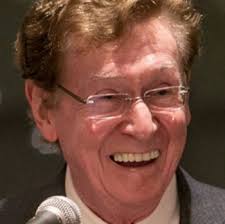
Ten years ago I joined the jury of the Driehaus Prize for Classical Architecture. I came to know Richard H. Driehaus (1942-2021) as padrone of the prize and as a munificent host on my periodic trips to Chicago. But his passing this week touched me in an unexpected way—I had lost a friend. Like anyone who met him, I was impressed by his curiosity and intelligence. And by his generosity. Over the years I occasionally sent him pieces of my writing that I thought would interest him—and everything interested him: people, buildings, art, cars. I once introduced him to a public gathering as a true son of the great Daniel Burnham. Like Burnham, Richard never made small plans, and like him he leaves a large legacy, not only in his native Chicago, but around the world.