
THE OLD RULES
The Louis Kahn/I. M. Pei generation of architects were modernists who had dispensed with many of the previously essential aspects of architecture such as ornament, but they still believed in buildings ordered by rules, especially the old rules of geometry, symmetry, centering, axes, and so on. That didn’t mean that they didn’t diverge from those rules—in Pei’s case quite often—but when they they did so they were always aware of the break and compensated in some way. That seems to be what is missing in current architecture. There are no rules, broken or unbroken, which too often results in mere confusion.
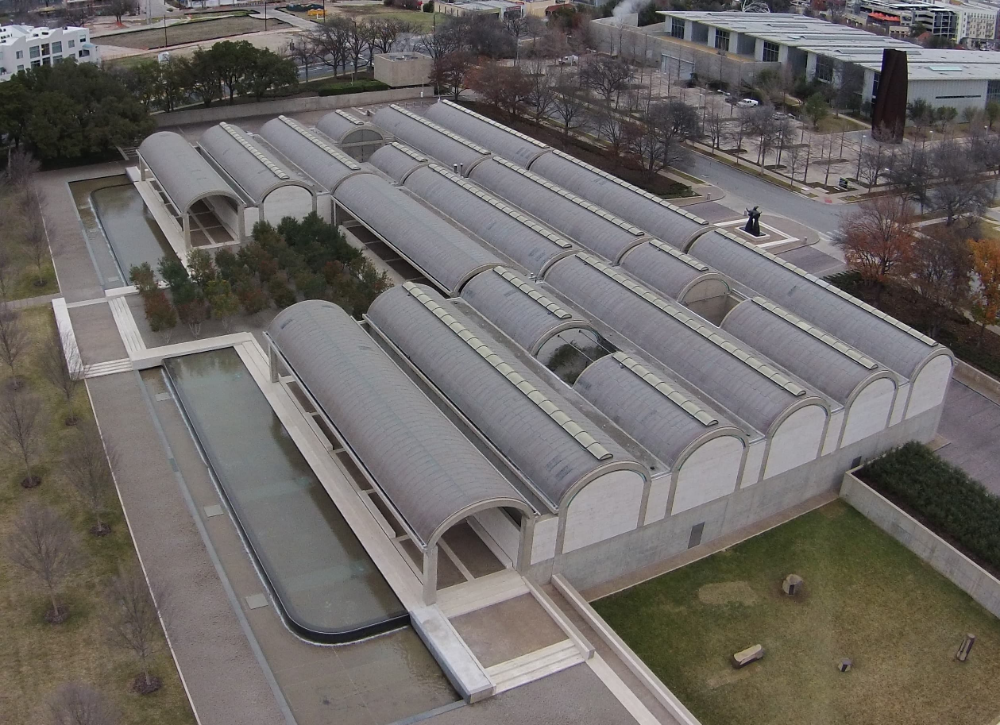
Another old rule is that the exterior of a building should prepare you for what happens on the interior. The tripartite façade of a Gothic cathedral, for example, signals the presence of the nave and side aisles. The vaulted porches on the exterior of Kahn’s Kimbell Museum (above) prepare us for the vaulted galleries of the interior. Similarly, the angled exterior of Pei’s East Wing of the National Gallery, despite the symmetrical entrance portico, anticipates the interior. In other words, the experience of a building is conditioned not only by what we see but also by what we remember.
HOW BIG?
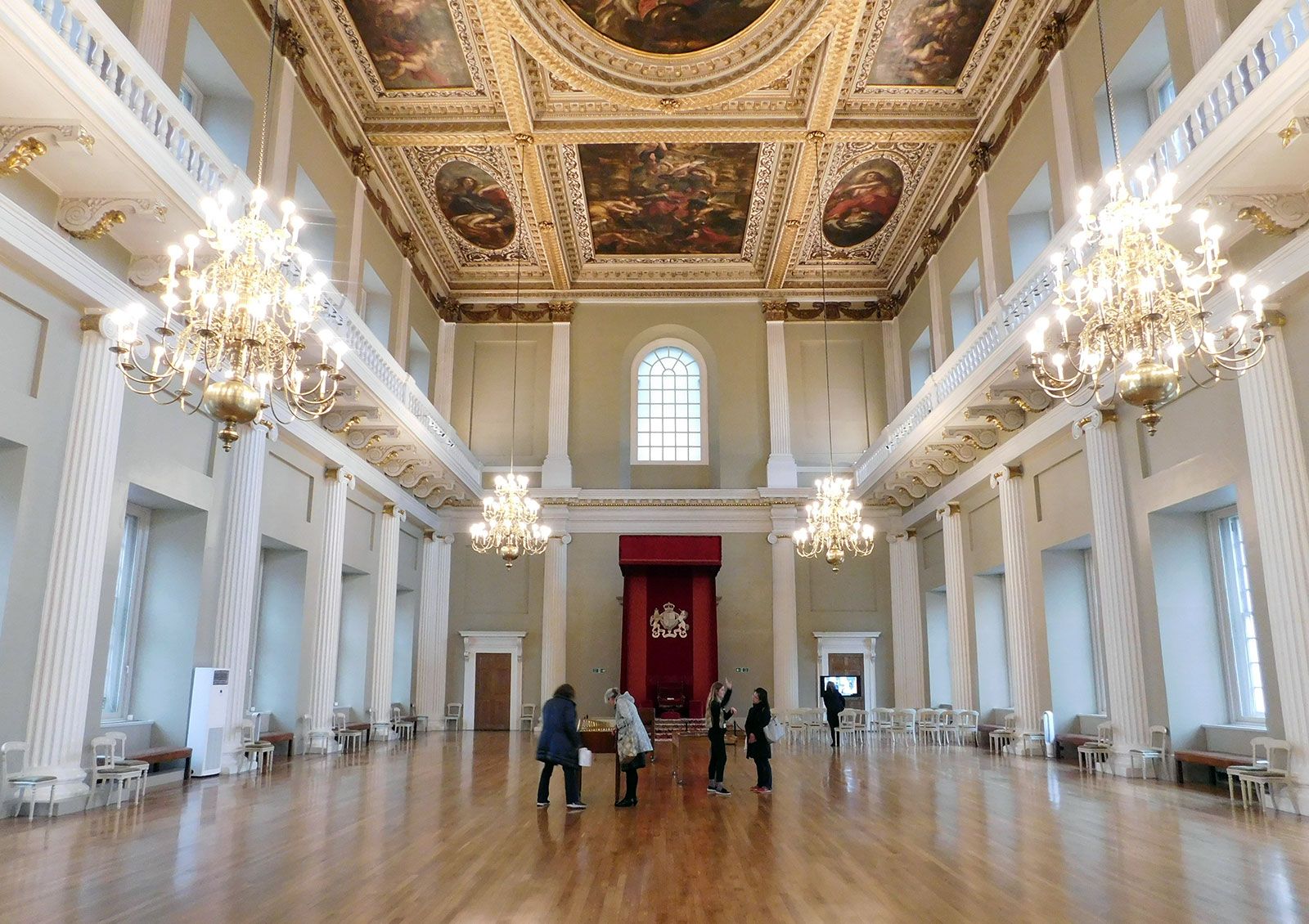
The State Dining Room of the White House seats only 140, in crowded but charming intimacy, the small size adding to the atmosphere of exclusivity. Still the idea that a larger banqueting hall would be a useful alternative to outdoor tents on the South Lawn strikes me as a sensible proposal. The challenge is to balance the need for seating capacity with the need for an appropriate size that suits its setting. Three times larger than the State Dining Room would be the capacity of Inigo Jones’s beautiful Banqueting House in London (above). The proposed White House ballroom (it is really a banqueting hall) was initially to have a capacity five times as large (600), but has grown to more than eight times as large (1,000). It is pretty obvious from the architect’s models that this is too big, and overwhelms the main residence in both height and footprint. My guess is that anything exceeding 600 seats would be too large for its setting. And what if rather than using the usual formula for calculating banquet seating in a hotel ballroom, the density were the same as the present State Dining Room? That would produce a hall with a footprint of approximately 65 feet by 130 feet.
A WRECKING BALL TOO FAR
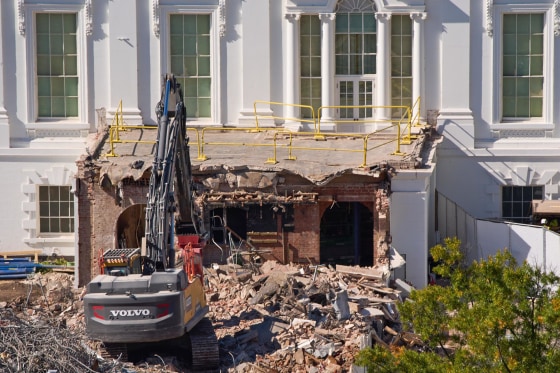
Jonah Goldberg has an interesting podcast on the current imbroglio over the demolition of the White House East Wing. The East Wing was built by Theodore Roosevelt in 1902, expanded by FDR in 1942 (partly to conceal an air raid shelter), and further enlarged by Richard Nixon, so this is not really about preserving history. Goldberg maintains that the demolition is important not because of the hysterical reaction of so much of the media and of the left in general, but rather because of the effect that the images of demolition have on the public in general. People always stop and stare when they pass by a demolition site. It is not a happy stare because there is something sad at a deep human level about seeing a building, any building, being pulled down. A building can be an object of affection. Even if it’s not a work of fancy architecture just everyday shelter, it’s doing its job, keeping the rain off, keeping us safe. This is all the more so in the case of a national icon, whose function is not only practical but also symbolic. I think that’s what people find unsettling. Tariffs can go up and then down,
WHAT KIND OF CLASSIC?
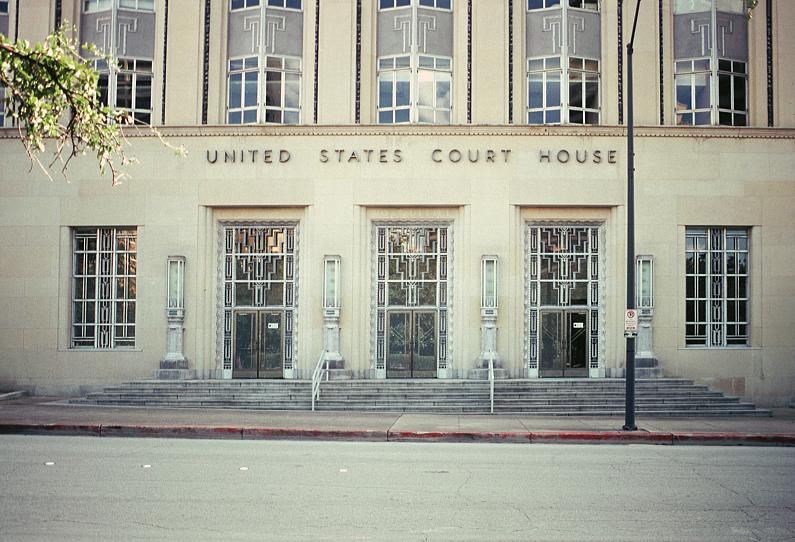
Well, it’s the law, at least for now. The executive order concerning the use of classical and traditional styles in federal buildings was signed on August 28, 2025. The intent is unequivocal, for example: “In the District of Columbia, classical architecture shall be the preferred and default architecture for federal public buildings absent exceptional factors necessitating another kind of architecture.” But what kind of classical? That remains to be seen. It could be the somewhat archaeological classical of Charles McKim, who is mentioned in the order, or the stripped classical of Paul Cret, who is not. (Cret’s 1933 Ft. Worth courthouse is pictured above.) Or the inventive classical of Bertram Goodhue, who described his design of the American Academy of Sciences Building as “God knows what kind of Classic.” Or perhaps a reinvented classical; is there an Inigo Jones, an Edwin Lutyens, or a Jože Plečnik waiting to be discovered? That might be asking too much. Still, as Adam Gopnik observes is an otherwise sternly censorious article in a recent New Yorker, “If, indeed, all federal buildings were to be done in the manner of nineteenth-century courthouses—well, worse things are happening.”
WHAT NOT TO DO
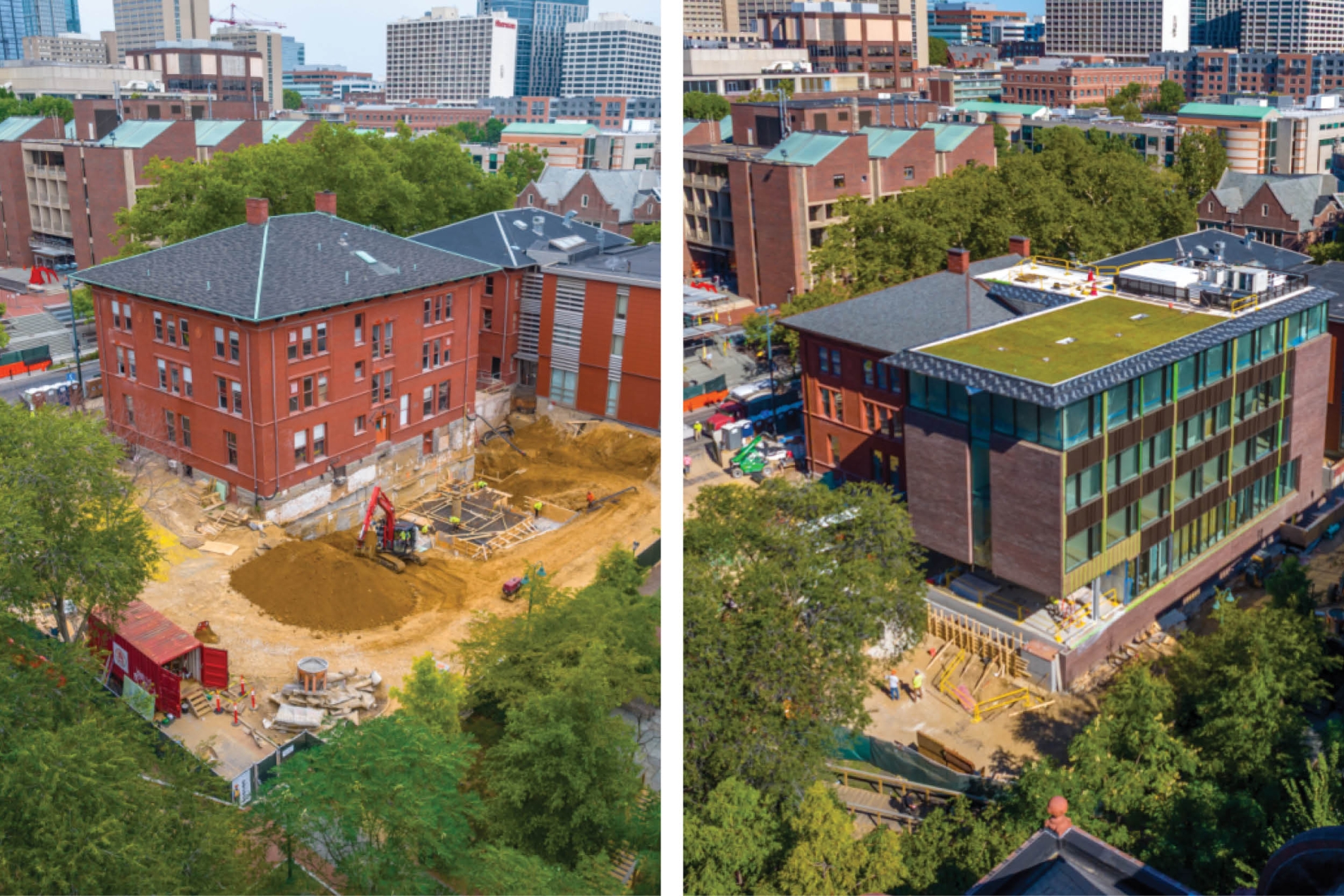
Recent architecture from KieranTimberlake at the University of Pennsylvania. It’s hard to imagine a more awkward addition to a nice old building (Cope & Stewardson, 1892). The height, roof form, curtain wall, brick color—all clash, and not in a good way. And the obligatory green roof doesn’t make up for it. What were they thinking?
THE FED BUILDS
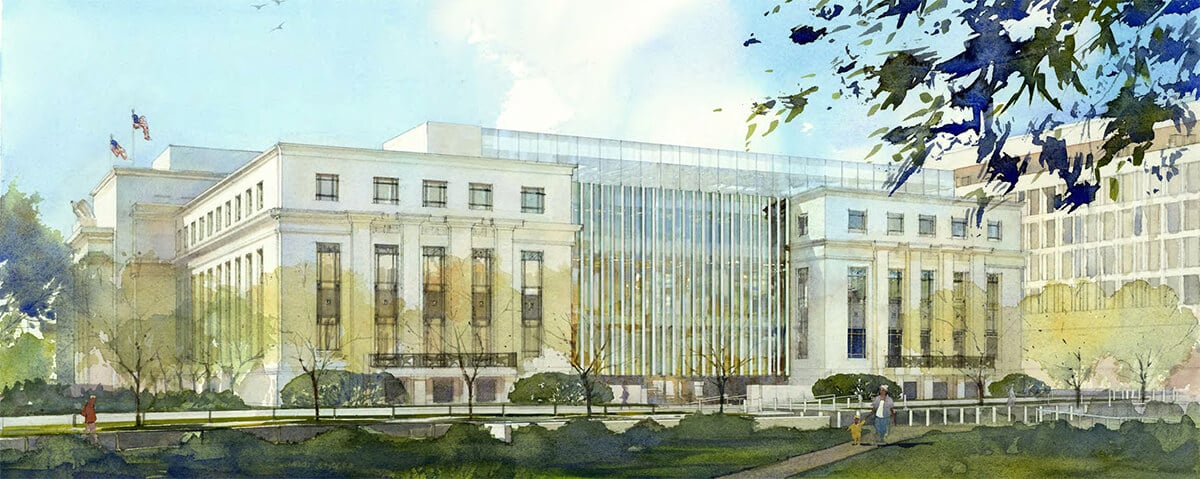
Although the media frequently describes the building project that the Federal Reserve is undertaking at its Washington, DC headquarters, the Marriner S. Eccles Building, as a “renovation,” it is much more than that. When Paul Cret designed the building in the mid-1930s, he used an H-shaped plan to ensure daylight in all the offices. The current project fills in those two spaces with glass-roofed atria. The external view (above) shows the clumsy mating of Cret’s marble facades with a steel-and-glass curtain wall. Quel dommage!