THROWAWAY ARCHITECTURE

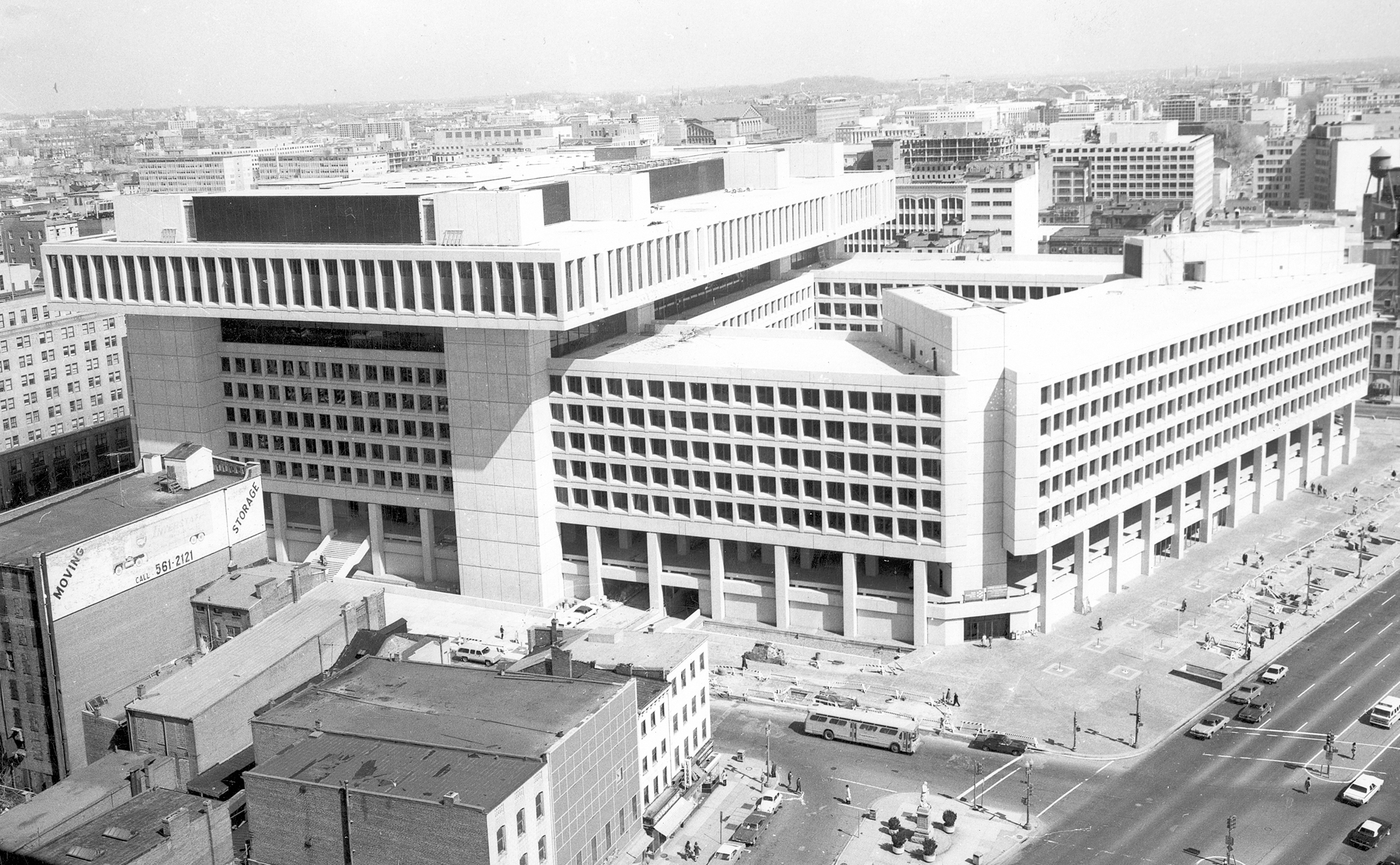
hooverbuiling1The federal government is looking for a developer to build a new suburban home for the FBI. The old FBI headquarters on Pennsylvania Avenue in Washington, DC is offered in exchange. A 41-year-old public building is going on the block. Admittedly the FBI headquarters (designed in 1975 by Charles F. Murphy & Associates) is an eyesore and won’t be missed (assuming it’s torn down, which seems to be its likely fate). But only 41 years! Washington is full of buildings that are two and three times as old. The first federal office building, the venerable Patent Office,

Read more

SPLENDID LOCATECTURE

B3G4f6lIcAAUkvnMessyNessyChic, a blog about libraries and books, recently featured the old Cincinnati Main Library, built in 1874 and demolished in 1955, less than a century later. The period photographs show a building of subtlety and sophistication. The four-story facade on downtown’s Vine Street is pragmatically built up to the sidewalk (like Chicago’s Harold T. Washington Library), and gives nothing away about the extraordinary space within. It is a “room full of books” what better image for a library than that? The architect was James W. McLaughlin (1834-1923). Born in the city, he apprenticed with a prominent local architect,

Read more

CITY OF TOWERS

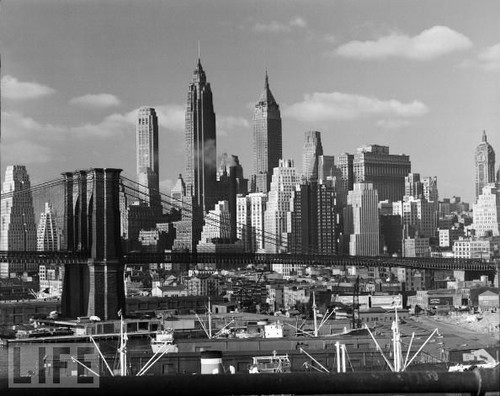
black,,,white,fourties,new,york,skyline-16bd1ca2f6129d450b03b959aa0e59a4_hThere was a Q and A after my Landmark West! lecture on New York’s Upper West Side. One person wanted to know what I thought about the exceptionally tall residential towers that are radically changing Midtown’s skyline. One57, Christian de Portzamparc’s skinny 75-story condominium, under construction on West 57th Street is an example. I’ve written about this new trend. The current phenomenon is a function of globalization and real estate, and has little to do with  architecture. But, then, that was always the case with Manhattan. As late as the 1940s, the high-rise real estate development projects of numerous entrepreneurs produced a memorable skyline: animated,

Read more

THE EVER-PRESENT PAST

I am speaking at an architectural conference in Charleston. The participants are architects who design custom houses, and many of the presentations highlght the difference between traditional and modern design, since so many custom houses fall into the first category. At one point, a member of the audience (somewhat impatiently) points out that if this were a meeting of fashion designers, or industrial designers, the distinction would not arise; the implication is that we would be discussing only “the latest thing.” Of course, I thought to myself, that’s because fashion and consumer products are so fleeting. There is no tradition of the laptop;

Read more

STAMPS

OstenI collected stamps as a boy. Mostly I was imitating my father. He collected only Polish stamps, and his collection begins with the outbreak of the Second World War. The earliest stamp is postmarked “Warszawa 1940.” It is not Polish but German, and bears the stern countenance of Paul von Hindenburg. The stamp is overprinted Osten, meaning East, that is, occupied Poland. My father’s collection includes poignant stamps issued by the provisional Polish government in London, as well as military stamps of the Polish II Corps in Italy, where he served in the SOE.

Read more

NOIR TOWER

doodle-810-ivory-towerIn a New York Times op-ed on the failed political career of Michael Ignatieff, the intellectual who had a short-lived stint as leader of  Canada’s Liberal party, David Brooks argues that academics are ill-suited to be politicians.“In academia, you are rewarded for candor, intellectual rigor and a willingness to follow an idea to its logical conclusion,” he writes. “In politics, all of these traits are ruinous.” Candor, intellectual rigor? This rosy view of the academic world is obviously that of an outsider, for academia is rife with obfuscation and intellectual fashions—and with politics. Teachers woo the electorate (the students),

Read more

GOOD FOOTBALL, SLOW TRAINS

I am not a football fan, but I inevitably watch the end of games on many a Sunday evening, waiting for CBS to broadcast 60 Minutes. It is a brutal, plodding game, the players marching the ball up and down the field, a yard at a time, with the occasional flurry of a long pass or a field goal. A game of armored might, the players resembling Roman centurions, with little of the finesse and speed of basketball or hockey. Nevertheless, I’m always impressed by the power and energy of the football business—the players and coaches,

Read more

BE IT EVER SO HUMBLE

The Atlantic’s website “Cities” argues that some urbanist buzzwords should be retired, including placemaking, gentrification, and smart growth. A good proposal, even if the Atlantic is itself responsible for the proliferation of many the self-same buzzwords—the website is subtitled “Place Matters.” Buzzwords are everywhere. Trouble in the Iraq war—what we need is a surge. No sooner did Obamacare falter than we learned that there were navigators, who would fix the problem. The right buzzword comes first; reality will follow.

Read more