

IKE MEMORIAL

The Eisenhower Memorial is slowly edging towards realization as the GSA has recently hired a construction company to begin work. Now a major change is revealed. The long mesh screen in front of the Education Building originally carried a photographic image of the Kansas prairie (Ike’s birthplace). This was later changed to another image, the landscape around Omaha Beach, one of the landing sites of the WWII Normandy invasion of which Eisenhower was Supreme Commander. Neither image was particularly striking, or for that matter, particularly recognizable. In any case, I’ve always thought that photography was the wrong inspiration for what Gehry insisted on calling a “tapestry.” A block-long photographic image doesn’t make me think of a Gobelin,
 The Canadian design mag, Azure, ran a
 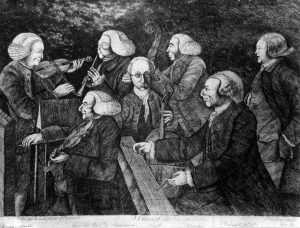 This week the short list was announced for London’s new Center for Music, which will be the future home of the London Symphony Orchestra and the Guildhall School of Music and Drama. The usual suspects include Frank Gehry, Renzo Piano, Norman Foster, and Snøhetta. Traditionalists need not apply; that’s a shame. Léon Krier has recently
  The other day I read in
 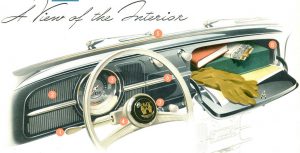 My first car was a Volkswagen. It was a 1960 model bought in Hamburg in 1967, and it carried me without a hitch as far as Valencia (which is where it was stolen, but that’s another story). I’d never driven a VW before, but the simple controls required no advance knowledge. The only gauge was a large speedometer that included an odometer, turn indicators, and two (unidentified) warning lights, one for oil pressure and one for the alternator/generator. A third warning light lit up when the gas tank was empty, which required flipping a switch to access the reserve tank (about a gallon,
 According to a