
STREETSCAPE
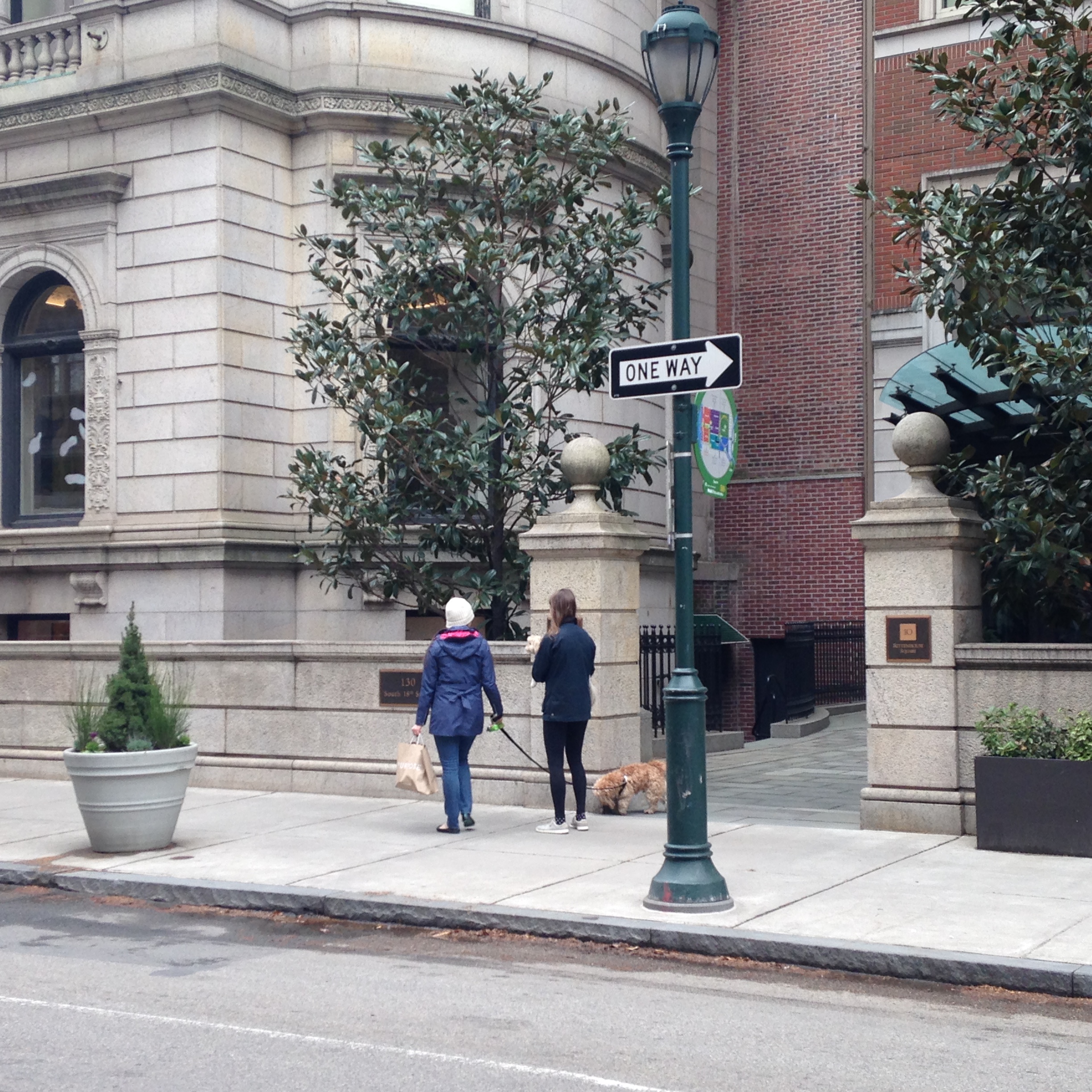
Passing the entrance to 10 Rittenhouse Square on 18th Street in Philadelphia today I was caught up short. Robert A. M. Stern Architects, who designed the 33-story apartment tower, have done something cunning. The entrance to the tower is distinctly low key, a simple break in a low stone wall, flanked by two piers topped by stone balls. Beyond the break, a short path leads to a glass marquee over the front door. It was the wall that interested me. 10 Rittenhouse Square’s immediate neighbor is the Fell-Van Rensselaer mansion, designed in 1898 by the great Boston firm, Peabody & Stearns. The Indiana limestone exterior is rather grand. The new limestone wall, which significantly overlaps the two properties, gives the impression that it was originally a part of the mansion. Thus the entrance to number 10 becomes integrated with its older neighbor, despite the fact that the apartment tower itself is brick, not limestone, and does not exhibit similar architectural features. A very nice detail.
INTUITION
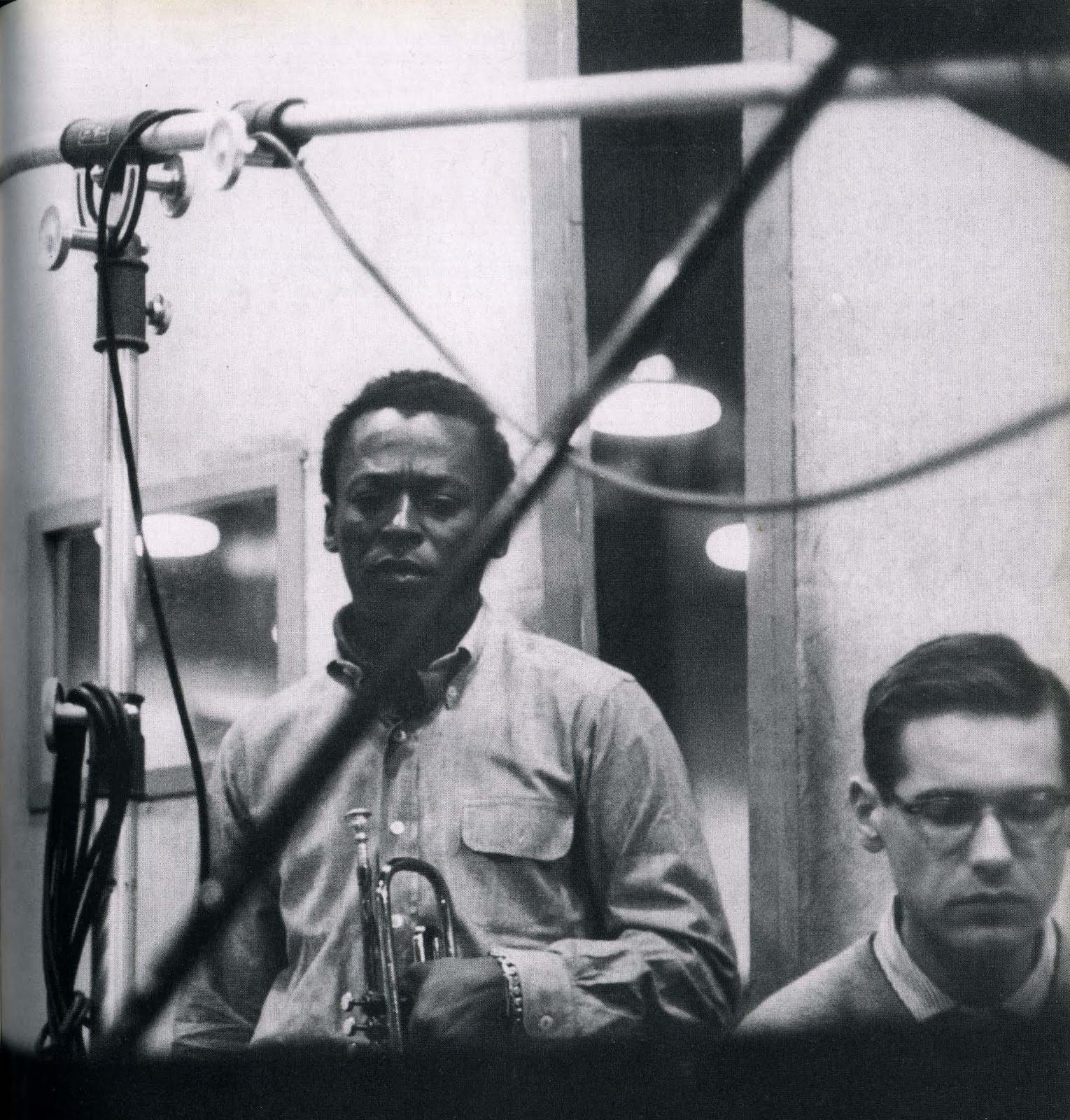
“Intuition has to lead knowledge, but it can’t be out there on its own,” said Bill Evans. “If its on its own, you’re going to flounder sooner or later.” He was speaking to Marian McPartland during a 1979 appearance on her NPR show, Piano Jazz. Evans was talking about the need to respect the basic structures of music, but it struck me that what he said applies equally to architecture. Especially today. Intuition seems to drive design; having set aside knowledge, that is, history, architects are winging it. And, yes, there is much floundering.
Photo: Bill Evans and Miles Davis, late 1950s.

WE WILL NEVER FORGET
Petula Dvorzak of the Washington Post called me recently and asked me what I thought of a memorial to the victims of school shootings. I’m not keen on the current fashion for memorializing victims, which has became an almost knee-jerk response to any calamity. In my own city, Philadelphia, only a few blocks from where I live, a memorial is under construction. The 125-foot by 25-foot memorial park will commemorate the six people who were killed on June 5, 2013, when a slipshod demolition resulted in a building collapsing on top of a Salvation Army thrift store. A tragedy for those concerned, no doubt, but does it really warrant a memorial? I am sympathetic to the temporary memorials that relatives and friends of victims place after shootings and traffic accidents. These fulfill an important immediate function, especially for those mourning, and their temporariness is part of their character. But formal memorials are forever. We remember soldiers’ sacrifice in war memorials, or those who gave their lives in the line of duty. I’m not sure that the innocent victims of muggings—or school shootings—are in the same category. Surely a simple plaque would be more appropriate?

BARBARIANS AT THE GATE
The New Yorker waxes emotional—and rather sappy—about the Philadelphia Eagles parade. The article doesn’t describe the suburban Golden Horde that descended on the center of the city. Hardly two to three million as was cheerfully forecast, but still a very large crowd. Or, rather, a mob. Somehow being part of a large group releases inhibitions. We won, we can do what we like! Throw our bottles and beer cans where we like, go where we like, piss where we like. And for some reason, climb up whatever we like. Slate monitored a police scanner: “On the southeast corner the pole is about to collapse. There are about 40 of them on there . . . We have a light pole down. On the east side of Macy’s corner. We have live wires . . . A man jumped off the light pole and landed on his head.” Late in the afternoon I saw the crowd returning to catch trains at Thirtieth Street Station. Some were carrying street signs and Stop signs, booty to decorate a basement rec room. The next day the city was almost back to normal—the clean-up will take a bit longer.
OFF THE TRACK
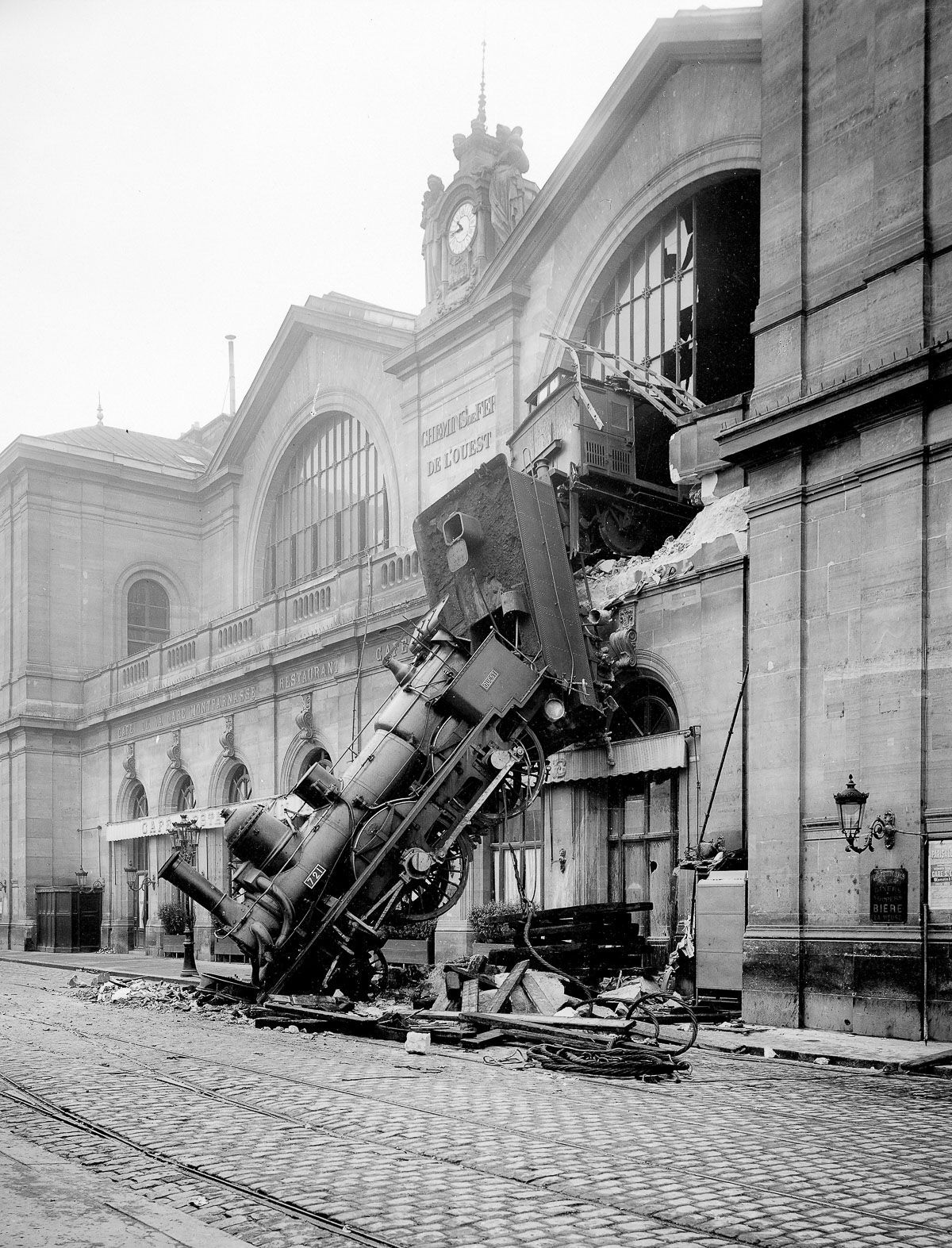
“I cannot think of anything more ludicrous than the idea that modernism somehow got off the track and was a monstrous mistake that should simply be canceled out,” wrote Ada Louis Huxtable in The Unreal America. “Revolutions in life and technology can never be reversed.” The last statement is demonstrably untrue—just ask the Russians, the East Europeans, the Cambodians, and the Chinese. Turning back the modernist clock admittedly will be difficult, but the idea that modernism was a monstrous mistake seems to me anything but risible. The suggestion that an industrial age required a different sort of architecture was hardly unreasonable. As Ralph Adams Cram wrote in 1936, it would have been as foolish to look to history for models for new building types such as garages, cinemas, and skyscrapers, as it would be to design “a Greek railroad train, a Byzantine motor car, a Gothic battleship or a Renaissance airplane.” But Cram insisted that it was equally irrational to radically re-imagine buildings such as homes, college dorms, or places of worship, whose function was unaffected by industrialization. His argument fell on deaf ears. Revolutions require simple slogans and wholesale change, and so we got houses that resembled machines,
NOT GOOD ENOUGH
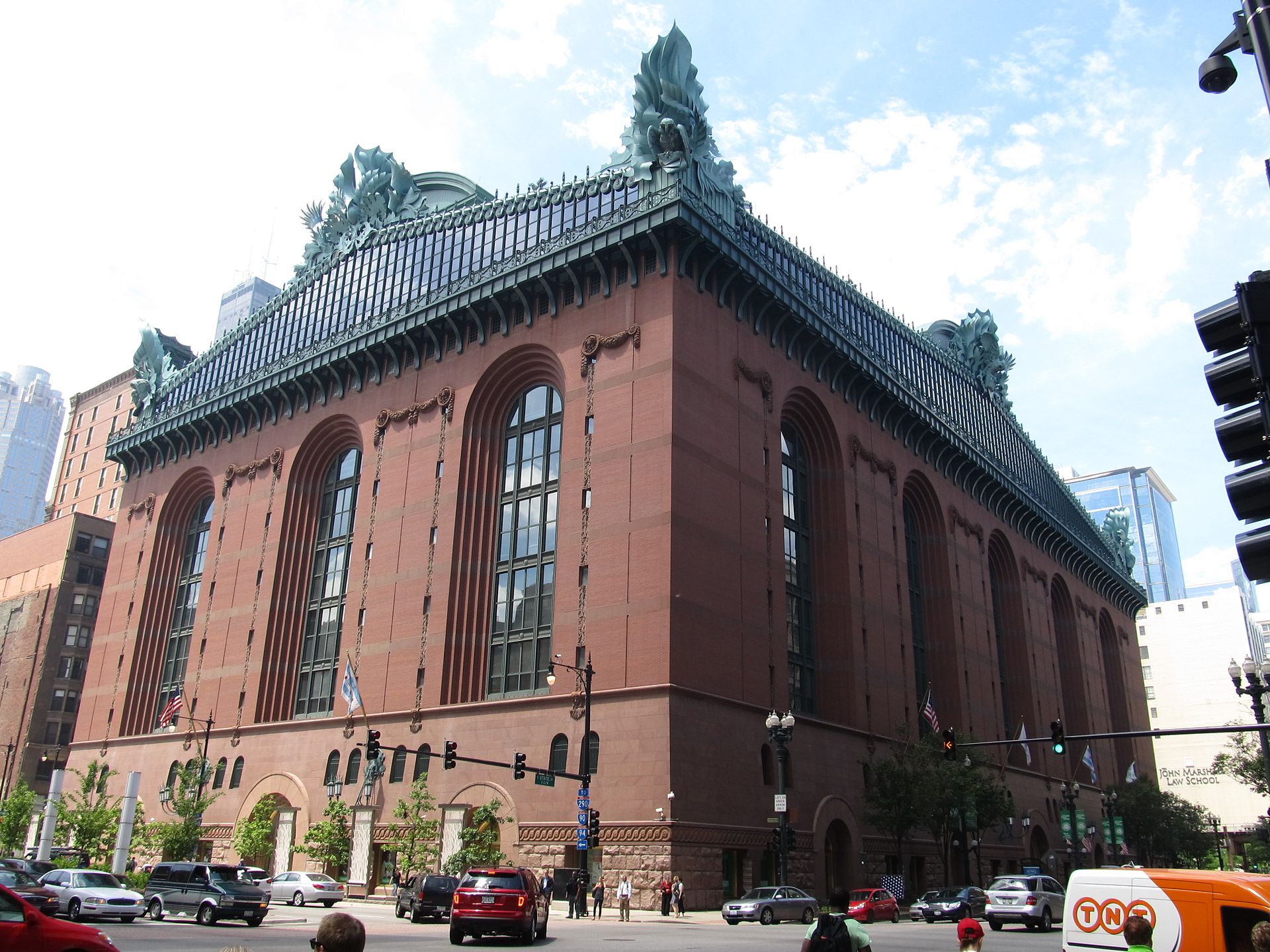
Ever since 1969, the American Institute of architects has bestowed a Twenty-Five Year Award that recognizes a “design of enduring significance.” The only exception was in 1970, when no building was found to merit such recognition. And now in 2018 the same. According to the AIA, “Unfortunately, this year the jury did not find a submission that it felt achieved twenty-five years of exceptional aesthetic and cultural relevance while also representing the timelessness and positive impact the profession aspires to achieve.” Really? No building in the 1983-93 window is good enough? Well, perhaps not Philip Johnson and John Burgee’s AT&T Building (1984), or the Beverly Hills Civic Center (1990) by Charles Moore, but Michael Graves’s Humana Building (1985) in Louisville merits an award, surely more so than Pietro Belluschi’s Equitable Savings & Loan Building in Portland (which won in 1982), or I. M. Pei and Partner’s Hancock Tower in Boston (which won in 2011). And what about Hammond, Beeby & Babka’s Harold Washington Library Center (1991) in Chicago, or Venturi Scott Brown’s Sainsbury Wing (1991) in London, considered by many, including the author, to be that firm’s finest work? In 1971, the award was given to Baldwin Hills Village in LA,