THE REAL THING
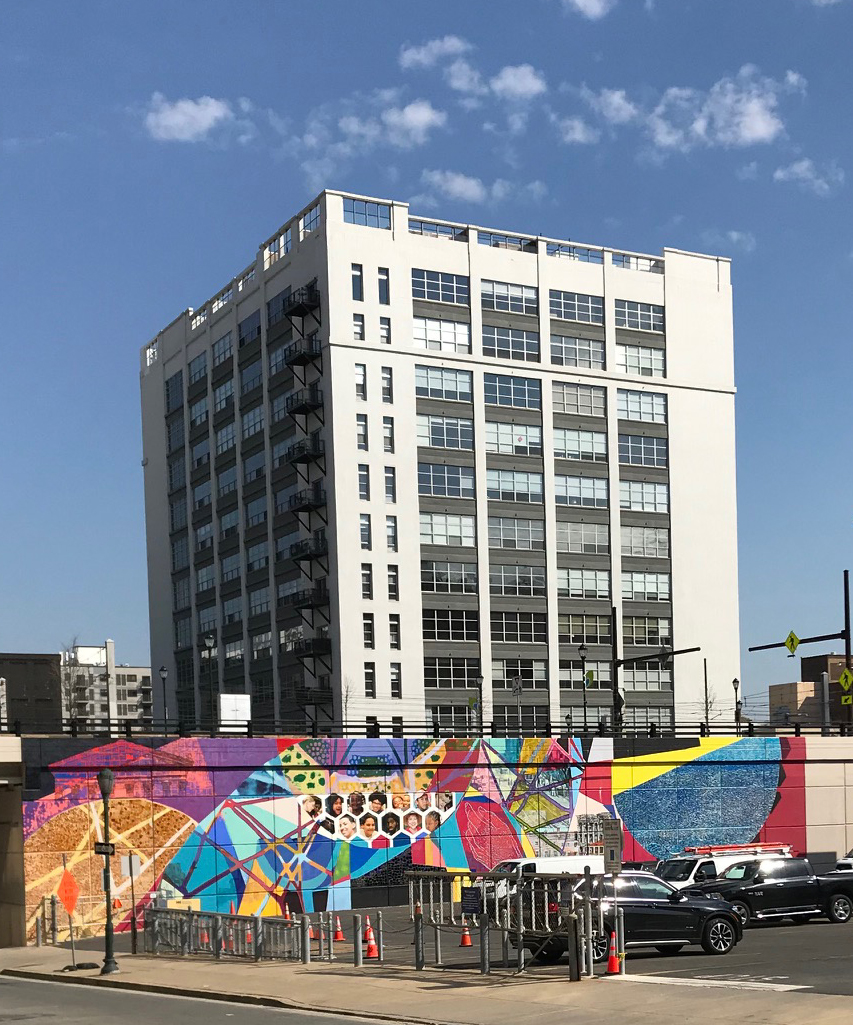
My wife and I live in a downtown Philadelphia loft in the Larkin Building, a 12-story industrial building built in 1912-13. The builder was the Larkin Company, which a decade earlier had hired Frank Lloyd Wright to build its headquarters building in Buffalo, N.Y. Our building was designed by a lesser light. C. J. Heckman was a Buffalo-based architect about whom the internet provides no information at all. Was he the Larkin house architect, or did he simply specialize in industrial buildings, the lowest rung on the practitioner’s ladder? Perhaps the latter, because our building is a very early example of reinforced concrete construction, a 20 by 20-foot grid of mushroom columns. The building originally contained showrooms on the first floor, offices on the second, and manufacturing and warehouse floors above. Mundane uses, but in small ways Heckman gave the building some real refinement. He designed the windows to emphasize the 20-foot structural grid. As architects had been doing since ancient Greek times, he beefed up the corners. He treated the lower two floors as a “base” and introduced an external molding that turned the upper two floors—ever so subtly—into an attic (the original building had a prominent cornice, long since gone).
HATS
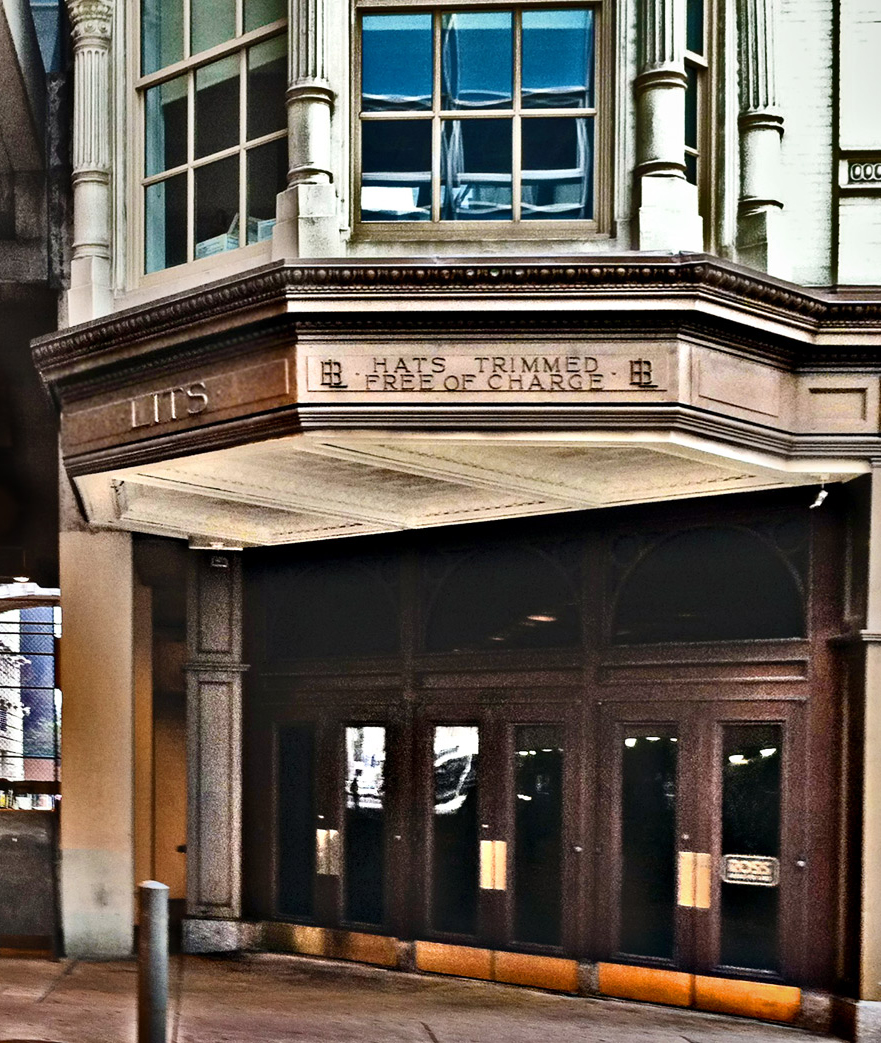
The old Lit Brothers department store (built and expanded between 1859 and 1918) on Philadelphia’s Market Street has a sign over one of its corner entrances, that has always puzzled me. HATS TRIMMED FREE OF CHARGE is embossed into the metal fascia of the canopy. It’s the only such sign. But whose hats, men or women? Did it refer to a hat bought in the store, or was it—as I suspected—an enticement to walk in and get your hat “trimmed,” whatever that meant? And why was this procedure so important—and so common—that it had to be emblazoned over the store entrance? The Internet has many references to the sign, but I couldn’t find an explanation. The closest I got was an article on how Stetson hats were made (John B. Stetson, a native of New Jersey, not Texas, established his factory in Philadelphia in 1865). The original Stetsons were made out of felt composed of beaver fur. The last step in the manufacturing process was to sand the blocked felt to remove excess hairs. Did such felt hats require periodic sanding and “trimming.” Perhaps.

ROADBLOCKS
The pandemic lockdown has turned me into a podcast listener. One of my favorites is GLOP Culture, with Jonah Goldberg, Rob Long, and John Podhoretz. In a recent conversation about woke bullying at the New York Times and Slate, Long made an interesting observation. There are too many wannabe journalists chasing too few jobs. What if wokeness is simply an expression of careerism, the young finding a way to make room for themselves by pushing out the old? A recent wokey article in Architect magazine, the official journal of the AIA, approvingly describes the dean of the Princeton school of architecture characterizing professional licensure as “a gargantuan roadblock to a racially and otherwise diverse and equitable field.” Since architecture is a zero-sum game—if you get the job then I don’t—I’m not sure what “equitable” means. In any case, the architectural profession needs more roadblocks, not fewer. I once asked a colleague at the Wharton School why his MBA grads earned two or three times more than my architecture students who had actually spent a year longer in graduate school. “Your guys actually like what they do,
CONVICTION
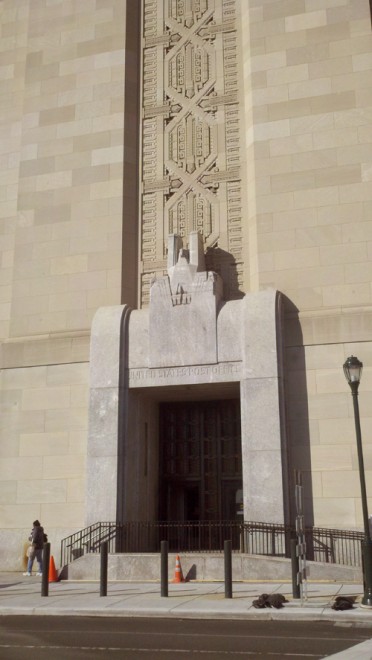
I’ve come to the conclusion that what I value most in architectural work, apart from skill and competence, is conviction. That is why I appreciate the work of Louis Kahn and his teacher Paul Cret equally, because while their work is quite different, it’s executed with a strong sense of purpose. Absent that, architecture risks becoming merely a weak-kneed copy-book reproduction, whether it is modernist or classicist. There is nothing weak-kneed about one of my favorite Philadelphia buildings, the Main Branch of the U.S. Post Office on Market and Thirtieth Street (today it houses the IRS). It was built in 1931-35 and designed by the leading local firm of Rankin & Kellogg. John Hall Rankin was a graduate of MIT and Thomas M. Kellogg had attended MIT and apprenticed with McKim, Mead & White. They formed a partnership in 1891 and acquired a national reputation after winning competitions for several prominent federal buildings. The Post Office, which covers a city block, is a five-story steel frame building clad in Indiana limestone. The flat roof was designed as a landing pad for autogyros that brought air mail from nearby airports in Camden and Philadelphia. The overall composition of the building is Beaux-Arts classicist but the style is Art Deco combined with pre-Columbian Inca motifs.
THE AFTER TIME
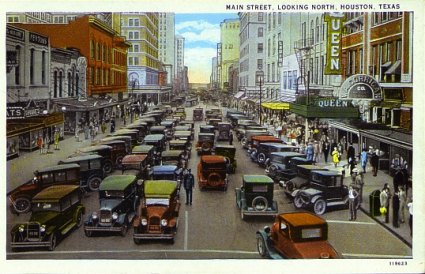
A lot has been written about the effect of Covid-19 and the associated year-long shutdown, on cities. The present situation is dispiriting: so many of the amenities that attracted people to cities in the first place—theaters, museums, ball parks, restaurants, bars—are either closed or half-closed. Too many businesses have gone out of business. Municipal tax revenue is down; municipal social costs are up. Commuting is down; crime is up. Tourism—a number one industry in many cities—is down; homelessness is up. Most urban commentators have reverted to their priors. Advocates of decentralization see a further shift to suburban living; digital seers see more work at home; downtown advocates say not to worry, it will all come back. Will it? Peggy Noonan’s contrarian column in the Wall Street Journal makes for sobering reading. “You can know something yet not fully absorb it. I think that’s happened with the pandemic. It is a year now since it settled into America and brought such damage—half a million dead, a nation in lockdown, a catastrophe for public schools. We keep saying ‘the pandemic changed everything,’ but I’m not sure we understand the words we’re saying.”
REMEMBERING
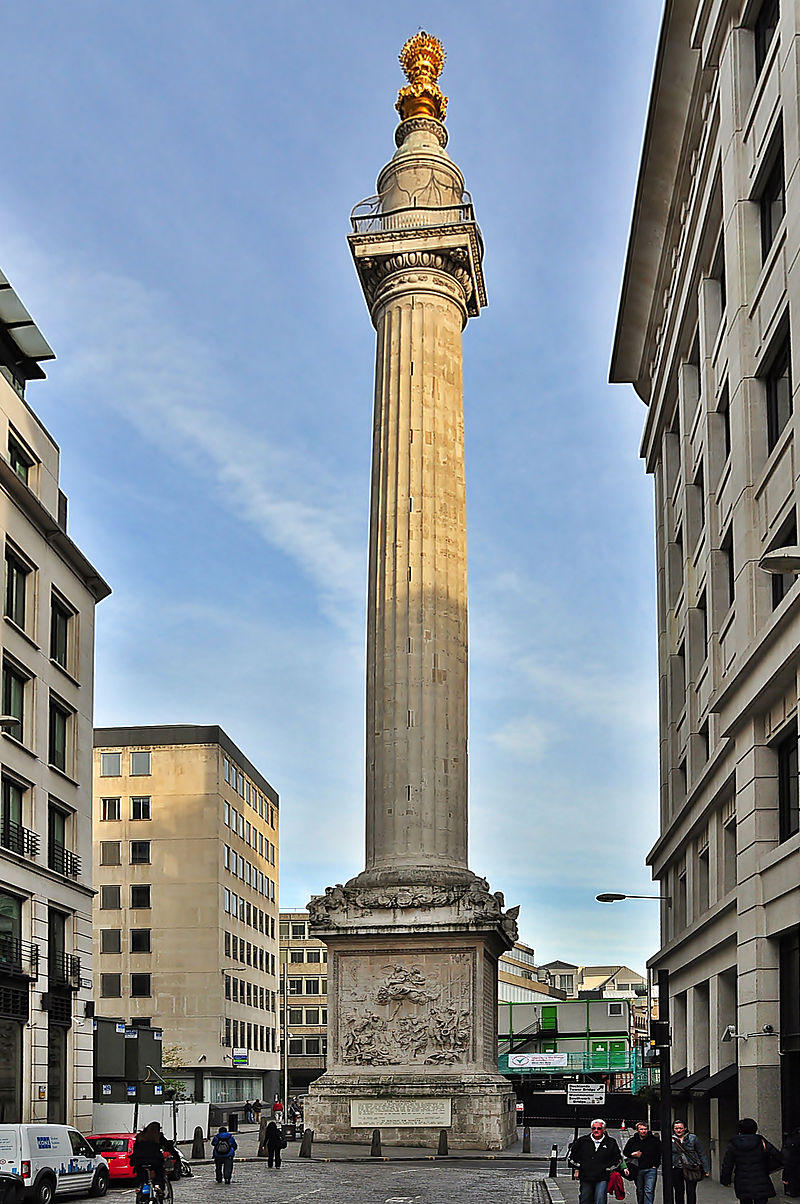
“By convention, we erect most of our monuments to salute the heroic spirit, or acknowledge acts of sacrifice of statue-genic soldiers, police, and firefighters or illustrate national ideals, such as the Statue of Liberty or the Gateway Arch,” writes Jack Shafer in Politico, in an article that argues that we are unlikely to erect a monument to commemorate the victims of the Covid-19 pandemic. He is right, at least historically—there is no monument to the great influenza pandemic of 1918-19, although the recent trend, demonstrated by the 9/11 Memorial in Lower Manhattan, is to commemorate individual victims. Shafer reasonably suggests that a statue saluting the medical scientists who created the vaccines would be appropriate, but the year-long (and is it over?) pandemic has touched the lives of millions and deserves commemoration. The Monument to the Great Fire of London comes to mind. It was begun in 1666, five years after event. Although the death toll was small, the homes of ninety percent of Londoners were destroyed as well as numerous important buildings, including Saint Paul’s Cathedral. The Doric column, topped by an urn of fire, was designed by Christopher Wren. It was erected near the place where the fire began,