
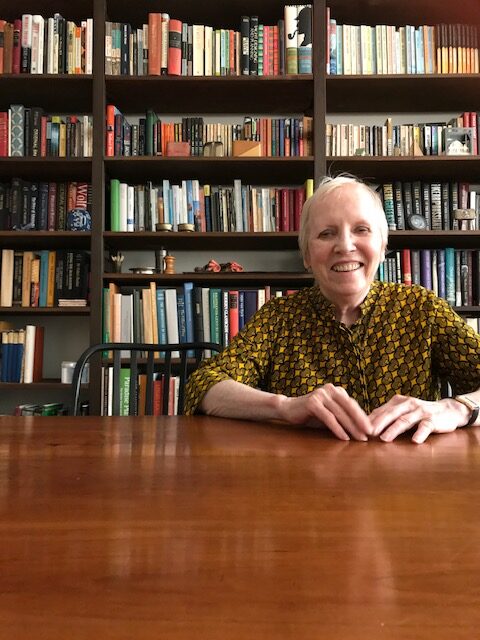
SHIRLEY GLORIA
This morning at two o’clock, my wife Shirley died peacefully in her sleep. She’d been at home under hospice care for six weeks after an acute failure of her mitral heart valve. She was very brave and put up with the indignities of bed-care with good humor and without complaint, or at least without too much. Willful as always, one of her last acts was to turn down a medication I was offering her. She must have known she no longer needed it. It was a long goodbye and her death was hardly unexpected. I shan’t say “I’ll miss her”; how can you miss someone who remains an integral part of you? We had been married almost fifty years—I can no longer tell where she stops and I begin, and vice versa. During the last weeks she wanted no music in the house. Now Casals and Bach comfort me.
An afterthought: The worst thing about death is its finality. The door is closed. There is no rewind or edit. Whatever was was, for all time.
And another: The advantage of hospice care is that you get to die on your own terms. In Shirley’s case that meant serious introspection,
DRESS AND DECOR
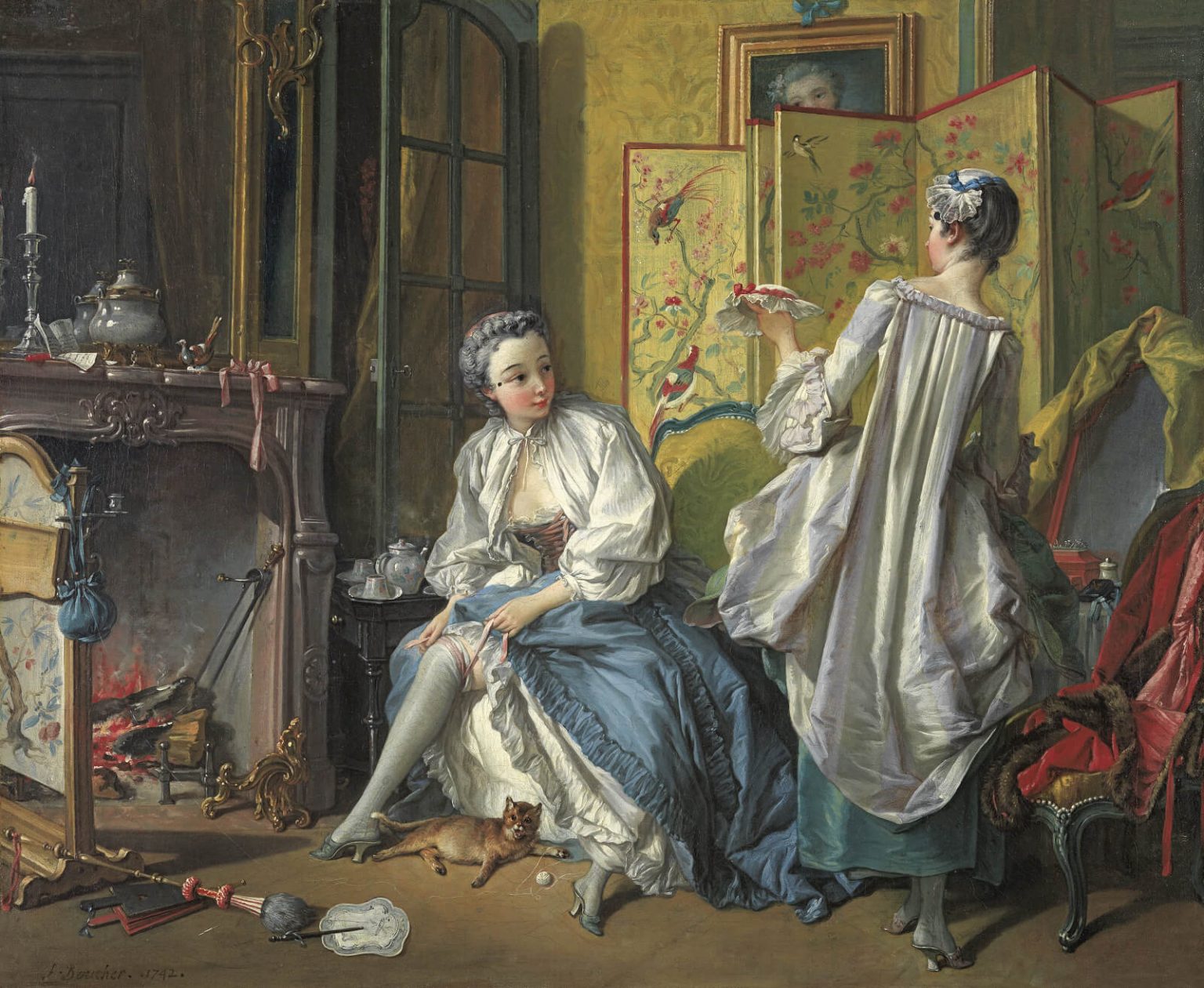
I recently wrote an essay for the catalog of the Polish pavilion at the London Design Biennale 2021. The theme of the exhibit of handwoven textiles was “The Clothed Home,” and the title of my essay was “Dress and Decor.” I think I first made this connection when I was writing Home, and looking at paintings of interiors. François Boucher’s enchanting “La Toilette,” painted in 1742 and currently hanging in the Museo Nacional Thyssen-Bornemisza of Madrid, was one of these. I was struck with how the dress of the two women, and the materials of the decor—the Chinese folding screen, the silk wallpaper, the upholstery of the slipper chair, even the moldings of the fireplace mantel—were visually all of a piece. This was not simply a painterly conceit. Dress and the decor used similar fabrics and techniques, and more important, they were governed by the same Taste. Boucher painted during the period we call Rococo, but a similar concordance occurred in later periods: Art Nouveau, Arts and Crafts, Art Deco, the early Modern Movement, and so on. In other words, we have always dressed ourselves and then decorated—dressed—our homes to suit.
ARCHITECTURE AND ART
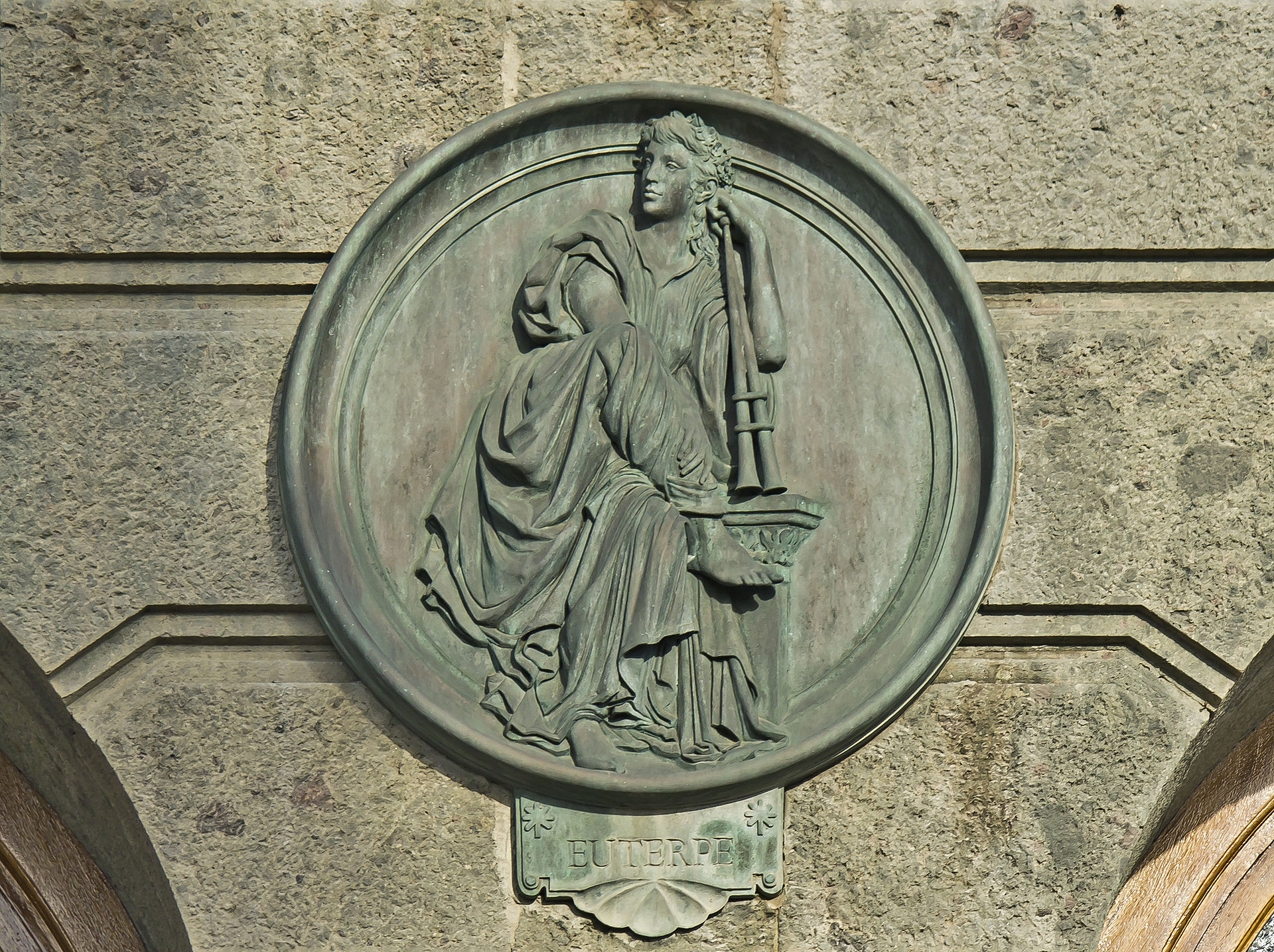
Several weeks ago I was interviewed by Carolyn Stewart for American Purpose. One of her questions was: “Are there any overlooked aspects of classical architecture – whether an element of design, function, or ethos – that deserve to be rediscovered in the current moment?” That reminded me of President Trump’s recent executive order promoting the classical style for federal buildings, subsequently withdrawn by the Biden administration. The idea that we should learn from the past raised the ire of many at the time, but yesterday’s buildings do offer real lessons. One concerns the presence of art, a long tradition in architecture. Can you imagine the facade of Notre-Dame without the sculptural figures, or Palladio’s Villa Barbaro without Veronese’s frescoes and Marcantonio Barbaro’s facade decorations? Or, to cite a more recent example, Raymond Hood’s RCA Building in Rockefeller Center without Lee Lawrie’s evocative bas-reliefs. In the name of renouncing the past—and denouncing anything that smacks of decoration—modernism has largely done away with art, the lonely Henry Moore stranded on a plaza, notwithstanding. The problem is that when you strip away figural and allegorical ornament, what is left are mute building materials, mechanical-looking details, and abstract space. Sigfried Giedion extolled the virtues of pure space,
COUNTERFACTUAL
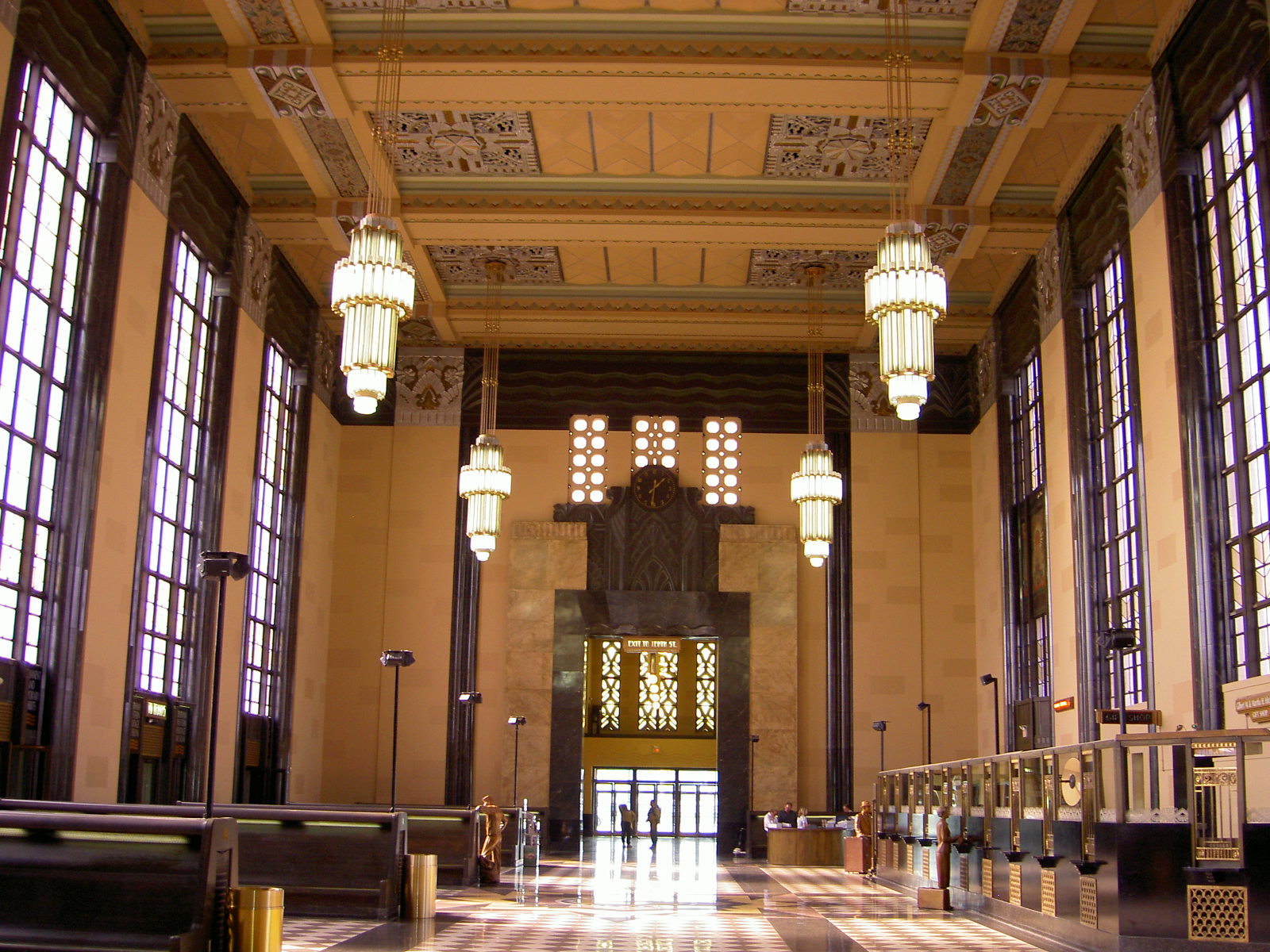
Architectural history is sometimes recounted as if it evolved autonomously, architects attacking and solving architectural problems largely of their own devising. But because buildings are large, complicated, and expensive, architecture is subject—more than other arts—to outside forces, economic, political, social. Here’s a historical counterfactual. What if the Depression and the Second World War hadn’t happened? What if construction hadn’t been halted for more than a decade and the American modernist movement of the Twenties and Thirties that produced the Empire State Building and Rockefeller Center, the Folger Shakespeare Library and the Walter Reed Naval Medical Center, Omaha’s Union Station and Los Angeles City Hall, had not abruptly been halted but had blossomed further instead? What if Mies van der Rohe and Walter Gropius had stayed in Germany, and remained avant-garde outsiders, entering competitions rather than building? The story of architecture would have taken a very different turn.
Photo: Union Station, Omaha. Gilbert Stanley Underwood, arch. (1931)
THE WRECKER’S BALL
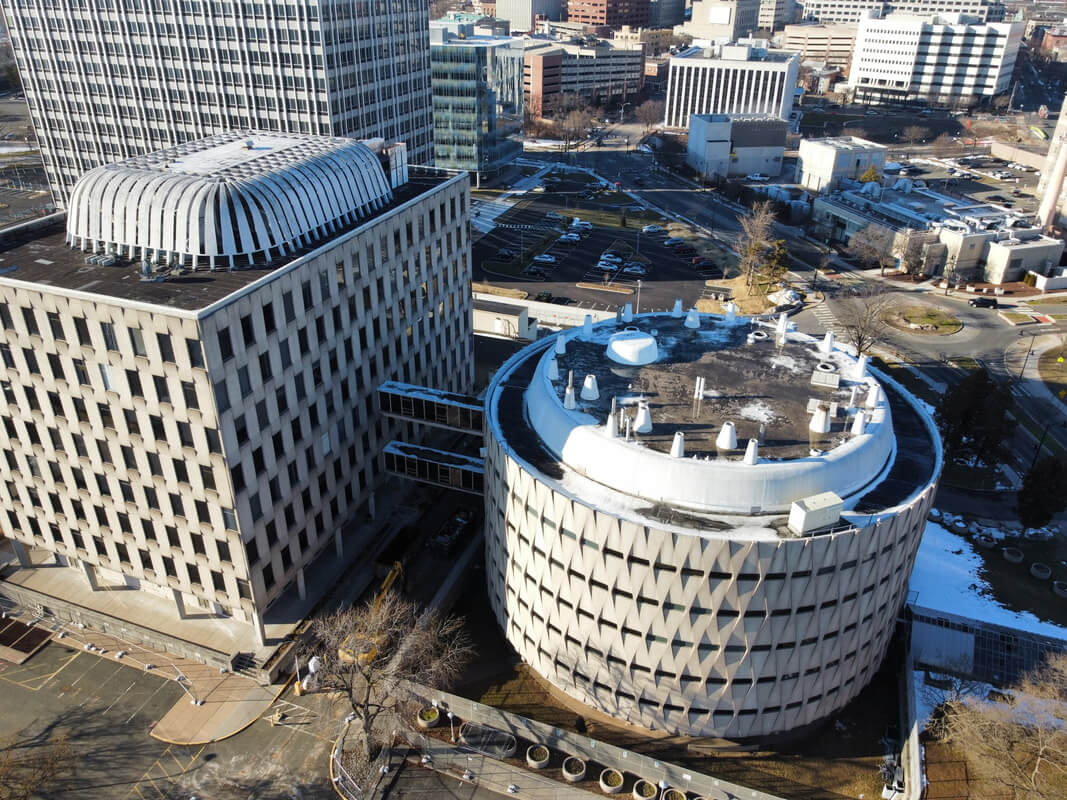
The Architect’s Newspaper reports that two “historic Brutalist” buildings in Trenton, N.J. are in the process of being demolished. The early 1960s buildings, which housed offices and labs of the state government, are the work of Alfred and Jane West Clauss, both partners in Clauss & Nolan. The German-born Alfred Clauss (1906-98) worked briefly for Mies on the Barcelona Pavilion and after emigrating to the U.S. he worked for George Howe on the PSFS Building and was one of the Philadelphians whom Howe brought to teach at Yale (Louis Kahn was another). Jane Clauss (1907-2003), born in Minneapolis, worked for Le Corbusier in Paris and met her husband when both were designing wartime housing for the TVA. The Trenton buildings are a cube and a cylinder clad in precast concrete panels. It is not clear what makes them historic. The Antique Automobile Club of America defines an antique car as over 25 years of age, so in that sense perhaps they qualify, and I suppose that like any old building they represent a historical moment. In this case, it was the time when architects turned away from the reductive minimalism of the International Style and began to experiment with facades of modeled concrete.
ART FOR ART’S SAKE
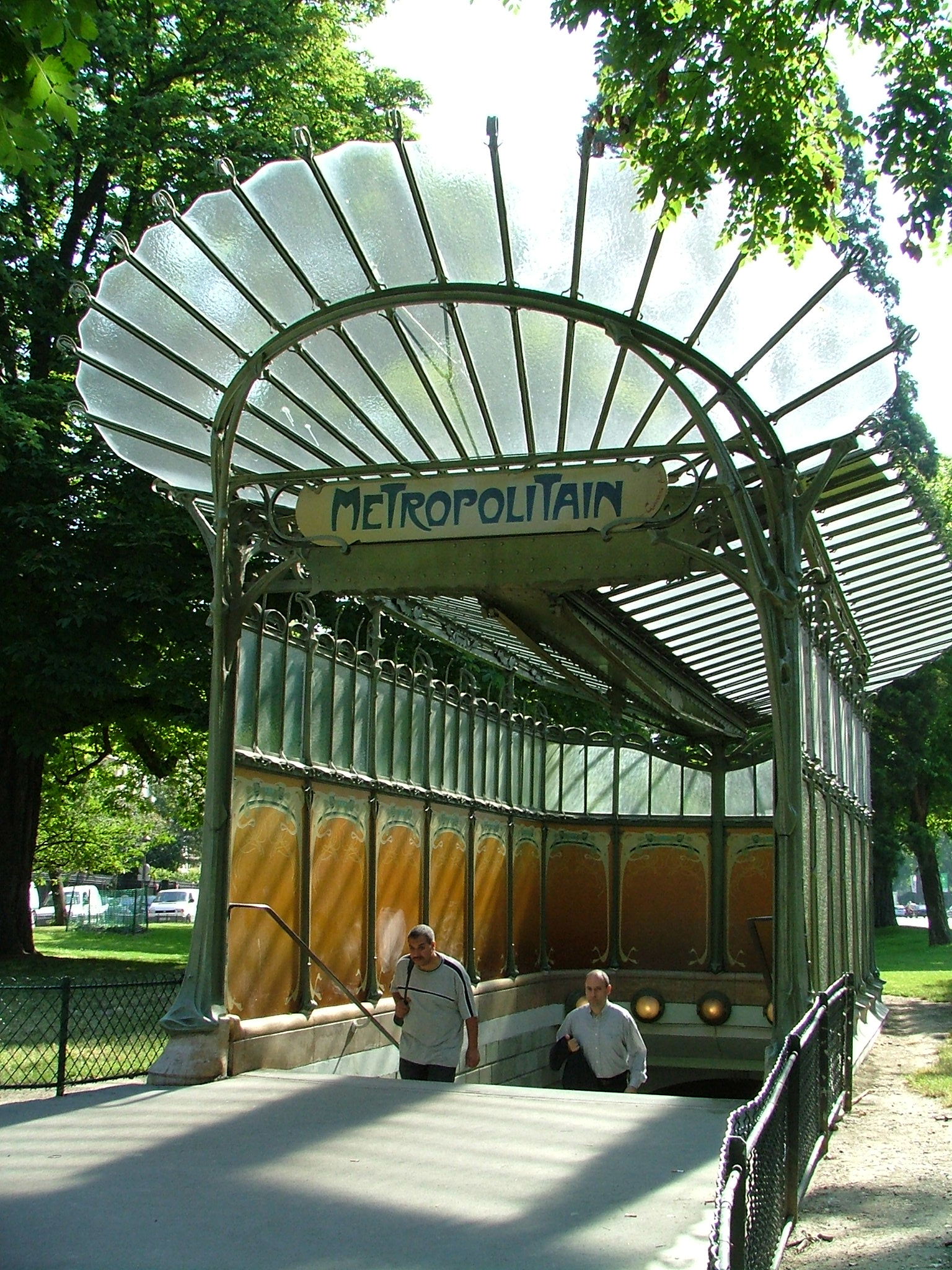
Art Nouveau lasted only a few decades; it appeared around 1890 and came to an end shortly after the First World War. Perhaps for that reason, it is often given short shrift by art historians who see it as a not altogether respectable prelude to modernism. “With novelty [Art Nouveau] must most certainly be connected, and liberty at least in the sense of license is applicable too,” sniffed Nikolaus Pevsner, who called it “suspiciously sophisticated and refined.” He did not explain why sophistication and refinement were disqualifying qualities. “Art Nouveau is outré and directs its appeal to the aesthete, the one who is ready to accept the dangerous tenet of art for art’s sake.” Pevsner wrote that in 1936. Fashions may be transitory but buildings last a long time. Eighty-five years later, art for art’s sake remains widely popular—Hector Guimard’s 1900 Metro stations are a cherished part of the Parisian streetscape—whereas it is the early work of the International Style that is outré, appealing not to the public but to the aesthete. The truth is that architectural movements should not be judged by the duration of their ascendancy, but rather by the duration of their impact on society as a whole.