
Jazz on Trafalgar Square

It’s exactly twenty years since Venturi Scott Brown completed the Sainsbury Wing of the National Gallery in London. After visiting the museum last weekend, I am still impressed. The sheen of newness is gone now, and the architects’ intentions are all the more visible: to make an addition that continues the 1830s building, and is also itself. Venturi explains that the rhythm of the pilasters on the façade is meant to be a jazzy riff on Wilkins’s staid minuet. The sometimes arch mannerist gestures seem a little tired, but the resolute attention to detail and construction (so rare today) remains affecting,
Read more

SoCal Modernism

In a post on Michael Kimmelman’s first architecture review in the New York Times, the New York Observer opined that the architects of the housing project in the South Bronx that Kimmelman referred to are “notable but far from famous architects.” Nicholas Grimshaw not famous? Well, perhaps not in New York City. Grimshaw—Sir Nicholas—has built in Germany, Spain, the Netherlands, and Australia as well as his native Britain. He is part of a generation that includes Michael Hopkins, Ian Ritchie, Eva Jiřičná, Richard Horden, and the late Jan Kaplický who followed in the footsteps of Richard Rogers and Norman Foster (Jiřičná worked for Rogers;

Read more

The Bilbao Anomaly

After the phenomenal success of the Bilbao Guggenheim, the conventional wisdom had it that signature buildings were the way for museums to build attendance. Never mind the collection, the so-called Bilbao Effect would ensure that the public would come. In an age obsessed with marketing, a pithy phrase is all, and nobody bothered to check if eye-catching museum architecture really had this effect. It doesn’t, as the Experience Music Project in Seattle and the Denver Museum of Art showed. It doesn’t even work if you are in Manhattan on busy West 53rd Street, next door to the Museum of Modern Art.

Read more

How Green is My House

Just as the greenest car is not the one with the most energy-conserving gadgets but the one that is on the road the least, the greenest building is not the one with grass on the roof or a rainwater reservoir in the basement, but the one that lasts the longest. So large is the amount of embodied energy in a building, that the best way to get the most out of it is for the building to remain in use a long, long time. By that measure, the greenest house is the U.S. is the Jonathan Fairbanks house in Dedham,

Read more

Lecture Rooms

I have spent many hours of my life teaching in college classrooms. Why are these rooms always so dismal? The worst don’t even have windows. And even when they are spanking new, they inevitably lack a crucial ingredient–architectural character. It is as if their architects, or perhaps it’s the college administrators, had decided that the ideal teaching space had to be neutral, bland, plain vanilla. In fact, the opposite is true. Classrooms should stimulate, not narcotize. I had these thoughts recently as I lectured at the University of Miami school of architecture, whose auditorium is in a building designed several years ago by Leon Krier.

Read more

ABCs

“Those who can, do,” observed George Bernard Shaw. “Those who can’t, teach.” As someone who has spent a lifetime teaching I’ve never warmed to that observation. I was reminded of it the other day when I overheard a remark from an architect colleague, who also happens to be a teacher. “The A-students end up teaching,” he said. “The B-students end up working for the C-students.” Other than the fact that grade inflation has virtually eliminated C-students, his observation accords with my own experience. Two of the three top students in my graduating class ended up as teachers; some of the weakest students,

Read more

Rooftops

My hotel room is on the eleventh floor, looking out over a landscape of downtown rooftops. I am struck by the difference between old and new buildings. The older buildings are crowned by an assortment of pitched roofs, spires, towers, and cupolas. The newer buildings are ingloriously surmounted by—mechanical equipment. In a few cases, the architects have attempted to camouflage the hardware, but these clumsy screens are not much of an improvement. Seen from above, the elevator penthouses, vent stacks, air-conditioning chillers, antennas, and satellite dishes lend the architecture a pathetic air, as if the buildings are so unimportant that anything at all can be dumped on their roofs.

Read more

School


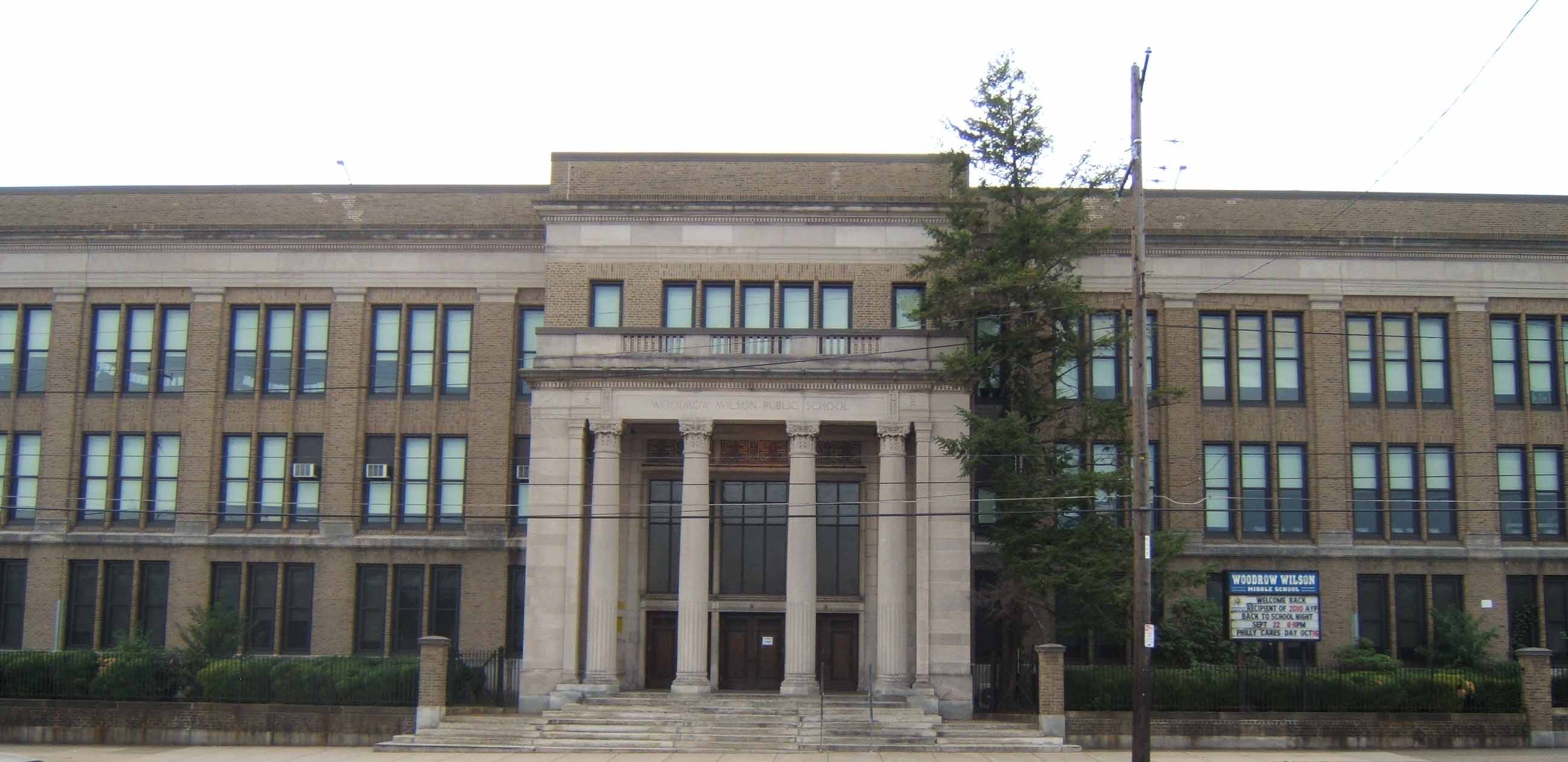
I drove by an old school today in northeast Philadelphia. I recognized immediately that it was a school, even before I read the name inscribed over the entrance: Woodrow Wilson Public School. What an entrance! The four Composite columns of the portico rose fully two stories high, supporting a balcony which I assume was off the principal’s office—or should have been. The wings on both sides stretched out in a regular beat of brick pilasters and tall classroom windows. The school opened in 1928 (Wilson died in 1924). What struck me about the building was not its Classical style and solid construction—that was simply how one built public buildings in those days—but rather the evident status of public education that the architecture conveyed.

Read more