MODELMAKING

Tom Kligerman, of Ike Kligerman Barkley, was showing me his new 3D printer the other day. His firm specializes in high-end houses, mostly though not exclusively traditional in design. Their printer, about the size of a Smart Car, is used to produce iterative study models that are extremely detailed, as if made by a Swiss watchmaker or a particularly obsessive ship-in-the-bottle hobbyist. 3D printers are all the rage in architecture schools. I can see why they’re popular with students. It’s sort of like having an in-house professional modelmaker—he can make even your half-baked efforts look good. But is it a good learning tool?

Read more

B-SCHOOL SHUFFLE

A new building for Yale’s School of Management designed by Norman Foster was formally opened on January 9. New B-school facilities are sprouting like ragweed, not only in the United States but globally. The reason is not hard to find. Their alumni are among the richest on the planet, and demand for MBAs and business degrees has skyrocketed. The best schools want to improve their facilities; the newcomers want to jump on the bandwagon, and a fancy new building helps to attract students. Virtually all of these buildings are the work of prominent architects such as Norman Foster (Imperial College,

Read more

DEMO OR NOT DEMO

From the ball and chain desk.
The recent demolition of Bertrand Goldberg’s Prentice Hospital, and the announced demolition of Williams & Tsien’s Folk Art Museum, raises the vision—or specter, depending on your point of view—of future demolitions of not-so-old buildings. What happened to the preservation of the past? I have always believed that the undoubted popularity of the historic preservation movement depends less on some abstract notion of heritage conservation and more on the actual architecture being preserved: in the past, that has meant the well-built, well-designed, and much cherished buildings of the late nineteenth and early twentieth century.

Read more

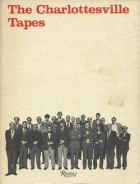
THE CHARLOTTESVILLE TAPES

charlottesville-tapes_0The Charlottesville Tapes is well worth a second read. In 1983, Jaquelin T. Robertson, then architecture dean at the University of Virginia, brought together two dozen architects to a private two-day confab (pointedly, no critics or historians were invited, only practitioners). It was a heavyweight group, a mixture of American, European, and Japanese architects, among them nine future Pritzker Prize winners, and four future Driehaus laureates. Each participant presented one project; discussion followed. The book is an edited version of the conversations. Reading the lively exchanges, one can only reflect on how much has changed since.

Read more

FANNING THE EMBERS

“Tradition does not mean guarding the ashes, but fanning the embers,” observed Benjamin Franklin; similar quotations are attributed to Thomas More and Gustav Mahler. Guarding the ashes puts old fogies in their place, and fanning the embers nicely catches the sense of an active involvement with the past. One looks in vain for such involvement in much of today’s architecture. Too many  architects have embraced novelty as the sine qua non of new work, perhaps under the mis-impression that they are designing products rather than buildings. But while the life of an iPhone is too short for the novelty to ever wear off,

Read more

FALLINGWATER

P1010418Random thoughts after a recent visit. Isn’t it strange that a millionaire’s plaything, a weekend house that cost a whopping $166,000 in 1937 ($2.6 million today), in which the servants outnumbered the occupants, and in which meals were served by a butler, should nevertheless have become the most popularly admired modern house in America. There are a number if explanations. I recently visited a huge (40,000 square feet) house designed by Paul Rudolph; it felt like being in a hotel lobby. Philip Johnson’s Glass House is much smaller, but most people couldn’t imagine living in it.

Read more

GLASSY EYED

reflection-glass-building-architectureI like glass as much as the next guy, but enough is enough. Just as the sixties architects went crazy about exposed concrete, architects today can’t get enough of glass. It’s used in the name of transparency, reflectivity, technology, ecology. If you’re a minimalist you like glass because it’s not there; if you’re a techie, you can accessorize it with all sorts of neat details; if you’re a not-very-good architect, glass will absolve you of having to design the facade. And who thinks up those glass details? Glass walls overlapping glass walls; facades that cantilever into this air;

Read more

LOOKING AT PICTURES

A-visitor-looks-at-a-painting-The-ladies-on-the-bridge-on-May-31-2013-at-the-National-Gallery-in-OsloThe other day, I was asked to talk to a class of architecture students who had been given  a museum as a studio project. Although architects refer to museums as “public buildings,” they are public in a peculiar way, I told them. I illustrated this by comparing a museum to a theater. In a theater, being part of the audience is an integral part of the experience: the more people the better. In fact, a half-empty theater diminishes one’s enjoyment of the play. Being in a museum is different: the more people you have to share it with,

Read more