THE MILLE-FEUILLE EFFECT

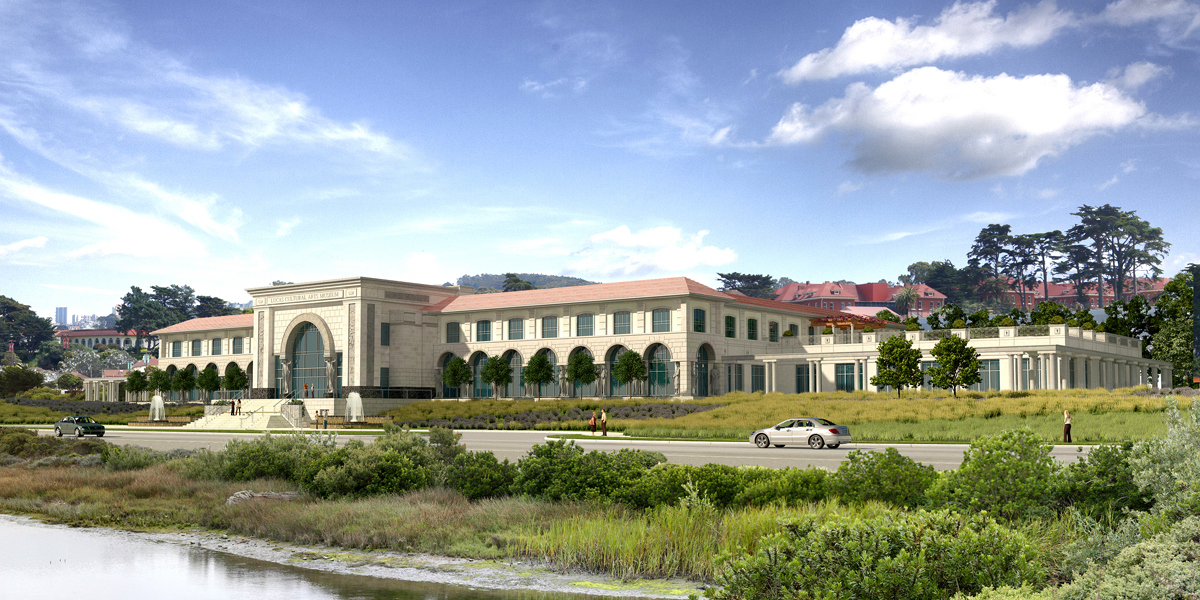
Writing about the late Jon Jerde in a recent issue of Architect, Karrie Jacobs brought me up short with a wonderfully pithy phrase. She described a Jerde-designed project as “a mille-feuille of the simulated and the real, layer upon layer upon layer.” Exactly. I remember visiting the newly-built Horton Plaza in San Diego, an urban shopping mall that Jerde designed in 1985. My first reaction was revulsion—this was postmodernism on steroids, cliché piled upon cliché. But then the Mille-Feuille Effect kicked in. The stagey architecture was obviously fake, but the sun and fresh air were real (the public spaces were not roofed).

Read more

THROUGH A GLASS DARKLY

crystal-ballI was interviewed recently by Gil Roth for his literary-cultural podcast, The Virtual Memories Show.  At one point he asked me what I thought about the future of architecture. No one had ever posed that question directly to me before, and when I answered I realized—much to my surprise—that I was not sanguine about the prospect. It seems to me that several factors have come together to produce a perfect storm (sorry), upending this ancient art.

Education, always a difficult undertaking in any creative field, has become divorced from practice.

Read more

THROWAWAY ARCHITECTURE

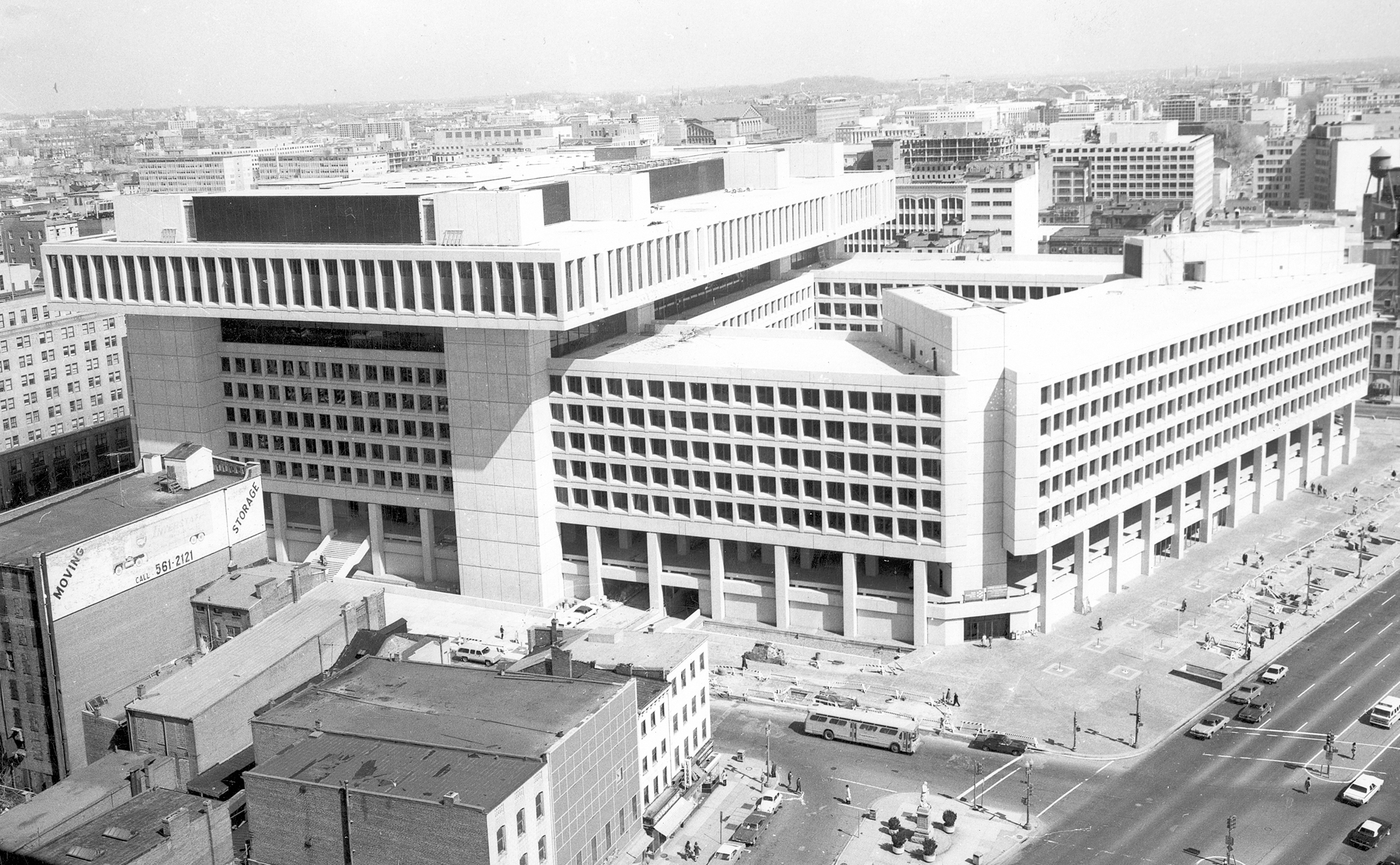
hooverbuiling1The federal government is looking for a developer to build a new suburban home for the FBI. The old FBI headquarters on Pennsylvania Avenue in Washington, DC is offered in exchange. A 41-year-old public building is going on the block. Admittedly the FBI headquarters (designed in 1975 by Charles F. Murphy & Associates) is an eyesore and won’t be missed (assuming it’s torn down, which seems to be its likely fate). But only 41 years! Washington is full of buildings that are two and three times as old. The first federal office building, the venerable Patent Office,

Read more

MIAMI NICE

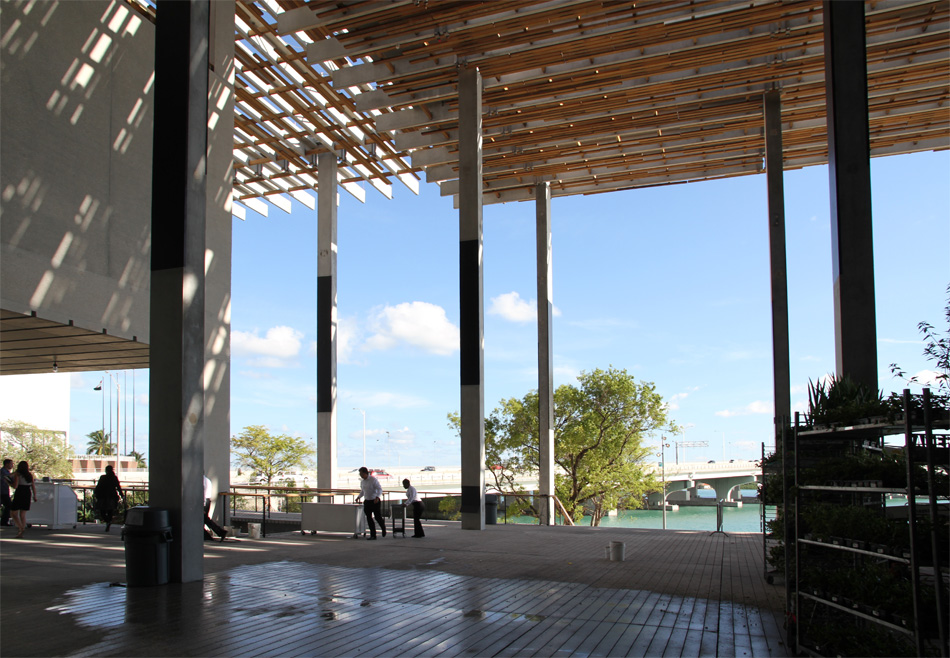
perezThe Pérez Art Museum in Miami suits the city and it suits modern art. Can’t ask for more than that. My first glimpse of the museum, which opened in 2013, was from the MacArthur Causeway, which swoops across the water next to the museum. The hovering shade roof over a boxy building gave the impression of a Renzo Piano museum. But something was different, and the difference became clear when later that day we visited the building. As in a Piano building, the architecture is derived from the construction, but unlike Piano, Herzog and de Meuron don’t sweat the details.

Read more

THE VIEW FROM ABOVE

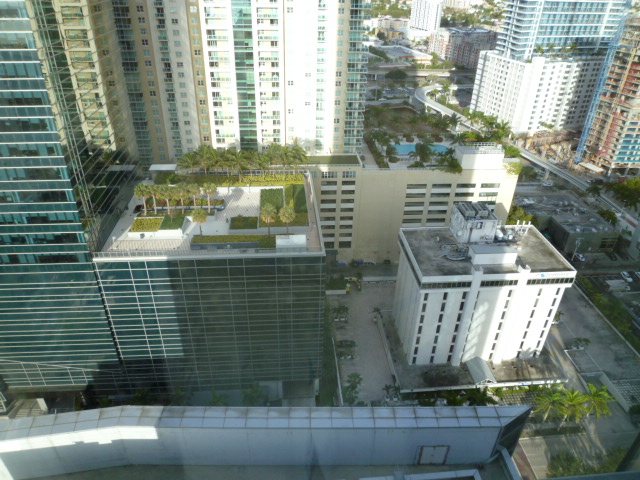
P1010969I’m staying in a Miami hotel, looking down on Brickell Avenue. Since I’m on the 29th floor, I can see the roofs of several lower buildings. Looking down on a building gives a different perspective of its architecture. From this vantage point, buildings that appear solid from the ground become insubstantial, theatrical, flimsy—the facade revealed as merely a wrapper. The wrapper stops at roof level, and the roof itself, invisible from below, is a utilitarian collection of cooling towers and other mechanical equipment. The building across the avenue is a recently completed office tower with ten-story annex whose roof is covered with a garden.

Read more

TRIED AND TRUE

“Experimentation can sometimes look weird at first, but it is a necessary part of figuring out how to make our human-built world better,” writes Aaron Betsky in his December 2014 Architect column. The implicit suggestion is that architectural experimentation is a good and necessary thing. But buildings that “look weird” are one thing, buildings that act weird are another. Buildings, unlike most artifacts, must last a long time—hundreds of years—so in terms of construction, weirdness should be avoided. In the sixteenth century, the great Palladio built revolutionary buildings, but he did so using tried and true technology,

Read more

A NEW TOOLKIT

Rybczyński, Jak działa architektura 300 dpiA Polish translation of How Architecture Works: A Humanist’s Toolkit will be appearing soon from Wydawnictwo Karakter in Krakow. Translations are also in the works from Owl Publishing House in Taipei, Cheers Media in Beijing, and CIR Co. in Seoul.

Polish speakers can read my interview in Gazeta Wyborcza.

Read more

ARCHITECTURAL JUDGMENT

BAMWThis year’s Best American Magazine Writing, published by Columbia University Press, includes three of my essays that were finalists for the 2014 National Magazine Awards. This might be a good place to express my appreciation to Architect, which published them, and to my supportive editor Eric Wills. My subjects were untypical for an architecture magazine: these three essays were not about the next new thing, which is what most architectural writing these days is concerned with. I wrote about two buildings in Seattle built ten years ago, about a planned community in England that is now two decades old,

Read more