Cinematic Spaces

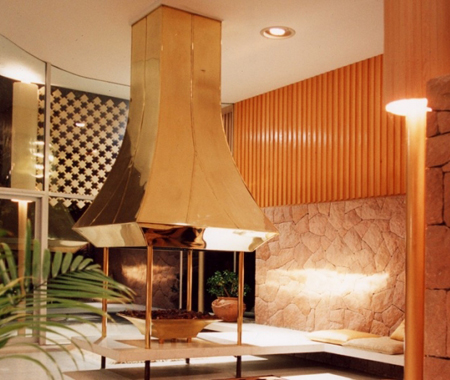
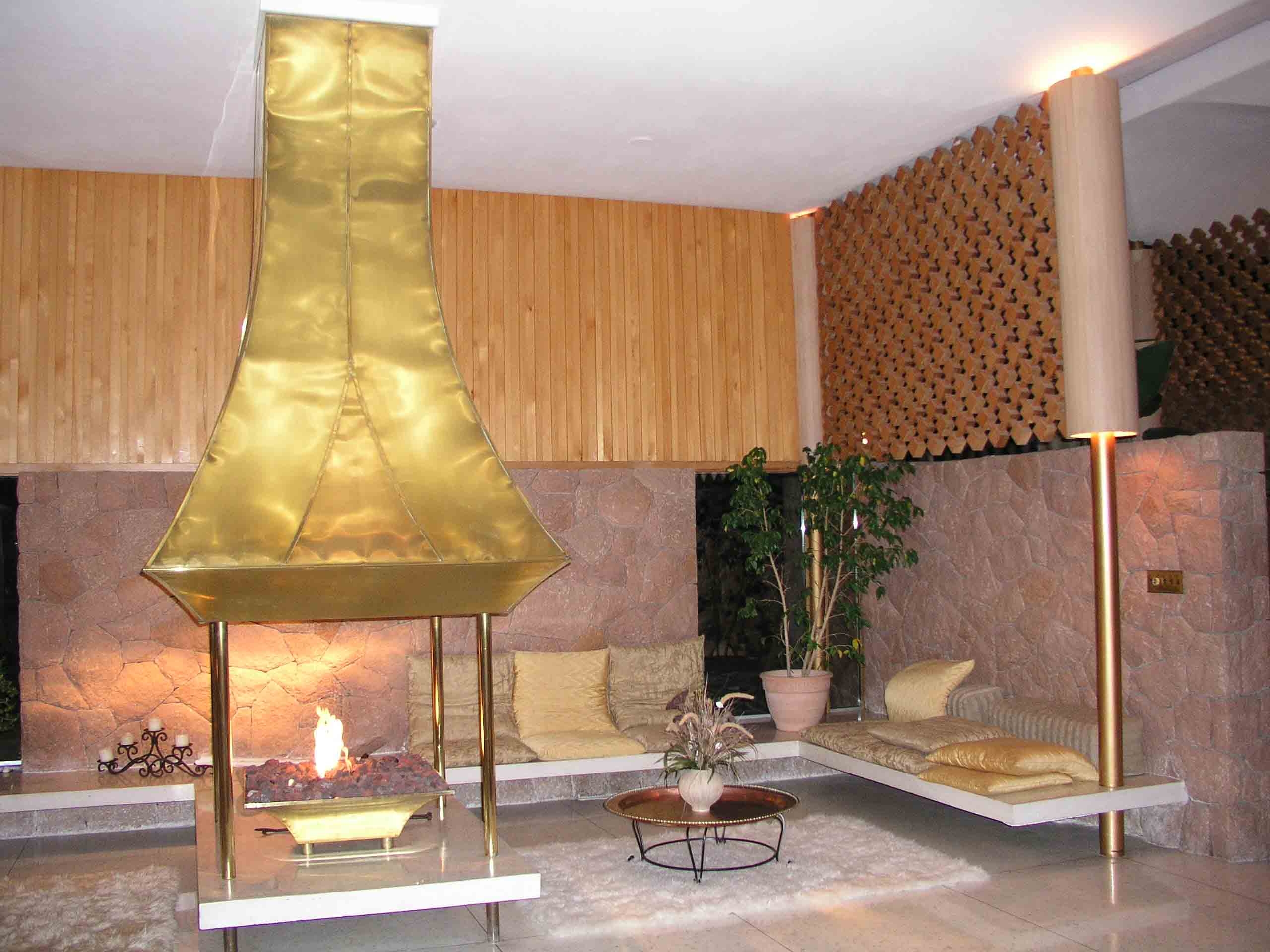
Last week I re-watched Roman Polanski’s 1966 film Cul-de-Sac. Lionel Stander and Donald Pleasance are first-rate, but they share star billing with Lindisfarne Castle, which is the location of this one-setting film. Lindisfarne is a sixteenth-century castle that was restored and converted into a country retreat by Sir Edwin Lutyens, whose austere architecture contributes greatly to the tense atmosphere of the film. It reminded me how few movie director’s have exploited outstanding architecture. Joseph Losey set his version of Mozart’s Don Giovanni (1979) in and around Vicenza, and made full use of Palladio’s Villa Rotonda.
Read more

Kahn’t Do It

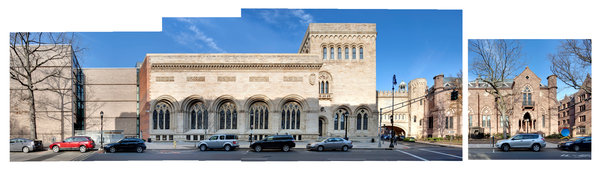
A photograph by New York Times photographer Bruce Buck accompanies an article on the wonderful renovation of the Yale University Art Gallery. The gallery was built in three stages: a tall 1866 Ruskinian Gothic first phase by Peter Bonnett Wight (right); a 1928 Florentine Gothic horizontal portion by Egerton Swartwout; and a 1953 addition by Louis Kahn. What Buck’s photo clearly shows is the insensitivity of Kahn’s addition. It is not a question of style—Swartwout did not follow Wight’s lead either—but of massing. The Swartwout wing was rudely truncated by a brick party wall,

Read more

Speaking Ill

One should not speak ill of the dead, it is said. Yet in a week fill with encomiums for Dave Brubeck (1920-2012) and Oscar Niemeyer (1907-2012) it is hard to hold back. When I started listening to jazz, in the late 1950s, the Dave Brubeck Quartet was already famous—or at least as famous as jazz musicians got at that time. I loved Paul Desmond, and Joe Morello could do no wrong (I was a drummer), but I never warmed to Brubeck himself. Me and my friends much preferred Ahmad Jamal, Monk, and Bill Evans.

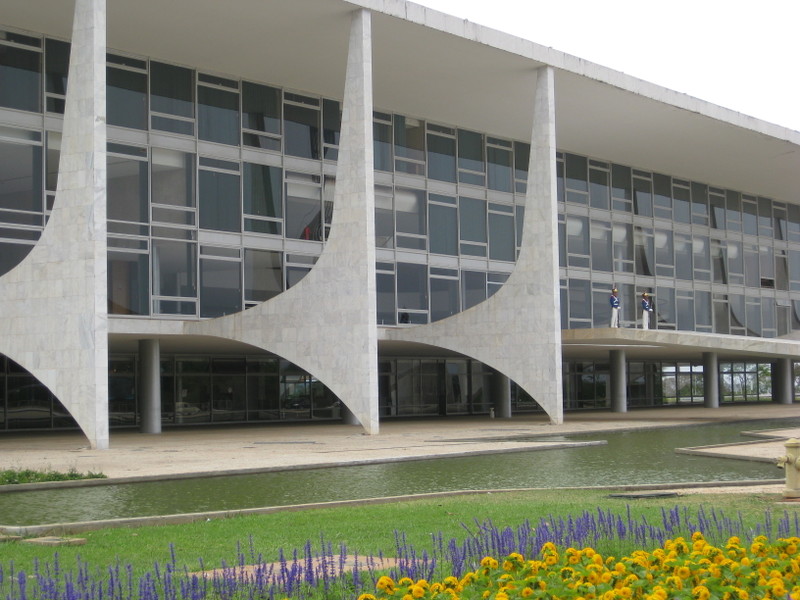
Nor was I ever an admirer of Oscar Niemeyer.

Read more

Simply Ike

The final review of Frank Gehry’s design for the Eisenhower Memorial in Washington, D.C., has been postponed yet again and the project seems more and more likely to be shelved. In a recent letter to Sen. Daniel Inouye, John S. D. Eisenhower, the President’s son, raises an issue that has nothing to do with the quality of Gehry’s design (which I have supported), nor with the over-wrought classical-modernist debate. Why couldn’t the memorial simply be “a green open space with a statue in the middle” he asks? Good question. Ever since the FDR Memorial spread over more than seven acres,

Read more

Image and Reality

Michelangelo Sabatino, who is researching the Canadian architect Arthur Erickson (1924-2009), recently sent me photographs that he had taken while visiting an early work by the architect. The 1959 Filberg house is in Comox, on Vancouver Island in British Columbia, and is particularly important since it launched Erickson on a stellar career that made him into Canada’s first internationally famous architect.


Sabatino’s photo (left) shows a rather,

Read more

Game-Changer?

There is some evidence that after five years the housing industry is showing signs of recovery. The sixty-four-thousand-dollar question is what form the recovery will take. It all depends on who you listen to. Those who believe that economic recovery will be spear-headed by consumer spending, see us going back to business as usual, that is, expanding the homeownership rate, and building as many large houses as the market will allow. New Urbanists, on the other hand, see the recession as a wake-up call and foresee a return to denser communities. Others see the increase in rental housing as a harbinger of a new Age of Tenants.

Read more

On the Potomac

Last week I had the opportunity to sail on San Francisco Bay on the Potomac. The USS Potomac, built as the Coast Guard cutter Electra in 1934, two years later was commissioned as Franklin Delano Roosevelt’s presidential yacht. Roosevelt used it to sail up and down the Potomac until his death in 1945, when the ship was decommissioned. Subsequently, the Potomac had a checkered career. She was used as a ferry boat in the Caribbean, was briefly owned by Elvis Presley, was later used for drug smuggling and seized by the Customs Service,

Read more

Real and Unreal

The French sculptor, Auguste Rodin, spent the last 24 years of his life living in La Villa de Brillants, his rather grand estate in Meudon, outside Paris. Rodin collected antiquities, and one of his largest possessions was a freestanding section of façade of a seventeenth-century chateau that he had disassembled and moved from nearby Issy-les-Moulineux to his garden. In the 1920s, when Paul Cret was designing a museum in downtown Philadelphia to house Jules E. Mastbaum’s collection of Rodin sculptures, he incorporated a replica of the chateau façade into his design. (Mastbaum, the developer of a chain of movie houses,

Read more