THE EMPEROR’S CLOTHES

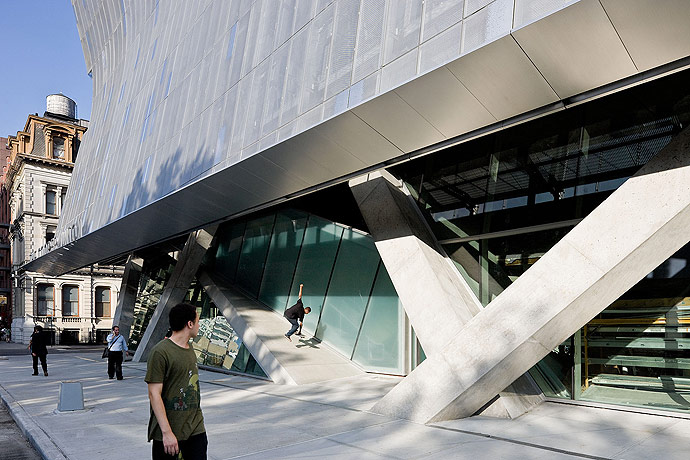
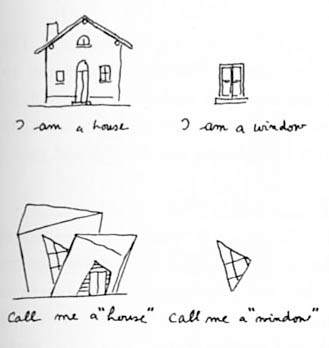
cooper-union-eng-low-dandelucaNicolai Ouroussoff called the Cooper Union Building “a bold architectural statement of genuine civic value.” Paul Goldberger described it as “the most exciting, energetic, and well-composed academic building to go up in the city in at least a decade.” James Russell was only slightly more circumspect: “Mayne’s high-wire act may offer an important lesson in creativity for Cooper’s students.” How could so many New Yorkers be taken in? I thought to myself as I looked across Cooper Square at the building. The photographs I had seen did make the building appear bold and exciting. The impression in real life was very different.
Read more

TOO MANY WORDS

KrierI was listening to a lecture on YouTube by Léon Krier. He was in full apocalyptic mode, his rousing talk illustrated by his charming but barbed drawings. At one point he recounted a quotation: “I wish I could speak a language where no word is repeated.” Krier couldn’t remember the source–it sounds like Marcel Duchamp or Max Ernst to me. In any case, Krier’s point was that this could serve as a maxim for today’s modernist architects, who judge themselves–and are judged–almost solely on their originality. What makes the metaphor so cutting is that a language of unrepeated words would be simply meaningless gobbledygook,

Read more

FANTASY FACTORIES

Dream_Castle_by_SukhRiarOliver Wainwright writes an excellent article on architectural education in The Guardian. He is particularly good describing the distortions that have accumulated in the so-called academy. Here are some highlights:

Wiry contraptions hang from the ceiling, while globular fungal forms nestle on tables between the spidery legs of 3D-printed creatures. A post-apocalyptic confetti of scalpel blades, empty Pot Noodles and cans of Coke is scattered among this landscape of foreign objects, while a sleeping bag pokes out from under a desk – perhaps with someone still in it.

_____________________________

Attending final presentations as an external critic,

Read more

SAVE THE STACKS

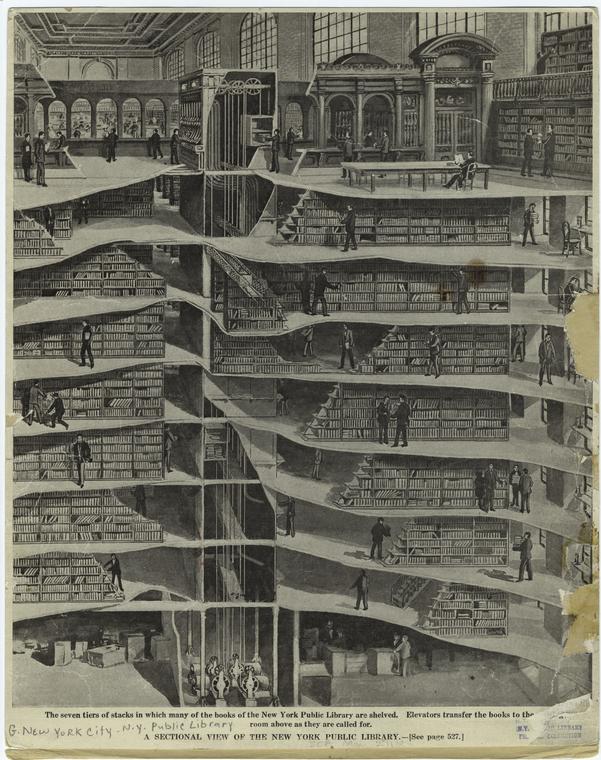
nyplI am lending my voice to those who are calling for a reconsideration of the plan to demolish the stacks beneath the Reading Room of the New York Public Library. While it is true that these stacks are not generally open to the public, they are an integral part of this extraordinary building, a Beaux-Arts design but truly a machine for reading in. As a writer and researcher, libraries–especially public libraries–remain for me special places. Library stacks, even more than reading rooms, are their symbolic heart. I think that one of the things that drew me to writing was the experience of wandering the stacks of McGill’s old Redpath Library,

Read more

PROBLEM SOLVER

I visited the Isabella Stewart Gardner Museum in Boston the other day. I had been there before, but not since the new addition, designed by Renzo Piano. Piano has become a specialist at adding to prominent buildings (Ronchamp, the Morgan Library, the High Museum, and soon the Kimbell Art Museum) and I was curious how he would respond to this rather eccentric museum–a Venetian palazzo in New England. At first glance, the new addition, clad in a green rain-screen, is distinctly odd. It seems to share nothing with its historicist neighbor. But it grew on me. I think that’s because Piano’s architecture has a certain inevitability;

Read more

THE OTHER STYLE

The first international style in architecture was not the white-box style of Le Corbusier and Walter Gropius but Art Nouveau, modernism’s predecessor and in many ways its aesthetic and philosophical opposite. Art Nouveau flourished from 1890 to 1910, and along the way it produced a surprisingly large number of masters: Gaudí, Hoffmann, Horta, Mackintosh, Plečnik, Sullivan, Van de Velde, and Wagner. And that’s just the leading architects; there were also painters, designers and craftsmen: Beardsley, Klimt, Lalique, Moser, Tiffany. Thirty years is a good long run as architectural fashions go, indeed, the International Style lasted barely that long, nevertheless, modernist apologists have always pooh-poohed Art Nouveau,

Read more

Sant Francesc

formentera


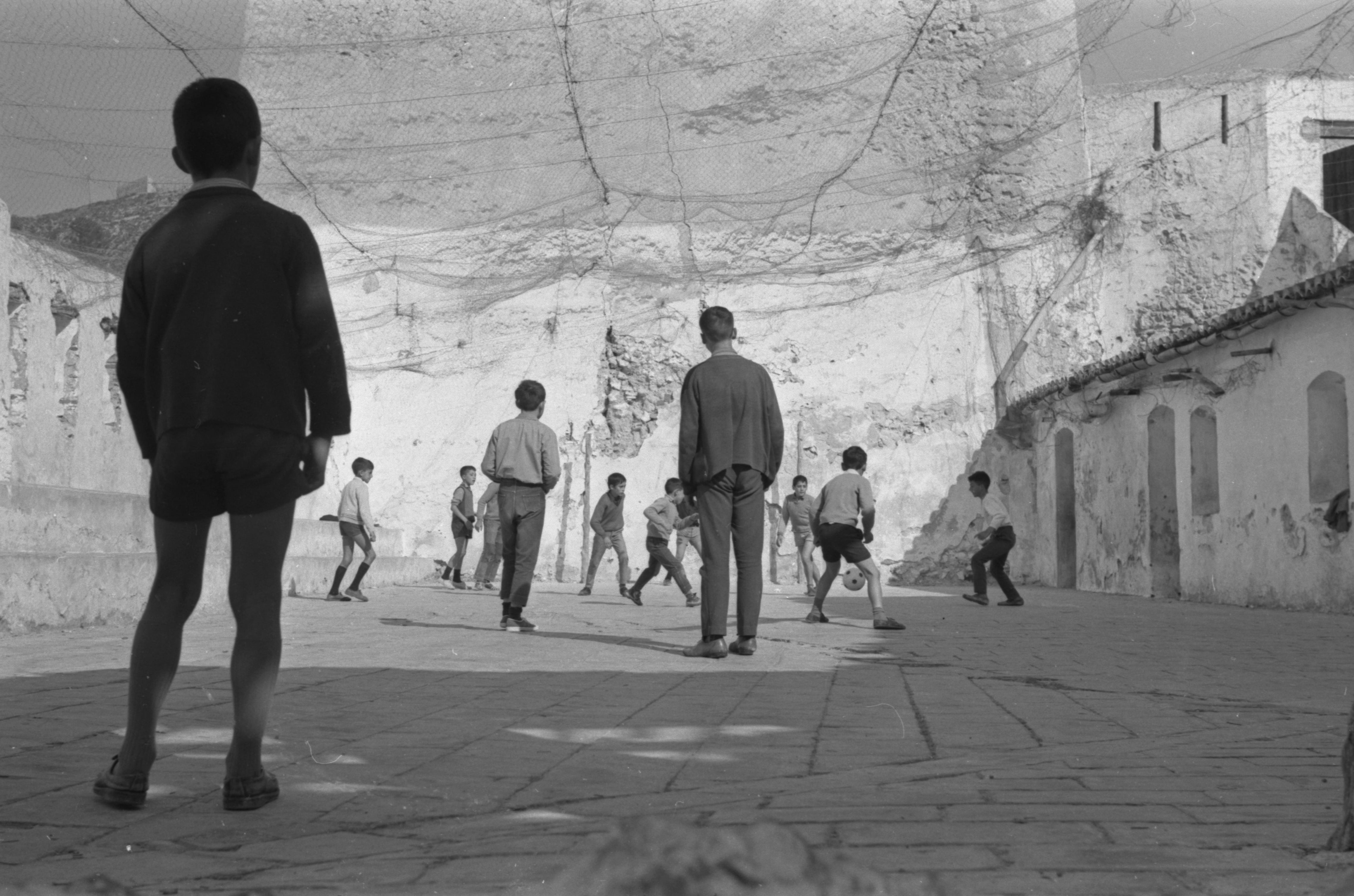
I took this photo in the spring of 1967, in the village of San Francisco on the Balearic island of Formentera where I was living at the time. The wall in the background is the church of Sant Francesc Xavier, an eighteenth century building, fortified against attacks by the Barbary pirates who periodically descended on the island. The mesh above the court must be there to keep the soccer ball in bounds. I assume that the taller figure is that of the local priest, or brother, acting as a referee, as he is the only one wearing street shoes.

Read more

FOLLOW THE MONEY

guys

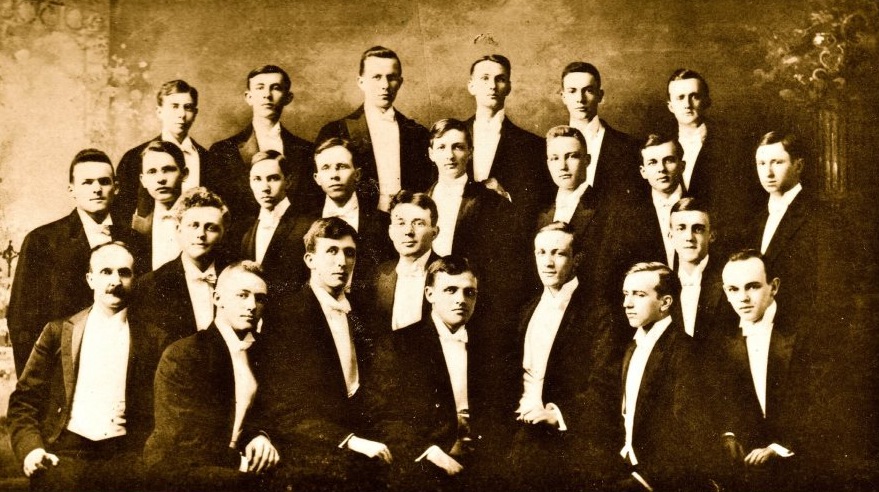
Whenever I hear of complaints about the makeup of the architectural profession, whether  it concerns race or gender, I think of a comment by my old teacher, Norbert Schoenauer. He observed that a disproportionate number of the architects working in the housing field in Canada were either Jews or immigrants. He cited Irving Grossman, Jack Diamond, Peter Dickinson, Oscar Newman, Sandy and Blanche van Ginkel, Len Warshaw, Andre and Eva Vescei–and himself. Schoenauer surmised that since housing commissions were less lucrative, they were neglected by established architects, and hence became an opening for “outsiders.” Incidentally,

Read more