
TYROS

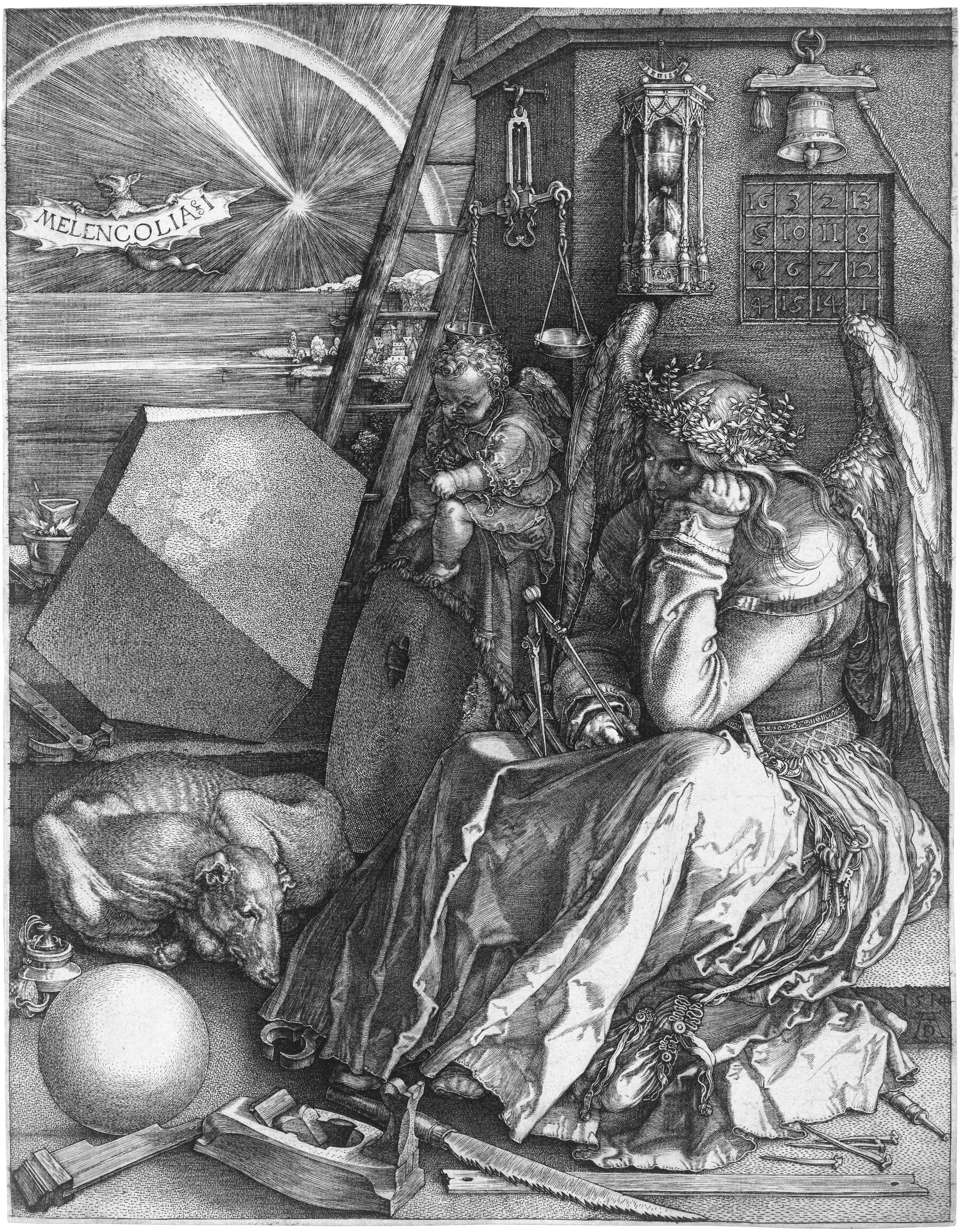
Melencolia I (B. 74; M., HOLL. 75) *engraving  *24 x 18.8 cm *1514A recent article in the New York Times points out the youth and inexperience of many teachers in today’s charter schools. In a related Slate piece, Sarah Mosle observes of her three years as a young Teach for America grade school teacher: “I was single, childless, and clueless about even the most basic aspects of child-rearing. My students’ parents seemed like creatures from another planet, remote and distant from the job I thought I was doing. To the extent I understood family dynamics, it was solely from the perspective of the teenager I’d been just a few years before.” There is a parallel here with teaching architecture.

Read more

WHAT’S IN A NAME

blank-nameplateMichael Kimmelman in a New York Times article on a new Italian winery near Florence, identifies the architect as Archea. There is no Architetto Archea, it’s a made-up name. While most architecture firms continue to be named John Doe Associates, the use of invented names is increasingly common. There are the mega-practices Aecom and Aedas, the mainstream Ennead (originally Polshek Partnership), cutting-edge SHoP, and the recently disbanded Office dA. Some of the made-up names involve arcane wordplay–Coop Himmelb(l)au, Mecanoo, Asymptote, Arch-Tectonics–and some seem calculated simply to grab our attention, like the Danish firm BIG (Bjarke Ingels Group),

Read more

SO MANY CLASSES, SO LITTLE TIME

Architectural curricula have changed in the last several decades. First, they are shorter. Architecture, since it concerns creativity, takes time. The original course of study at the École des Beaux-Arts recognized this; you simply kept at it until you were considered ready to leave. Modern architecture programs used to be five or six years. Since they devoted  time to general subjects, this usually meant about four years of intensive architecture study. In the 1970s, most universities followed Harvard’s lead and made a three-year Master the professional degree. The problem was that a BA degree didn’t really prepare students for a career in architecture,

Read more

MAKE A STATEMENT

I came across a term new to me in an architectural magazine today. The writer was speculating about whether Jeff Bezos would have an influence on the design of the new headquarters of the Washington Post. “One question is whether the newspaper’s new owner wants a statement building,” he wrote. A statement building! It struck me as a sad commentary on the present state of architecture that what at one time would have been called simply good design had now been elevated to the status of a “statement.” And a statement of what?

Read more

THE CREATIVE ACT

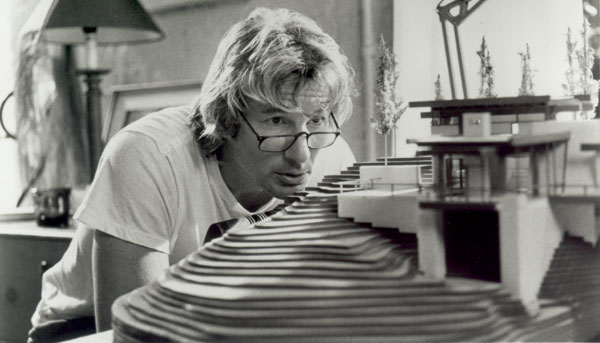
07015I recently watched Intersection, a 1994 flick with Richard Gere and Sharon Stone cast as a husband-wife architect team. We know that Gere is a creative soul–he has long, unruly hair–and that he is financially successful and glamorous–he wears Armani and drives a classic Mercedes 280SL. Stone, oddly cast as an ice queen, runs the business. So far, so good. The setting is Vancouver. The director, Mark Rydell, enlists Arthur Erickson’s Museum of Anthropology (actually almost two decades old, but looking great) as a stand-in for Gere/Stone’s latest architectural triumph. But except for a scene where Gere throws a temper tantrum on a building site,

Read more

CORPORATE HOMES

In the midst of the astonishing sale of the Washington Post to Jeff Bezos, a related announcement has received less attention: the newspaper will be getting a new home. Developers have been invited to make proposals, and while the final choice has not yet been made (and given the sale of the paper, who knows?), some of the alternatives have been made public. The architects include the usual megafirm suspects, and the designs are equally predictable–buildings for anybody, anyplace. What a difference when the Chicago Tribune held a well-publicized architectural competition in the 1920s for its home,

Read more

OFF LIMITS

Keep-Off-Grass-Sign-S-7260Andrés Duany takes issue in Architectural Record with Michael Sorkin’s review of Landscape Urbanism and Its Discontents. But the problem with a compilation of 20 essays by many different authors is that it rarely presents a coherent argument, so almost anything you say about such a book is (sort of) true. Although this is a sanctioned new urbanist collection, the contributors present a variety of–sometimes contradictory–views. Some admire the High Line, some don’t; some are still fighting a rear-guard action against the modern movement, some aren’t;  some see landscape urbanism as the enemy,

Read more

STU

Some architecture students had Louis Kahn, or Paul Rudolph, or Jose Luis Sert; I had Stuart A. Wilson. He taught the third-year design studio of McGill’s six-year course. His class was famous–or infamous–as a sort of boot camp. A grueling boot camp: students regularly repeated that year; some dropped out altogether, following his advice that they would be better off in another field. Wilson gave all sorts of design assignments: book jackets, posters, graphics, as well as hands-on exercises conducted in the carpentry shop, his private domain. The semester-long design problem required each student to build a large scale framing model of their project at 1/2 inch to a foot–every stud and joist in place–and to prepare a complete set of construction drawings.

Read more