FALLINGWATER

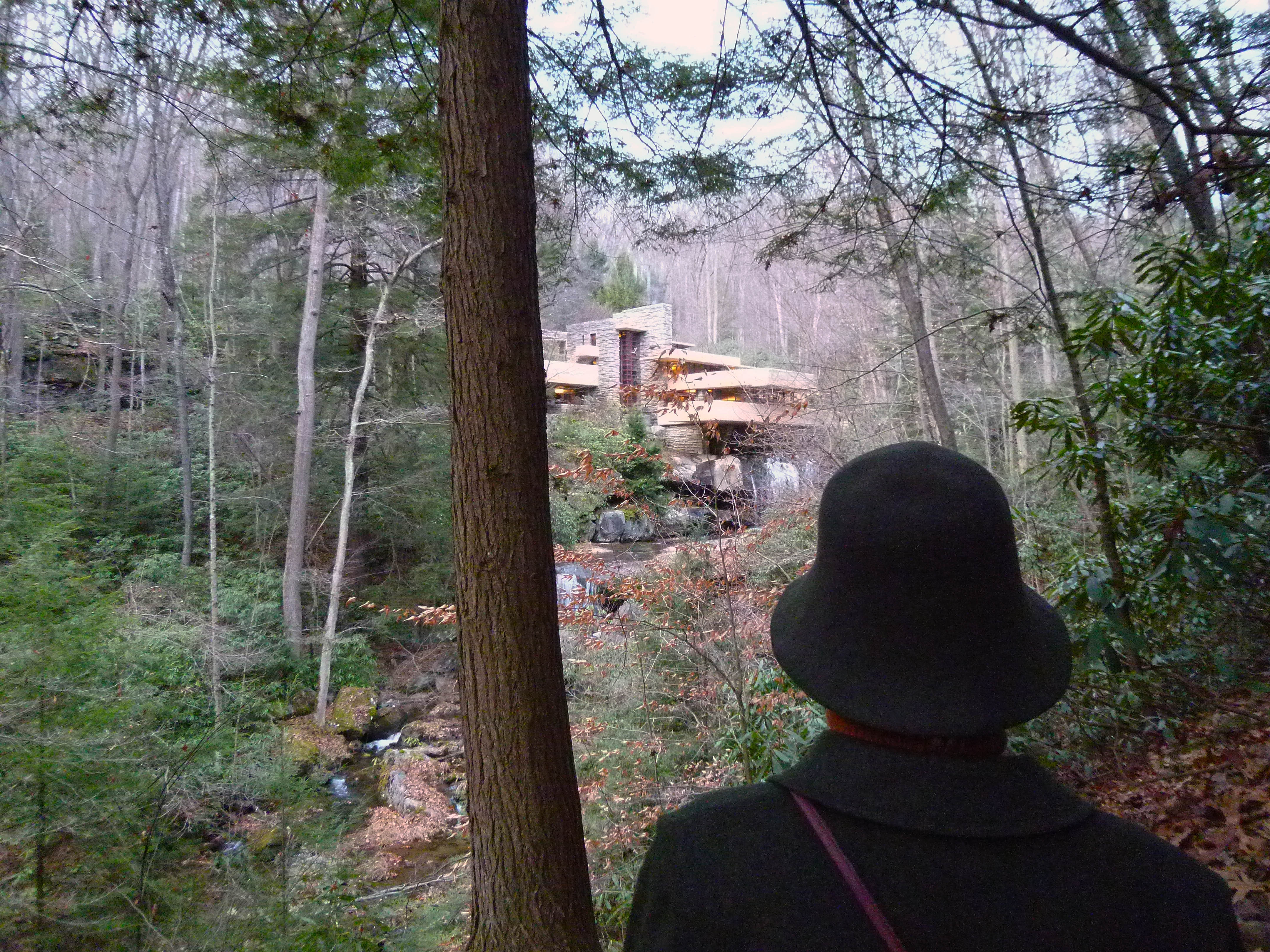
P1010418Random thoughts after a recent visit. Isn’t it strange that a millionaire’s plaything, a weekend house that cost a whopping $166,000 in 1937 ($2.6 million today), in which the servants outnumbered the occupants, and in which meals were served by a butler, should nevertheless have become the most popularly admired modern house in America. There are a number if explanations. I recently visited a huge (40,000 square feet) house designed by Paul Rudolph; it felt like being in a hotel lobby. Philip Johnson’s Glass House is much smaller, but most people couldn’t imagine living in it.

Read more

GLASSY EYED

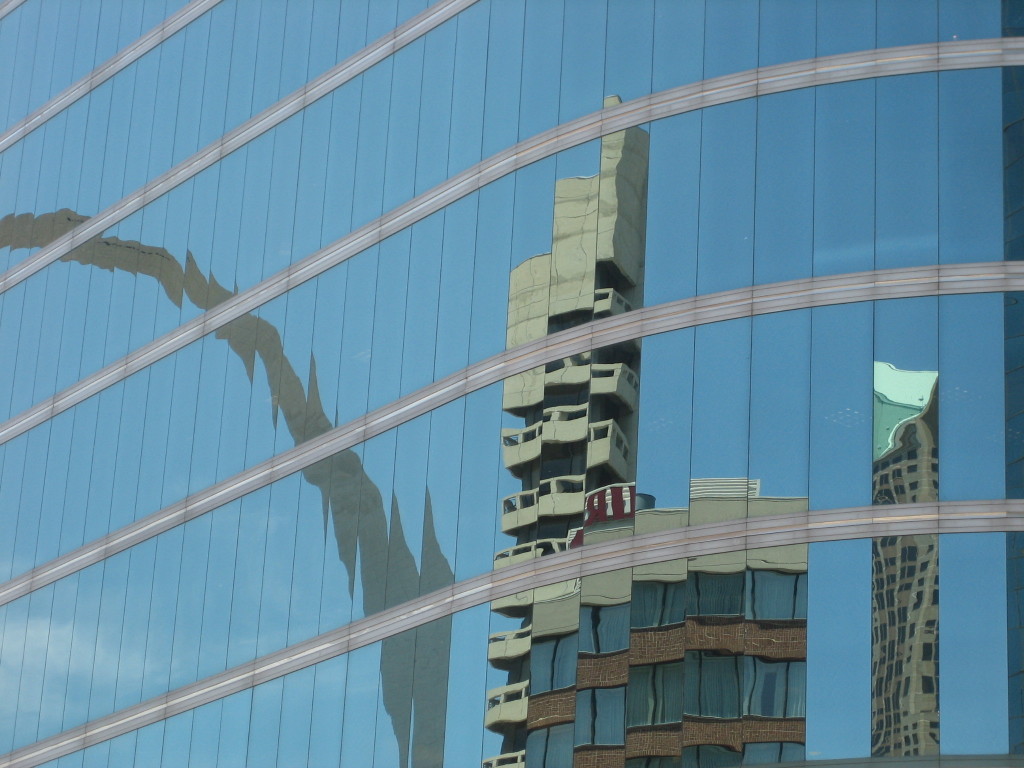
reflection-glass-building-architectureI like glass as much as the next guy, but enough is enough. Just as the sixties architects went crazy about exposed concrete, architects today can’t get enough of glass. It’s used in the name of transparency, reflectivity, technology, ecology. If you’re a minimalist you like glass because it’s not there; if you’re a techie, you can accessorize it with all sorts of neat details; if you’re a not-very-good architect, glass will absolve you of having to design the facade. And who thinks up those glass details? Glass walls overlapping glass walls; facades that cantilever into this air;

Read more

CAR BARN

A group of us had dinner in a Chicago garage last night surrounded by Richard H. Driehaus’s car collection. The collection of about 50 cars, I would guess, includes classics such as a 1948 Tucker Torpedo, one of only 51 built, and a 1954 Kaiser Darrin, a 2-seater with weird pocket doors and a fiberglas body. There were a number of concept and customized cars. A 1941 Lincoln Continental V-12 rebuilt by Raymond Loewy, includes a removable plexiglas top and porthole windows. One of my favorites was a 1934 Ford Brewster Town Car, which resembled a high-tech insect.

Read more

LOOKING AT PICTURES

A-visitor-looks-at-a-painting-The-ladies-on-the-bridge-on-May-31-2013-at-the-National-Gallery-in-OsloThe other day, I was asked to talk to a class of architecture students who had been given  a museum as a studio project. Although architects refer to museums as “public buildings,” they are public in a peculiar way, I told them. I illustrated this by comparing a museum to a theater. In a theater, being part of the audience is an integral part of the experience: the more people the better. In fact, a half-empty theater diminishes one’s enjoyment of the play. Being in a museum is different: the more people you have to share it with,

Read more

MONTRÉAL

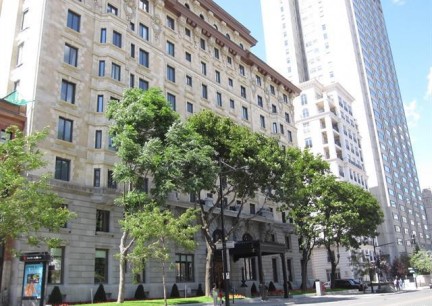
Facade1-I haven’t lived in Montreal for twenty years, but it’s the city where I passed my twenties, thirties, and forties, so it is a place full of memories. But like all North American cities, it is in constant flux; the city of today is not the one I left in 1993. The view of Mount Royal outside my hotel window is comfortingly familiar, but the downtown is undeniably different. It appears oddly both more prosperous and more provincial than I remember. The Ritz Carleton, the first Ritz hotel in North America and the grande dame of Sherbrooke Street,

Read more

STYLE CONT’D.

In his snarky review of How Architecture Works in the Wall Street Journal, Joseph Rykwert (who was a colleague of mine at Penn, something the review doesn’t reveal) quotes the Count de Buffon, Le style c’est l’homme mȇme, to support his view that the choice of a style is a “warrant of personal integrity.” I’m not sure that’s true in personal affairs, after all we dress differently for a morning jog than for the office, but it’s definitely not true in building design. Rykwert admires Mies for building the Farnsworth House in the same steel-and-glass style as his office buildings,

Read more

STYLES AND THE MAN

Gary Brewer, a partner at Robert A. M. Stern Architects, lectured at the Philadelphia Center for Architecture. The talk was illustrated with the firm’s work, which appears to include every conceivable building type, with the possible exception of industrial buildings. These buildings represent a variety of building styles, Traditional, Modern, and Transitional. The last category is interesting, for though rarely alluded to it probably represents the majority of what is built today. Most if not all architects consider themselves either modernists or traditionalists, and develop elaborate justifications for their positions. Not Stern. As Brewer pointed out, for RAMSA, a building’s appearance should not be the result of an architect’s whim,

Read more

HOUSING THEORY

leninLast night I took part in a panel organized by Fordham University. The topic was “A Home in the City,” and the discussion was about future housing strategies for New York. The talk ranged over modular housing, micro apartments, affordable housing, single-room occupancy, and zoning regulations. Of course, everyone knows that housing in New York is very expensive–although not equally expensive for everyone. More than 400,000 New Yorkers live in public housing, and almost a third of New Yorkers live in rent-controlled apartments. Furthermore, as Mary Anne Gilmartin, the CEO of Forest City Ratner, observed,

Read more