
DEMO OR NOT DEMO

From the ball and chain desk.
The recent demolition of Bertrand Goldberg’s Prentice Hospital, and the announced demolition of Williams & Tsien’s Folk Art Museum, raises the vision—or specter, depending on your point of view—of future demolitions of not-so-old buildings. What happened to the preservation of the past? I have always believed that the undoubted popularity of the historic preservation movement depends less on some abstract notion of heritage conservation and more on the actual architecture being preserved: in the past, that has meant the well-built, well-designed, and much cherished buildings of the late nineteenth and early twentieth century.

Read more

BE IT EVER SO HUMBLE

The Atlantic’s website “Cities” argues that some urbanist buzzwords should be retired, including placemaking, gentrification, and smart growth. A good proposal, even if the Atlantic is itself responsible for the proliferation of many the self-same buzzwords—the website is subtitled “Place Matters.” Buzzwords are everywhere. Trouble in the Iraq war—what we need is a surge. No sooner did Obamacare falter than we learned that there were navigators, who would fix the problem. The right buzzword comes first; reality will follow.

Read more

DESIGN DREAMS

“I really do believe that the world can be saved through design, and everything needs to actually be ‘architected,’ ” Kanye West recently told Harvard students in a widely-repeated quote. Architects especially loved it, but Lucas Verweij, a Berlin-based writer, argues in Dezeen that claims such as West’s are excessive. Verweij writes that the expectations placed on design—“design can solve the smog problem in Beijing, the landmine problems in Afghanistan and huge social problems in poor parts of Western cities”—are overblown and cannot be met. “We are in a design bubble,” he writes, “it’s a matter of time before it will burst.” I’m not sure about the bubble—it seems more like a passing fashion to me—but the current idea that every problem is fodder for the design profession is certainly misguided.

Read more

MARKETING AND INVENTION

I watched a PBS Newshour segment last night on Singularity University. Well-named, this really is a singular organization of the sort that only California can spawn—where is Evelyn Waugh when we need him? Singularity is an unaccredited university, that is, it doesn’t give degrees and it has no student body, although it does have faculty, some of whom appeared on the program, interviewed by Paul Solman. It’s obviously liberating to be a professor without the irksome burden of students, for they were all remarkably happy, relaxed, upbeat types. In fact, they reminded me more of cheerful marketers than academics,

Read more

FUNNY NAMES

London architecture office FAT has announced that it will shut down its studio next summer, after “exploring the potential of the projects as much as possible,” reported Dezeen. (Architectural firms like FAT don’t have offices, they have studios.) One less funny-name, I thought to myself. The big boys and girls—Foster, Gehry, Safdie, Stern, Hadid—simply use the name of the principal, as architects have always done. Piano adds “Building Workshop,” which is a harmless enough affectation. Presumably, their buildings speak for themselves. Indulging oneself in a catchy, or at least memorable, moniker, is partly an attempt to stand out from the crowd,

Read more

THE CHARLOTTESVILLE TAPES

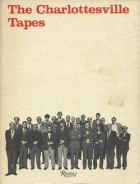
charlottesville-tapes_0The Charlottesville Tapes is well worth a second read. In 1983, Jaquelin T. Robertson, then architecture dean at the University of Virginia, brought together two dozen architects to a private two-day confab (pointedly, no critics or historians were invited, only practitioners). It was a heavyweight group, a mixture of American, European, and Japanese architects, among them nine future Pritzker Prize winners, and four future Driehaus laureates. Each participant presented one project; discussion followed. The book is an edited version of the conversations. Reading the lively exchanges, one can only reflect on how much has changed since.

Read more

FANNING THE EMBERS

“Tradition does not mean guarding the ashes, but fanning the embers,” observed Benjamin Franklin; similar quotations are attributed to Thomas More and Gustav Mahler. Guarding the ashes puts old fogies in their place, and fanning the embers nicely catches the sense of an active involvement with the past. One looks in vain for such involvement in much of today’s architecture. Too many  architects have embraced novelty as the sine qua non of new work, perhaps under the mis-impression that they are designing products rather than buildings. But while the life of an iPhone is too short for the novelty to ever wear off,

Read more

STAMPS

potterletterOn November 19 the U.S. Post Office issued a series of 20 stamps honoring . . . Harry Potter. There has been a bit of a kerfuffle, since the commission that normally reviews the subjects of new stamps was by-passed in the process, and also because of the non-American subject. I have no objection to honoring a foreigner, after all, Vietnam has recently issued a 10,500 dong (roughly 50 cents) stamp honoring Ernest Hemingway, so why not commemorate a British subject. But instead of celebrating the author J. K. Rowling, the U.S. stamps honor her fictional characters—including Hedwig the Owl—moreover,

Read more