FOREVER YOUNG

Many critics have commented on the disconnect between the exterior and the interior of the new Whitney Museum of American Art. But only an article in the current issue of TIME (read in my doctor’s waiting room) points out the obvious connection between the Whitney and the Centre Pompidou. Over the decades, Renzo Piano has produced so many sedate, restrained and above all polite museums that it is easy to forget that his first effort was raucous, immoderate, and (urbanistically) ill-mannered. It also wasn’t really a very good museum. Piano has since learned how to design successful galleries,
Read more

FAUX

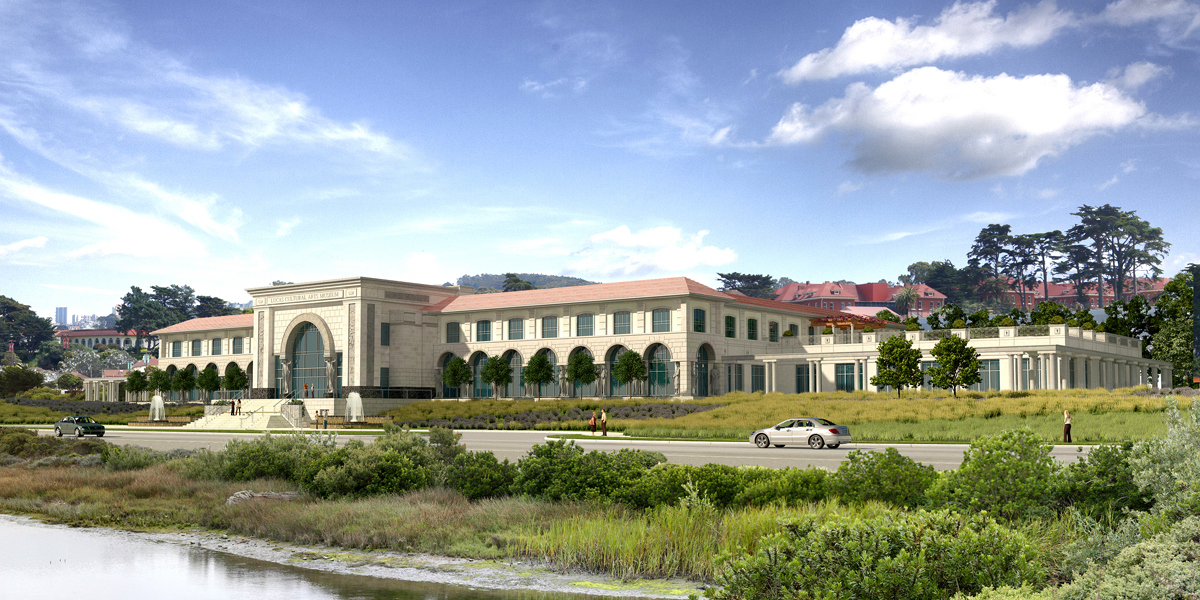
george-lucas_presidio_trust_crissy-field_san-francisco_lucas-cultural-arts_museum_second-proposal_rendering“There’s nothing wrong with replicating old architecture,” George Lucas said, reacting to criticisms of his proposed Museum of Narrative Art for the Presidio in San Francisco. “Basically all of Washington is a mimic of the past.” As is well known, Lucas’s proposal was turned down, and the museum is going to be built in Chicago instead. Many felt that the Presidio building was too large for its site, which is likely true, but there was also resistance to the architectural style, which was usually characterized as “faux Beaux Arts.” The adjective is a dead giveaway; no one ever called Philip Johnson’s Glass House “faux Mies,” or Richard Meier’s early houses  “faux Le Corbusier.” The Lucas Museum was the work of EHHD,

Read more

MAKESHIFT METROPOLIS

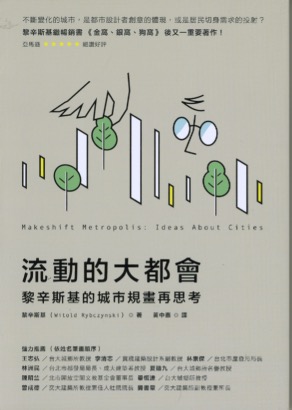
ScanOwl Publishing House in Taipei has just issued a translation of Makeshift Metropolis: Ideas About Cities. The book has also been translated into Russian (Strelka Press, Moscow) and will soon be available from Commercial Press of Beijing. Translations of  Home and One Good Turn are also available from Owl.

Read more

THE MILLE-FEUILLE EFFECT

Writing about the late Jon Jerde in a recent issue of Architect, Karrie Jacobs brought me up short with a wonderfully pithy phrase. She described a Jerde-designed project as “a mille-feuille of the simulated and the real, layer upon layer upon layer.” Exactly. I remember visiting the newly-built Horton Plaza in San Diego, an urban shopping mall that Jerde designed in 1985. My first reaction was revulsion—this was postmodernism on steroids, cliché piled upon cliché. But then the Mille-Feuille Effect kicked in. The stagey architecture was obviously fake, but the sun and fresh air were real (the public spaces were not roofed).

Read more

THROUGH A GLASS DARKLY

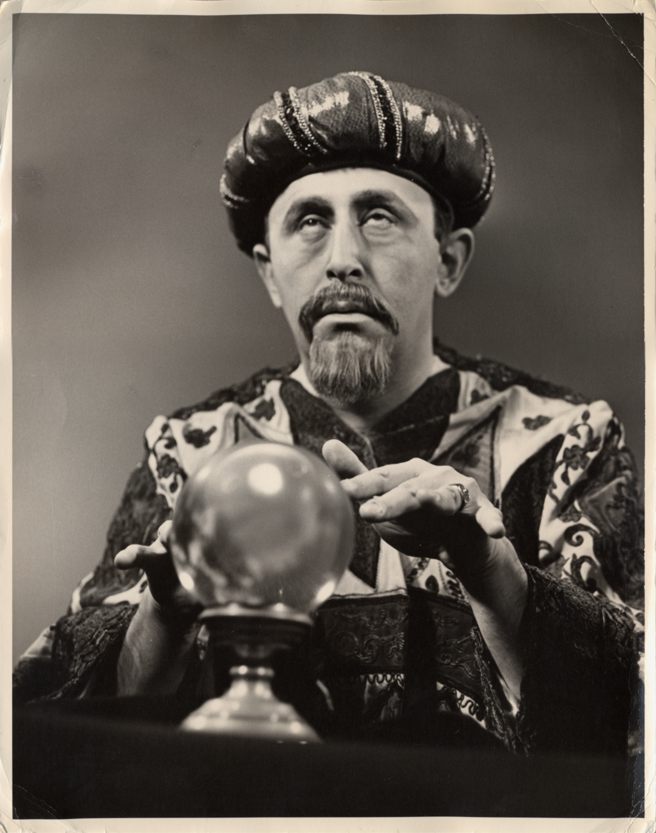
crystal-ballI was interviewed recently by Gil Roth for his literary-cultural podcast, The Virtual Memories Show.  At one point he asked me what I thought about the future of architecture. No one had ever posed that question directly to me before, and when I answered I realized—much to my surprise—that I was not sanguine about the prospect. It seems to me that several factors have come together to produce a perfect storm (sorry), upending this ancient art.

Education, always a difficult undertaking in any creative field, has become divorced from practice.

Read more

THE TENT MAN

Frei Otto (1925-2015) is an inspired choice for the Pritzker Prize. When I was a young architect, he was the man of the moment. I thought that his German pavilion at Montreal’s Expo ’67 was the best building of the exhibition. The sense of fluid, uncompartmented space created by the tent structure was something entirely new. That was just a warm-up for his breathtaking Olympic Stadium in Munich. I saw that building in 1972 and wrote about it—my second ever published article. Otto was later overshadowed by postmodernism, and by celebrity-driven architecture, but his lightweight architecture prepared the way for architects such as Piano,

Read more

WORTH EVERY PENNY

Downtown Fort Worth is a lively urban place that includes a central plaza, shops and restaurants, movie houses, theaters, a concert hall, and a public library. At the head of Main Street is the 1895 Tarrant County Courthouse, which resembles the state capitol in Austin, but with a clock tower instead of a dome. The downtown architecture is a mixture of styles: the Renaissance Revival courthouse, Sullivanesque office blocks from the early 1900s, Art Deco buildings from the 1930s, and modern towers from the 1980s (notably two glass hulks by Paul Rudolph). Most of the commercial construction tracked recurring oil booms.

Read more