

PHENOMENA
I came across the following passage recently.
There have always been dazzling personalities that flashed out of the surrounding gloom like the writing on the wall at the great king’s feast; but they are not manifestations of healthy art. They are phenomena. The sanest, most wholesome art is that which is the heritage of all the people, the natural language through which they express their joy of life, their achievement of just living; and this is civilization,—not commercial enterprises, not industrial activity, not the amassing of fabulous wealth, not increase of population or of empire. These may accompany civilization,
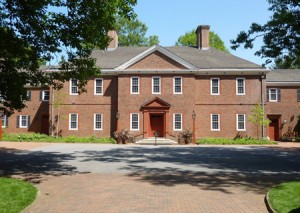 The other day we drove to Mount Cuba, a horticultural center in Delaware. The forest garden is part of an estate built in the 1930s by Lammot du Pont Copeland and his wife Pamela, a branch of the mighty Delaware family. We went to look at the trillium garden, but I was also impressed by the house, a very large Colonial Revival mansion that was completed in 1937. The beautiful brick architecture was exquisite, simple to the point of distillation. The design was the work of Victorine and Samuel Homsey. Samuel (1904-1994), a native of Boston, graduated from MIT and met and married Victorine du Pont (1900-98),
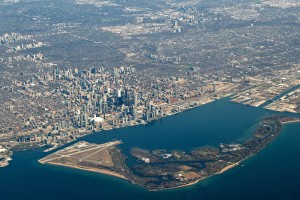 Rather silly op-ed
 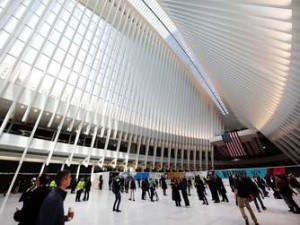 The newly completed Oculus in Manhattan is not just misnamed (an oculus is a round opening, not a slit) it is misconceived. It is not a question of design, or execution, or cost, but rather of the entire concept. Does a daily commute really require this level of architectural rhetoric? Even if this were a substitute for Penn Station, it would be a dubious proposition. It made sense for our forbears to celebrate long distance train travel, when railroad terminals really were the “gateways to the city.” Today, that is no longer the case. Even air travel has become a mundane,
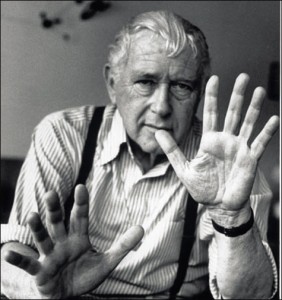 Marcel Breuer built his second house in New Canaan, Ct., in 1951. Known as Breuer House II, it served as the family’s home until 1975 when Breuer, then 73, sold the property. The new owners hired Breuer’s longtime associate Herbert Beckhard, to enlarge the house. Over the years the house experienced more changes and was described as “essentially gutted.” By 2005 it was threatened with demolition. New owners bought the house, removed the additions, restored the interior and doubled its size with a large addition designed by Toshiko Mori. The house is currently for