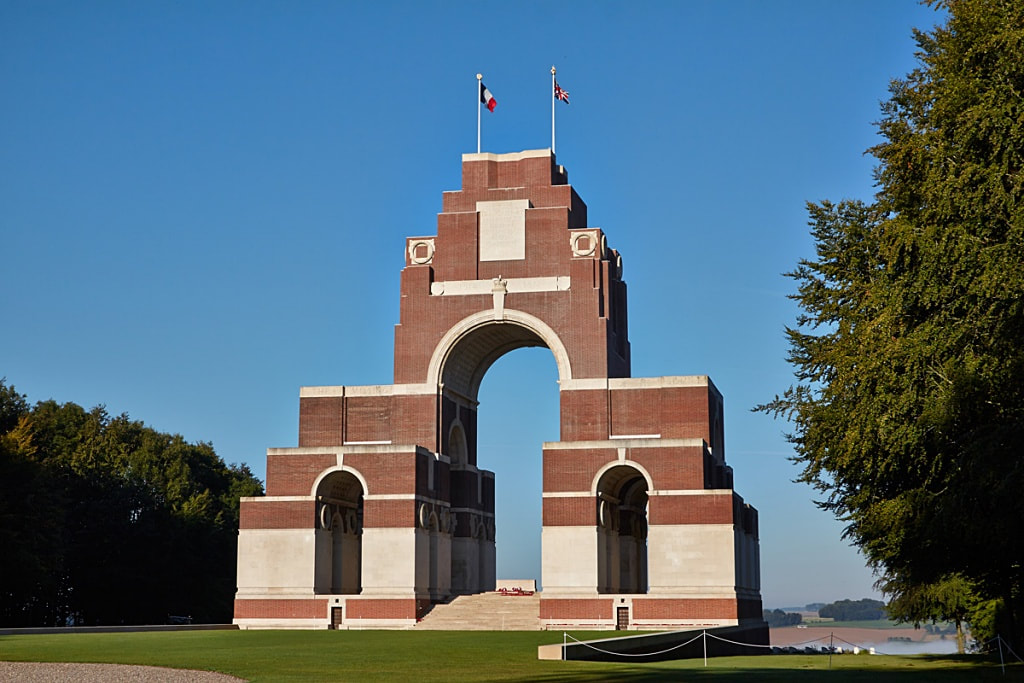
An article in The Architects Newspaper titled “How Trump’s arch gets classical wrong” gets it wrong. I’m not here to defend the design of the memorial arch proposed for a site near the Arlington National Cemetery, but to say that the arch represents “category error” because it doesn’t commemorate a military victory, like its inspiration, the Arc de Triomphe and the ancient Roman original, the Arch of Titus, is misleading. There have been several twentieth-century arches that do not commemorate victorious battles. The National Memorial Arch at Valley Forge, designed by Paul Philippe Cret and inaugurated in 1917 doesn’t, neither does the Gateway of India, built in Bombay in 1924 to celebrate the visit of King George V and his coronation as Emperor of India. The Black Star Gate in Accra, Ghana, was commissioned by Kwame Nkrumah in 1957 to commemorate his country’s new sovereignty. The Ghanaian gate is not modeled on a Roman arch and it’s not huge—40 feet high. The Valley Forge arch is 60 feet, only slightly taller than its model, the Arch of Titus. The Gateway of India is 85 feet, which happens to be the height of another famous arch, the Brandenburg Gate in Berlin. It was Napoleon who couldn’t resist inflating things—the Arc de Triomphe is 162 feet high. The proposed arch at Arlington will be 250 feet tall, which is on the gargantuan side, although supporters will point to the precedent of the 555-foot Washington Monument, a mighty exaggeration of a modest Egyptian obelisk. Sad to say, the proposed arch is not only over-sized, it is under-designed, a banal and unskilled replica. Can a memorial arch be modern? Edwin Lutyens’s Thiepval Memorial to the Missing of the Somme (above), built in 1932, shows that it can. His loosely recalls its ancient predecessor, and it is big (140 feet tall), but it shows what a talented architect can do with an old form.